Welcome to
Congregation
Beth Tikvah

We empower people to live & learn Jewishly
and make the world a better place.

Meet Rabbi Rick Kellner

Rabbi Rick is the guiding light and heartbeat of our congregation, whose wisdom and warmth inspire and uplift us all. We can’t wait for you to meet him.

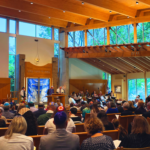
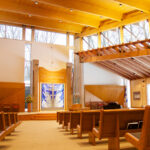
Congregation Beth Tikvah holds weekly Shabbat Services on Friday evenings.
Learn More by visiting our Music & Ritual Page.

2025-'26 Mishpacha Appeal

Every year, our Mishpacha Appeal is our congregation’s way of ensuring that Beth Tikvah remains strong, vibrant, and welcoming for everyone who walks through our doors.

The Mishpacha Appeal is an opportunity for us to give together and grow together. The donations from this campaign sustain our programs, services, clergy, staff, and building. It’s our single largest annual fundraiser — and it’s what keeps the lights on, both literally and figuratively.

Our goal is to raise $60,000. Every gift makes an impact on our community — no matter the size.

Rabbi's Blog

Between Two Worlds

December 12, 2025

I want to invite you to imagine the rabbis of the Talmud sitting around their Beit Midrash (house of study) and discussing all of the matters pertaining to Jewish life. These conversations would have taken place sometime between the 1st century of the common era and the 5th or 6th century of the common era. As they are conversing, one of the rabbis interjects and says, “Mai Hanukkah?” meaning, “What is Hanukkah?” It is a profound question to ask. They answer by explaining the ritual of kindling lights and the miracle of the oil. When you want to understand the story of Hanukkah from a historical perspective, you generally look to two sources, the Talmud and the books of the Maccabees. The books of the Maccabees are considered part of the apocrypha, which means they were written around the time as the Bible, but are not part of the Tanakh, the Jewish Bible.

In the book of Maccabees, we learn the background of the story of the Seleucid Greeks. They ruled Jerusalem during the time of the origins of Hanukkah (2nd century BCE) and took over the Temple and placed idols within it. They forbade the Jews from offering sacrifices, made their own sacrifices to Greek gods, prevented the Jews from studying Torah, and prevented circumcision. This is called Hellenization – the process by which the communities that the Greeks conquered would abandon their own cultures and take on Greek cultures. Essentially the Greeks were saying, “We are happy to keep you alive, but you must become Greek.” Of course, if someone were to disobey these rules, they did so at the penalty of death.

Earlier this week, I listened to Rachel Goldberg-Polin as a guest on Dan Senor’s Call Me Back podcast. She frames the situation of the Jews in ancient Israel during the time of the Maccabees in the following way: There were Jews who fully assimilated and took on Greek culture; there were Jews who rebelled, fled to the hills, and maintained their Jewish identity; and there were Jews who had their feet in both buckets—the Jewish bucket and the Hellenized/assimilated bucket. The world in ancient times is much like the world we have faced in recent years. In many instances, we are given a choice: if you want to be accepted by the dominant culture, you have to abandon your Judaism. Some people choose to do that. Others dive deep into Judaism, Jewish practice, and Jewish identity. For the ancient Seleucid Greeks, they were happy to have us around—just in the way they wanted us to be around.

When we think about Hanukkah and we ask the same question the rabbis asked, mai Hanukkah? What is Hanukkah? — we are challenged to think about the importance of our own Jewish identity. Following Goldberg-Polin’s teaching, we wonder about the times when we wish for acceptance by the rest of the world, and we also think about how we immerse ourselves in our own Jewish identity. Over the last two years, many people have experienced receiving a message saying something like, “We are fine that you’re around, but in order for you to be accepted by ‘us,’ you have to abandon your values, your Zionism, your connection to Israel. We can keep you in our circle, but only on our terms.” That is exactly what the Seleucid Greeks did to the Jews in the time of the Maccabees.

Rachel Goldberg-Polin reminds us that history is repeating itself. She explains that Hanukkah is a choice. For those of us living here in America, we have a choice to make every day. We know we live in a world where there are times we do things that we would consider to be part of the assimilated world (i.e., going to the movies, concerts, sporting events, etc.) and there are times when we live in the Jewish world (i.e., going to Torah study, Shabbat services, family holiday dinners, and more). Hanukkah, then, is an invitation for us to think about where and when we want to draw the line regarding how assimilated we want to be. We know we live in both buckets: a Jewish bucket and an assimilated bucket. As we celebrate the days of Hanukkah and light the hanukkiah, let us think about the same questions our ancestors did: What is the line we want to draw for the boundary of our Jewish identity? When can we immerse ourselves Jewishly? When do we dive into the world around us? And perhaps we also need to ask ourselves how we bring our Jewish selves and values to the assimilated world we encounter.

Shabbat Shalom and Happy Hanukkah,

Rabbi Rick Kellner

Planting Hope in Sacred Soil

December 5, 2025

“If you build it, they will come.” Many of you will remember these famous words from the 1989 movie Field of Dreams when Ray Kinsella, an Iowa farmer, ploughs his corn fields to build a baseball diamond. The film, arguably my favorite baseball film, reveals that Ray is on the verge of defaulting on his property. Without his crop, he is unable to earn enough money to make the payment. His brother-in-law ridicules him for destroying the one thing that could provide income. It is not often that one ploughs a corn field; fast forward nearly 30 years and in real life, three brothers are planning to plough their own corn field.

Sterling, IL is home to Nik, Alex, and Ricky Jakobs. It was also once home to Temple Sholom, a synagogue that housed Jewish life for several generations. However, due to the closure of the Northwestern Steel and Wire Plant, many who called the area home were forced to move away, leading to the demise of Temple Sholom. Those who remained could not maintain the building. The synagogue was sold, and like many other small town midwestern synagogues it became a development of condos and businesses.

The story of Jewish life in Sterling began with the Jakobs’ grandfather, Norbert Jakobs, who survived the Holocaust and moved to the area in 1949. He bought land and began planting corn, soybeans, and other crops. On Rosh Hashanah, Nik pitched a tent on the field and the Jews who remained in Sterling gathered to hear the shofar and welcome in the new year with Rosh Hashanah services. Nik’s vision was to take part of the cornfield and rebuild Temple Sholom. His purpose in doing so was to create a museum that told the story of Jewish life in midwestern small towns and created a sacred space for those in and near Sterling to come and gather as a Jewish community. Nik and his family were not rebuilding solely because of his own family’s connection to the land, but also because of the many Jewish families in the area who yearned for a Jewish home.

As I reflected on this story (which you can read more fully in the Forward), I thought about what it takes to create and sustain Jewish life. It takes the fire inside of the people who are drawn closer to Jewish heritage, Jewish pride, the Jewish people, and Jewish faith. That fire is fueled by a vision that is tended to each day. In the article, mentioned above, Benyamin Cohen writes, “Hope, here, isn’t an idea. It’s a practice, the daily work of planting what you may never see bloom.” We are truly blessed at Beth Tikvah to share in the vision of creating sacred community. While we have a building and a thriving congregation, it takes the same will and desire of all of our members to plant a garden that can flourish and can continue to grow.

From our volunteers who serve our community in many different capacities, to our staff who till the soil inside our building every day, we flourish because we share a vision for what Jewish life can look like in Northwest Columbus, OH. Together, we nurture Jewish learning; we instill a sense of Jewish pride, tell our Jewish story, and add pages to the next chapter. We do the sacred work of building a better world for our neighbors and community. This work is only possible because of the people who sustain it.

I am so grateful to all those who support our sacred work through Life & Legacy contributions, gifts to Mishpacha, Annual Commitments, as well as the volunteers whose dedication gives our synagogue its unique character. I hope you will take the time to read about the building of Temple Sholom in Sterling, IL and think about how all of us can find the fire to continue to build and nurture what we have created together in Northwest Columbus.

Shabbat Shalom,

Rabbi Rick Kellner

Importance of Gratuity

November 28, 2025

On October 7th, the book I had ordered by Eli Sharabi called “Hostage,” arrived in the mail. With all the excitement of the new ceasefire and the hostages being released, I could not bring myself to read it. Upon returning from Israel earlier this month, I came home, opened the book and after three days, finished it. I could sense the discomfort within me during the weeks that it sat on my desk, unread. Did I want to read about the awful days he endured, the beatings that he took, the loneliness he felt? After returning home from Israel, where I once again encountered the resilience of our people, I knew I had to read Sharabi’s harrowing experience.

Of my many takeaways from the book, two stand out. First, during captivity, Sharabi was held for several weeks with Hersh Goldberg Polin. What could 23-year-old Hersh teach a father of two who was double his age? One’s age is not an indicator of one’s capacity to offer wisdom. Hersh had been influenced by reading the acclaimed Holocaust survivor and psychologist, Viktor Frankl’s personal account of surviving Auschwitz, “Man’s Search for Meaning.” Hersh learned from Frankl that, “A man who has a why, can endure any how.” Hersh’s wisdom changed Sharabi. Sharabi’s why was to get back to his family. Of course, entering the book, the reader knows that Sharabi’s family was murdered on October 7th. Sharabi also has another why; he befriends fellow hostage, Alon Ohel and in many ways becomes like a father figure to him. The two care for each other during captivity and Eli is pained when he is freed, but Ohel remained.

The second lesson I learned is how gratitude can be lifesaving. In captivity, Sharabi urged his fellow captives to conclude each night with a moment of gratitude. In the depths of horror, how could they find something good to recognize? Sharabi told them, “Come on, let’s think of something good that happened today, just one thing. For example, one good thing to be grateful for is when they suddenly allowed us to drink tea. Or when the tea was sweet. Another good thing might be if a particularly cruel guard we dislike doesn’t show up that day. We find ourselves searching for the good things for which we can express gratitude in the evening.” They began to look for something good in every moment. It changed their mindset, shaped their outlook, and potentially saved their lives.

As you read the book, you learn of the minimal food they ate – sometimes only one pita a day. You learn of the beatings they took and the fear they had. Sharabi’s resilience and the resilience of all the hostages is certainly remarkable. Perhaps Sharabi’s lesson to us is that gratitude is not something we only focus on one day per year; we can turn our gratitude into a practice. What if we paused each day to recount one good thing that happened? Even in our darkest moments, we have the power to find something positive about our day. Our practiced recognition of the good might just change our lives and help us survive the most challenging and darkest moments that we encounter.

Gratitude is at the heart of who we are as Jews. We read in our Torah this week about Leah giving birth to her fourth child, who she names Yehudah (Judah), because she says, “I am grateful.” The Jewish people are yehudim, a word that is derived Yehudah’s name. Gratitude is part of our Jewish DNA.

I hope that everyone is able to spend time today and throughout the weekend recounting at least one thing for which you would like to express gratitude. Perhaps you might consider recording it in a journal, texting it to a friend or family member, even posting about it on social media or replying to this email and letting me know – I would love to hear.

Perhaps even better, what if we made acknowledging our gratitude a daily practice?

Shabbat Shalom,

Rabbi Rick Kellner

The Role of a Rabbi

November 21, 2025

The role of the rabbi is quite diverse. We teach, we provide comfort, we celebrate significant moments in people’s lives, we counsel, we stand up for the vulnerable. People look to us to be a moral voice and a source of wisdom.

In ancient times, when the rabbis or sages reflected on their role in people’s lives, Yosei ben Yoezer—leader of Tz’reidah—taught, “let your house be a meeting place for the sages; sit in the dust of their feet; drink in their words thirstily,” (Avot 1:4). When commenting on this teaching, Rabbi Yehudah Aryeh Leib, also known as the S’fat Emet, explained that our places of learning should be made into homes. When we come to a place of Jewish learning, in modern day, that place of learning is a synagogue. We want people to feel fully at home there.

What does that look like? Rabbi Shmuly Yanklowitz explains that we want people to discover a thirst for knowledge, explore, ask questions, and find opportunities to grow intellectually and spiritually. Empowering people to live and learn Jewishly and make the world a better place is core to the sacred work we do at Beth Tikvah. In order to bring that vision to life, we strive to equip our community members with the tools to make Judaism part of their lives and to support one’s Jewish journey in personal and unique ways.

Five months ago, Rabbi Karen Martin joined our Beth Tikvah family and is helping to make this synagogue a home. In the time that she has been with us, she has worked to bring Torah to our lives in new and creative ways. She has spent much of her time in these past few months learning and teaching; she has already enriched our lives in such a short time. She has opened my own eyes to perspectives on Jewish communal life, insights into Torah, meaningful prayer, and a passion for bringing people together. While Rabbi Martin has already been with us for several months, tonight is a moment to both honor her at her installation and celebrate her as a community. Bringing a new rabbi into the community provides opportunities for more touch points and opens pathways to discovering new depths of Torah.

We also learn in the Pirke Avot that we are to “aseh l’cha rav—make for yourself a rabbi (or teacher).” Every one of us needs a teacher. The magical power of a teacher is to open one’s eyes to making new discoveries, new meaning, and new possibilities. Judaism is such a rich tradition, and when we approach our tradition with a new lens and new perspective, our eyes open to new possibilities. It is my hope that, if you have not done so already, you will welcome Rabbi Martin into your lives as one of your teachers.

Our tradition is rich with insight and wisdom that provides much guidance at every stage of our journey. As rabbis, we are privileged to experience those most private and vulnerable moments alongside you. Thank you for letting us walk with you when you are vulnerable, for allowing us to be your teachers, and for providing us with insight into your lives so that we can create opportunities to encounter what is holy.

Please join us this evening as we mark a historical moment in our synagogue’s journey and officially celebrate and welcome Rabbi Karen Martin, her husband Stewart, and her children Sam and Joel.

Shabbat Shalom,

Rabbi Rick Kellner
Join Us!

We offer more than just a place to worship; we provide a spiritual home for individuals and families of all backgrounds and lifestyles. 

Discover opportunities to connect, learn, celebrate, and grow together.

6121 Olentangy River Rd. Worthington, OH 43085

(614) 885-6286


Want to learn more about Beth Tikvah?

Enter your email to have more information about Beth Tikvah sent to your inbox!!

Contact Congregation Beth Tikvah