
Death & Dying
Death and mourning are among the most sacred and emotionally charged experiences in Jewish life. Yet even in grief, Judaism offers guidance, ritual, and connection.
Read below to explore the customs and values surrounding death and mourning in Reform Judaism, helping us understand not just what we do, but why we do it.
Jewish Perspectives on Death & Mourning
Cremation vs. Burial in Reform Judaism
While traditional Jewish law calls for burial, Reform Judaism recognizes that the ways we honor loved ones evolve with time and values. Cremation is permitted when chosen thoughtfully, though burial remains the most common practice. What matters most is intention—treating the body with dignity and ensuring that the process reflects the sanctity of life. Reform rabbis often emphasize that every choice around end-of-life should balance Jewish teaching, personal conscience, and compassion. Beth Tikvah partners with Green Lawn Cemetery for our burial arrangements.
Green Burials
Increasingly, Reform Jews are exploring green burials as a way to reconnect with the earth and Jewish ecological values. These burials avoid embalming fluids and non-biodegradable materials, allowing the body to return naturally to the soil. Green burials echo the verse, “For dust you are, and to dust you shall return.” Kokosing Nature Preserve is a green burial site near Columbus.
Tattoos & Burial
Many Jews grew up hearing that people with tattoos couldn’t be buried in a Jewish cemetery, but that’s a myth. Reform Judaism rejects the notion that physical markings exclude anyone from Jewish community or ritual. Jewish cemeteries often welcome all Jews, regardless of tattoos or other choices. Our tradition teaches that we are created b’tzelem Elohim (in the image of God) and no external mark can change that.
The Funeral & Ritual Practice
Prayers & Funerals
A Jewish funeral focuses less on death and more on honoring the life that was lived. Services often include El Malei Rachamim and the Mourner’s Kaddish, which praises God and sanctifies life even in sorrow. The funeral usually occurs as soon as possible after death, affirming our belief in the dignity of the body and the urgency of returning it to the earth.
Burial Traditions: Shoveling & Placing Rocks
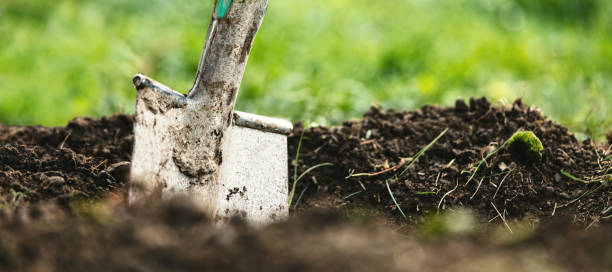
At the graveside, mourners may take turns shoveling Earth into the grave, a profound and humbling act known as the truest kindness because it cannot be repaid. It grounds the moment in reality and invites closure. After burial, we honor our loved ones by placing rocks instead of flowers on their graves. Stones symbolize permanence, unlike flowers that fade, rocks endure. Each stone left behind is a small act of remembrance: a sign that someone visited, remembered, and carried the person’s memory forward.
To help arrange your funeral needs, we recommend contacting Epstein Memorial Chapel. Funerals can take place at Beth Tikvah, graveside, or at Epstein Memorial Chapel.
The Mourning Process
What is Shiva?
Shiva (from the Hebrew word for seven) is the initial week of mourning after burial. Some chose to observe Shiva for up to seven days. Friends and community members traditionally “pay a shiva call,” meaning they visit the home to offer comfort. Food is often brought, both as a practical kindness and to remind mourners to eat when they might not feel like it. A memorial candle is lit inside the home and sometimes prayer services are held so mourners can recite Kaddish together. The intention is not to isolate but to create space for grief in a setting of comfort and presence; it’s about showing up, listening, and being present. Silence, when offered with warmth, can be as healing as words. Upon the conclusion of Shiva, it is customary to take a walk around the block, symbolizing a return to society.
The Two Stages of the Mourning Process: Shiva & Shloshim
Judaism recognizes that grief evolves over time. After shiva ends, mourners enter shloshim, the thirty days following burial. During this period, mourners gradually resume daily routines while continuing to remember and honor their loved one. For those mourning parents, the period of saying Kaddish extends to eleven months. These structured stages teach us that while loss is permanent, its intensity softens as life and memory coexist.
The Importance of Showing Up
The mitzvah of comforting the bereaved is one of the most meaningful acts of kindness in Jewish life. You don’t need perfect words or deep theology; your presence is the prayer. Simply showing up at a funeral, attending shiva, or sending a heartfelt note reminds mourners that they are not alone. In a time when people often shy away from grief, Judaism calls us toward it with open arms and open hearts.
Continuing Bonds & Memory…
Long after shiva and shloshim end, Judaism offers opportunities to keep memory alive. Lighting a Yahrzeit candle on the anniversary of a loved one’s death, participating in Yizkor memorial services on festivals (Yom Kippur, the final day of Sukkot, the final day of Passover, and during Shavuot), and giving tzedakah in their name all keep their light burning within our community.
In moments of loss, Judaism calls us not to retreat but to connect. Through our rituals, we learn that mourning is not an ending; it is a bridge between love remembered and love renewed.
May this guide help you approach death and mourning with greater understanding, comfort, and courage, and may it remind us that showing up for one another, even in grief, is one of the holiest acts we can perform.
HOW-TO WITH BETH TIKVAH
We’re excited to introduce a new monthly feature called How-To with Beth Tikvah! Each month, we’ll explore a different aspect of Jewish life, from celebrating holidays and hosting Shabbat Dinners, to navigating life’s milestones and moments of loss, this series will help deepen your understanding of Jewish practice in a Reform context.
Our goal is simple: to make Jewish living accessible, meaningful, and relevant for everyone in our Beth Tikvah community. Whether you’re learning something new or rediscovering an old tradition, “How-To” offers practical guidance with a Beth Tikvah touch!
Sources & Further Reading:
Union for Reform Judaism. “Death & Mourning.”
Union for Reform Judaism. “Preparing for a Jewish Funeral: A Guide.”
JCFS Chicago. “Traditional Jewish Ritual and Mourning Practices.”
Union for Reform Judaism. “Why We Offer Green Burial in Our Community.”
Union for Reform Judaism. “What is Reform Judaism’s position on Cremation?”
My Jewish Learning. “Why Jews Put Stones on Graves.”
Union for Reform Judaism. “Everything You Need to Know About the Jewish Custom of Shiva.”

November 19, 2025