
News & Events
Beth Tikvah Blog
Give the Gift of Tomorrow
October 11, 2026
Today, I give blood in memory of my father as a way to honor his legacy. I remember, as a child, joining my dad when he went to donate blood, and I remember with pride the first time, when I was 16, that we were able to donate together. He was a doctor, and he patiently explained to me (several times) the different blood types and how important it was for us to donate with ours.
“It’s a way that any person can save a life,” he told me, and, “Not everyone is able to donate, but those who can should.” He was no stranger to saving lives in his profession, but he still donated as often as he was able, and by the end of his life, he had donated well over 10 gallons of blood.
My father’s words have stuck with me, and they have been joined by a chorus of voices from our tradition. Leviticus 19:16 teaches, “You shall not stand idly by the blood of your fellow,” reminding us that if we can save a life, we must do so. Mishnah Sanhedrin 4:5 adds, “Whoever saves one life… is considered as if he saved the entire world.” In the Talmud, we’re taught that pikuach nefesh, saving a life—or even the potential to save a life—is a powerful obligation, even if we must violate Shabbat to do so (Yoma 84b–85b).
Giving blood is a value that, for me, lives at the nexus of memory, religion, and hope. When I give, I honor the values my father bestowed, personally and religiously, and I give someone else the gift of tomorrow.
We hope you will join us in giving at our Red Cross Blood Drive at Congregation Beth Tikvah on Tuesday, October 20, from 12:00–6:00 p.m. You can register in advance or simply walk in that day.
To schedule an appointment, visit RedCrossBlood.org and use sponsor code bethtikvah. Questions can be directed to Brotherhood member Art Flesch at artflesch@hotmail.com.
With gratitude,
Rabbi Karen Martin
Mazel Tov to our Difference Makers!
October 9, 2026
Jewish tradition teaches us that at any given moment in time, there are 36 righteous individuals who are privileged to behold God’s presence and who, because of the sacred work they do, sustain the world. The origin of this notion is found in the Talmud, in tractate Sanhedrin (97b), where we learn, “There are not less than 36 righteous people in the world who receive God’s presence.” When I first learned this teaching, I was also made aware that lamed vavniks, as they are called in Hebrew, do not know how they are. (The name lamed vavnik is derived from the numerology of Hebrew letters in which every Hebrew letter also has a number. In this case, lamed = 30 and vav = 6; added together, they equal 36.) While we cannot apply to join the club, nor would we know where to send our application, we can aspire to be righteous in our work.
As we think about the individuals who make a difference in the world, I want to highlight that each year, the Columbus Jewish News selects 18 Difference Makers in our community. I am not suggesting that these 18 individuals are lamed vavniks, but perhaps they can inspire all of us to think about how we can make a difference in the world we encounter on a daily basis. While I want to extend my congratulations to all, I want to highlight the two members of this year’s class who are Beth Tikvah members, Bill Byers and Tanya Shats. If there is one character trait that might help them qualify as lamed vavniks, it is their humility. When I wished each of them a mazel tov, they showed their humility, essentially saying that others were more deserving.
Bill has been an incredible leader in the Jewish community. Through his leadership and vision, he has helped guide us into the future as we better understand our security needs so that we can be active participants in Jewish life and the Jewish community can thrive. Over the years, I have had numerous conversations with Bill about the challenges we face as a Jewish community. Bill is always a listening ear and someone who brings innovative ideas as we think about a pathway forward. Through Bill’s leadership and vision, we are setting the standard for security in Jewish communities across North America.
Working with Tanya as our Social Action chair has been a joy. Her first entry point into Beth Tikvah was when she began serving as our Mitzvah Day Chair and then became our Social Action Chair. Tanya brings incredible joy and resolve to the work she does at Beth Tikvah, helping us achieve our vision of making the world we encounter a better place. Perhaps even more important than her volunteer work is her professional work where she helps support foster children, some of our community’s most vulnerable. She helps to ensure they are loved, supported, and able to find places where they can grow and thrive.
We should be proud of our fellow Beth Tikvah members, Bill and Tanya, and we extend a mazel tov to all those who make a difference in our community. As we read about the special work each of them does, may we be inspired to make a difference as well. Mazel tov!
Shabbat Shalom,
Rabbi Rick Kellner
Board Role Change Announcement
October 4, 2026
After several years of service as Board Treasurer, Jonathan Beck has announced that he is stepping down from this role. Jonathan has helped guide our congregation’s finances with great thoughtfulness and dedication, and we are deeply grateful for the many ways he has contributed to the strength of our congregation.
We are pleased to share that Liz Shafran has stepped into the role of Treasurer, moving from her position as 2nd Vice President. Liz has been a dedicated member of our congregation for many years and brings extensive nonprofit board and treasurer experience, making her a great fit for this role.
Jenny Byers has been voted in as 2nd Vice President, an interim role she graciously accepted mid-cycle. We are excited to welcome Jenny back to our Board of Trustees! Jenny is also a longtime member and a great friend of Beth Tikvah.
Please join us in thanking Jonathan for all he has done and in welcoming Liz and Jenny into their new roles.
Warmly,
Tara Rozen, Board President
Reclaiming a Hidden Jewish Story
Written by Hannah Karr
Parts of our collective Jewish story have remained hidden for generations behind the Iron Curtain. Jews who grew up under communism carried those experiences with them, and after immigrating, their stories became woven into the tapestry of American Jewish life, sometimes without being fully told. On Yom Kippur afternoon, Rabbi Rick Kellner invited Beth Tikvah congregants Adam Major, Polina and Inna Litvak, Mark and Yulia Bar, and Valia and Vitaly Bergelson to bring some of those stories into the light.
The program was part of Beth Tikvah’s ongoing effort to tell more of the totality of the Jewish story, including chapters that may be less familiar. The panelists’ experiences stretched across cities and generations, but common tensions resurfaced. For most of the group, Judaism was something they knew belonged to them without being introduced to the depth of what that meant.
For Adam Major, a defining reality of growing up under communism was the constant “distinction
between what you’re saying at home versus what you can talk about outside the house.”
Adam’s memory speaks to something broader than the concealment of Jewish practice. Growing up meant learning to monitor what you said and understanding that openness could carry consequences. Before a child could even begin to ask what being Jewish meant, there was already a lesson in secrecy; some parts of who you were belonged behind closed doors.
Polina and Inna Litvak remembered homes where pieces of Jewish life survived without being explained. Inna recalled growing up surrounded by family gatherings, her grandmother’s cooking, music, and Yiddish. Yet the reasoning behind these traditions remained unspoken. Even the Jewish history of their hometown, Kishinev, Moldova, the site of the 1903 pogrom, was largely absent from what they were taught.
For Mark Bar, Jewish identity carried an immediate sense of danger. He remembered being stopped on the street by older boys who targeted him because he was Jewish. “It was very, very challenging,” he said.
“I was very scared.”
For Valia Bergelson, reclaiming Judaism became an act of resistance. In 1971, after applying to leave the Soviet Union to move to Israel, she spent two years as a refusenik. During this time, she began studying Hebrew.
“It was very difficult to learn,” she remembered, “because there were no study books.” People turned to the few books found on the black market; they had to actively seek out the parts of their stories the Soviet system attempted to suppress.
“There was nothing to maintain. There was no Jewish life,” said Yulia Bar. She knew she was Jewish, but understood it as her nationality or ethnicity. “I had no idea it was a religion.”
Still, Judaism lived in the foods prepared by her family, the Yiddish conversations overheard at her grandparents’ home, and in an unspoken understanding that some things are better left unsaid. “It was kind of a secret,” Yulia recalled. “We don’t talk about it.”
She remembered her grandmother grating an apple and adding honey, a favorite childhood snack that she described as “the taste of my grandma’s house.” She wondered why none of her friends ate apples the same way. Only years later, after moving to Israel and experiencing Rosh Hashanah, did she understand what was preserved in her grandmother’s kitchen all along.
Yulia’s family story carries the scars of the Holocaust. Members of her family were murdered, while one of her grandfather’s brothers escaped as a teenager and eventually made his way to Columbus, Ohio. For 30 years, Yulia’s grandfather did not know what had happened to him. When the brothers finally reconnected in 1975, that reunion ultimately helped bring Yulia’s family to Columbus.
“Jewish story was not a religious thing,” she explained. “It was family history because we are Jews.”
Coming to the United States did not automatically restore all that was lost. Several congregants described discovering Judaism more deeply through their children and grandchildren, through PJ Library, the JCC, synagogue life, and other Jewish institutions.
As they became parents, Mark and Yulia realized that Jewish identity does not appear on its own. “If we don’t determine for ourselves who we are, someone will do it for us, and it won’t be a Jew,” said Yulia.
Our congregants who grew up under communist rule learned early how to conceal their Jewishness. The challenge then became intentionally creating Jewish lives for their children and grandchildren. They had to learn how to make Judaism visible, accessible, and joyful in once impossible ways.
When Rabbi Kellner asked what message they hoped others would carry forward from the conversation, Vitaly Bergelson answered: “Don’t be afraid to be a proud Jew.” His words gave voice to the transformation between the lives these panelists inherited and the ones they have proudly built.
“These stories are part of our collective story,” concluded Rabbi Kellner. “We are the sum of the stories that we tell about ourselves, and this is part of who we are.”
For decades, Soviet Jews were told what parts of themselves were safest left unspoken. Yet Jewish identity endured. It lived on in the Yiddish overheard at their grandparents’ house, matzah baked at home, apples mixed with honey, secret Hebrew and history lessons, and an active awareness that their differences connected them to something larger.
Questions left unanswered by years of Soviet suppression are still unfolding. By telling these stories, our congregants returned a once-hidden chapter to the collective Jewish story where it has always belonged.
Written by Hannah Karr, Director of Marketing & Community Engagement at Congregation Beth Tikvah
September 29, 2026
Building the Community We Seek
By Tara Rozen, Board President
Shana Tova! About a month ago, I enjoyed meeting new and prospective members at our annual event. I was chatting with a prospective member as their young child played nearby when he asked me a question I’ve heard in various forms over the years: “Are there many Jews on this side of town?”
I got the sense he was coming from a large Jewish community where Jewish kids were prevalent in classrooms and ended up on the same sports teams together…where adults didn’t have to explain why they would be missing work for holidays in September. If you come from a place where Jewish life is concentrated and woven into your daily routine, you will likely feel a difference when you move here. Northwest Columbus has more Jewish residents than many people realize, but we are spread across numerous suburbs and neighborhoods. I’ve spent some time thinking about his question, and I’ve realized that the question may be rooted in the desire for that feeling of belonging. And the answer may depend less on how many Jewish people actually live here than on how impactful the community feels.
When our kids were young, we intentionally looked for a Jewish community, and we were lucky enough to find it at Beth Tikvah. The relationships I built through this congregation changed my perception. The people I met here became the ones I socialized with, gathered with for holidays, and texted when I needed a handyman recommendation. Over time, this Jewish community literally became a part of my daily life. We were still a little geographically spread out, but not as much as I had thought, and the community no longer felt so distant. I started running into my Beth Tikvah community at my kid’s school, at stores, theaters, and sporting events. The population had not changed; what changed was my connection to it. Maybe in a similar way that, after buying a new car, you begin noticing that same make and model everywhere you go.
Once something becomes part of your life, you begin noticing it all around you. I would guess that this experience is exactly what Beth Tikvah’s founders had in mind.
Beth Tikvah was named the House of Hope by people who hoped they could build the community they were seeking. But hope alone would not be enough. They needed to create a home—a central place to gather for worship, learning, and celebration—a place that could make the geographic distance between people feel smaller and allow a community to take shape.
That hope was never passive; the founders—and all those who carried their vision forward—turned this into a place where Jewish life could be visible, meaningful, and shared. More than 65 years later, that commitment has not changed. Beth Tikvah remains an anchor for Jewish life in this part of Columbus—a place where we learn about and practice Judaism, gather, and build our community.
Many of us came here seeking that sense of belonging—the feeling of being surrounded by people who share our traditions, humor, and shorthand. You can find it in Northwest Columbus, but it may only reveal itself slowly over time. The more we participate and invest in relationships, the more present the community becomes in our lives. Our strength has never come from being the largest group; it comes from our commitment to gather and form relationships that strengthen our community. We build those relationships by showing up—for holidays, mitzvah projects, adult learning, and Shabbat dinners. A conversation after an adult learning class could lead to an invitation for coffee. A chat after a Shabbat service may lead to getting together for a show you both want to see. And parents lingering during religious school might just turn into a Sunday morning running group.
The Jewish community is already here; the more we participate in it, the more it becomes woven into the daily rhythm of our lives.
And that is how a strong, joyful Jewish community grows: not because Jewish life surrounds us at every turn, but because we’ve learned how to seek it, nurture it, and build it wherever we are. And that may be the greatest gift we can give ourselves and our children: the ability to create the community we seek even when it’s not immediately visible. Rosh Hashanah reminds us that what we hope for can still be created through the choices we make—that how we choose to react, interact, and connect can make a real difference in the life unfolding around us.
This time of year, specifically, we are asked to reflect on the ways we have missed the mark—hopefully just in small ways, though sometimes in larger ones as well. Jewish tradition teaches that those missteps do not define us. They are temporary departures from our inherently good souls. Teshuvah is the process of finding our way back to this core. This time of year is not about perfection but direction: making choices that move us closer to being the kind of people we want to be.
As we step into this New Year, we are reminded that this moment is a gift of hope because it’s a chance to begin again. We can listen with more compassion, judge with more humility, and move ourselves forward with greater intention. Each choice helps shape who we become, and who we become helps shape the community we are building together.
So, “Are there many Jews on this side of town?” As I look around this sanctuary, my answer is yes.
May the year ahead deepen our connections, strengthen our community, and fill our lives with sweetness and hope. Shana Tova.
Tara Rozen, Board President
September 27, 2026
Pause for Poetry
Reflections by Rabbi Karen Martin
The Man from Gath by Silvia Margolis (1900-1966) from As the Dial to the Sun
Some vowed it was abandonment
To pure philosophy
That made his stillness biting
And bitter as the sea.
While others swore his arctic silence
Derived from some deep need
To do uncommon penance
For an old and grave misdeed.
But one who knew him best of all
Had only this to say:
Not all the dead are buried,
Not all are laid away.
A few months ago, I was gifted a copy of As the Dial to the Sun by Silvia Margolis. It’s a small book of striking poetry, with images that are poignant and at times perplexing, and at other times gripping in the way they capture a moment. Born in Poland, she was a graduate of OSU and made her home in Dayton. I could have shared any number of her poems here (and will likely share more in the future), but this simple poem felt right for this moment.
In “The Man from Gath,” Margolis creates a portrait of a man who is remote, still, cold, bitter, and uninviting. All these traits are seemingly designed to keep people at a distance. Still, the man is the object of curiosity. It is possible that the title holds some hint as to why this man is an object of interest. Gath was a Philistine city, famously the home of Anakites, giants, including Goliath, David’s outsized opponent. Perhaps there is something about this man’s stature, physically or figuratively, that draws the eye.
The man is not wholly unknown or unknowable, as there is one who knows him at least to some extent, though the narrator is somewhat cagey since “best of all” is relative: it could suggest an intimate, a longer but not necessarily deeper acquaintance, or somewhere in between. From this friend or acquaintance, we learn that the man is cold, remote, and bitter because “not all the dead are buried, not all are laid away,” suggesting that this man is one of this number—dead, but still among the living.
It’s October, so I imagine I’m not the only one whose brain took a little detour to vampires or zombies, but of course Margolis is being metaphorical rather than leaning into the paranormal. Some animating force inside this man is gone.
Margolis’s poem paints the image of one who has closed himself off to companionship, who pushes people away and holds them at a distance. For some reason, something has died within him. The poem speculates about philosophy or past misdeeds and guilt-fueled penance, but the way others hover at the edges, the force with which the titular man drives people away, and even the title’s reference to a city made famous by the death of one of its own all suggest that grief is the cause of the man’s inner death, though we can only speculate on the cause.
At the end of Sukkot, on Shmini Atzeret, the final day of the festival, we change a line in the second blessing of the T’filah, G’vurot, from morid hatal, “who causes the dew to fall,” to mashiv haruach u’morid hagashem, “who causes the wind to shift and the rain to fall.” This change reflects the seasonal change from summer to winter (we switch back at Passover).
In this second blessing, traditional liturgy blesses God “who gives life to the dead” (m’chayeih meitim), and the insertion of dew and rain ties this prayer to the cycles of nature. Reform, reading this phrase literally and rejecting the theology of bodily resurrection, has long substituted the language “who gives life to all.” Mishkan T’filah and Mishkan HaNefesh, our Reform prayerbooks for Shabbat and the High Holy Days, offer both options.
During the Neilah service, the final service of Yom Kippur, I was struck by the following reading offered on the left side of the page:
When greeting a friend after more than a year—say:
“Praise the Power that gives life to the dead.”
When the prisoner is freed and the sick one is healed—say:
“Praise the Power that gives life to the dead.”
When asking forgiveness and the other forgives—say:
“Praise the Power that gives life to the dead.”
When words of Torah unlock the heart and open the eyes—say:
“Praise the Power that gives life to the dead.”
When evil is stopped and goodness prevails—say:
“Praise the Power that gives life to the dead.”
When hope fills the spirit of one who despaired—say:
“Praise the Power that gives life to the dead.”
When the hearts of the parents turn to the children
and the hearts of children turn to the parents—say:
“Praise the Power that gives life to the dead.”
The prayer ends with this translation of the final line of the blessing: “We praise You, eternal Power—Source of our immortal yearnings, our undying hopes.”
This blessing, which draws on the Talmud (B’rachot 58b) and the words of the prophet Malachi (3:24), challenges the idea of death as a permanent end. When read against Margolis’s poem, it is a reminder of hope—we can rekindle lost friendships, we can make amends for wrongdoing, and even in the darkest of despair, so long as we live, there’s the possibility of hope.
As the seasons make their steady way toward the bitter darkness of winter, may we find good companions and nurture that which keeps us warm. And should we encounter the man from Gath, or someone like him, let us extend our hands and try to share our light in the hope that life will find a way to bloom again. Praise the Power that gives life to the dead.
L’Shalom,
Rabbi Karen Martin
September 27, 2026
We Lift our Lamp
Sermon – Rosh Hashanah 5787 – Rabbi Karen Martin
Back in January, members of five different Worthington faith communities came together for the first gathering of faith250, a project to honor the 250 years since the founding of our country and to help build bridges and relationships across faith communities through the study of four of America’s foundational texts.
As we began our conversation around The New Colossus, the poem found on the base of the Statue of Liberty, Rabbi Kellner invited those gathered to share the story of how we or our families came to this country. In hearing each other’s stories, we learned that around our table sat a Daughter of the Revolution, first and second generation immigrants, and several people in between.
The New Colossus was something of a strange choice to kick off our conversations about the foundational texts of this country. It wasn’t the earliest text – The Declaration of Independence, nor the most hard-hitting – What to a Slave is the 4th of July by Frederick Douglass, which truly does not pull its punches.
Nor was it the most surprising, because America the Beautiful has two verses that I – a show choir kid! – did not know existed. Rather, The New Colossus was an entreé into the American story that many of us shared – the story of coming to America in hopes of finding a better future for ourselves and our children.
The New Colossus was written by Emma Lazarus, a Sephardic Jew in 1883 that tells a story of America that is at once aspirational and rooted in the American story as a nation of immigrants:
Not like the brazen giant of Greek fame,
With conquering limbs astride from land to land;
Here at our sea-washed, sunset gates shall stand
A mighty woman with a torch, whose flame
Is the imprisoned lightning, and her name
Mother of Exiles. From her beacon-hand
Glows world-wide welcome; her mild eyes command
The air-bridged harbor that twin cities frame.
“Keep, ancient lands, your storied pomp!” cries she
With silent lips. “Give me your tired, your poor,
Your huddled masses yearning to breathe free,
The wretched refuse of your teeming shore.
Send these, the homeless, tempest-tost to me,
I lift my lamp beside the golden door!”
These words, an explicit statement of welcome, were written in the wake of the Chinese Exclusion Act which passed the year prior, growing nativism, and widespread hostility toward immigrants in general and in particular against the tide of Jews immigrating to America fleeing the pogroms in eastern Europe and the Pale of the Settlement. Against this backdrop, Lazarus’ poem was a defiant and hopeful statement of welcome and succor. Lazarus challenged America to live up to her founding ideals, which, it turns out, is a very American Jewish thing to do.
That same spirit of challenge runs in her family and is, in turn, our legacy. Emma Lazarus was not the product of a new immigrant family. Had she so wished, she could have joined the Daughters of the Revolution as a direct descendant of the first Jews to arrive in America. Her people came from Portugal, emigrated to Holland, and travelled from there to Recife in Brazil.
They were forced to flee Recife when Portugal captured the colony and imposed the Inquisition in 1654. From there, a group of 23 Jewish refugees made their way to New Amsterdam, a colony of the Dutch West India Company, forming the first Jewish community in North America.
Many of these refugees had nothing, not even the money at the outset to pay for their passage.
Peter Stuyvesant, the governor of the colony, was not pleased and wanted to kick them out as soon as they settled their debts. He wrote a strongly worded letter to the directors of the Dutch West India Company asking permission to do just that given the well known “repugnance” and the “deceitful nature” of the Jews. Unfortunately for him, the Jewish refugees wrote to their family, friends, and coreligionists back in Holland for their support, and they came through. It turns out that Jews were significant investors in the Dutch West India Company, and new world capitalism won out against Old World discrimination. Stuyvesant was ordered to give liberty to the Jews, to allow them to live and trade both within the colony and beyond.
Appalled at the idea, Stuyvesant wrote back to the directors, “To give liberty to the Jews will be very detrimental… Giving them liberty, we cannot refuse the Lutherans and the Papists.”
Stuyvesant resisted at every step. While several of the Recife refugees pushed back, one, Asher Levy, was particularly tenacious. When Stuyvesant wanted Jews to pay hefty fees in lieu of serving in the protection of the colony, Levy demanded the right to stand guard and join the militia–at least in part because he couldn’t afford the fees at the time.
Few colonists were able to get licenses to become butchers, but Levy, a few years later, was able to secure such a license, only to be told he had to become a Burgher of the colony to practice, and Jews were not permitted to do so. He petitioned the directors to become a Burgher – and Stuyvesant, already in a precarious position, was forced to grant the status. Levy then petitioned for permission for his shop not to sell pork and to be closed on Saturday for the Sabbath. He was one of the first Jews to be permitted to sit on a jury – ironically, or perhaps deliciously at the trial against Peter Stuyvesant for his conduct in the loss of the colony to the British.
Levy and his comrades demanded that Jews be treated as all other colonists, forging a path through which all could hope to receive equal treatment under the law. They created homes, settling in this nascent nation, living out the command that God gave to the prophet Jeremiah for the Babylonian exiles 2000 years before:
Jeremiah 29:5-7
(5) Build houses and live in them, plant gardens and eat their fruit. (6) … Multiply there, do not decrease. (7) And seek the welfare of the city to which I have exiled you and pray to GOD in its behalf; for in its prosperity you shall prosper.
And as they did so, they continued to work both for the good of the nation, and to create a space for themselves within it.
There was a lot of work to do. While the Constitution of the United States forbade religious tests for federal offices, almost every state of the newly minted United States required test oaths for office and the majority required anyone holding a state office to be Protestant, or at least Christian.
Nevertheless, Jacob Henry ran for and won election to the State Assembly in North Carolina in 1808 and 1809. His opponent, perhaps a bit sour, argued that he should not be allowed to take his seat in the assembly since he was Jewish and could not take the test oath, though technically the test oath itself was in violation of the state’s Declaration of Rights which read: “that all men have a natural and unalienable right to worship Almighty God according to the dictates of their own conscience.”
In Jacob Henry’s address to the assembly, he demanded:
Are you prepared to plunge at once from the sublime heights of moral legislation, into the dark and gloomy caverns of superstitious ignorance? Will you drive from your shores and from the shelter of your constitutions, all who do not lay their oblations on the same altar, observe the same ritual, and subscribe to the same dogmas?…
For all know, that persecution in all its shapes and modifications, is contrary to the genius of our government, and the spirit of our law; and that it can never produce any other effect, than to render men hypocrites or martyrs.
He was allowed to take his seat in the assembly, and paved the way for other Jews and other non-Protestants to serve at all levels of government.
During the civil war American Jews experienced their first and only exile on American soil, this time in the form of General Order 11, issued by Ulysses S. Grant, expelling all Jews from the Military Department of Tennessee, which extended from Cairo, Illinois through parts of Kentucky and Tennessee on the charge of smuggling, despite the lack of evidence. Following the expulsion, Caesar Kaskel, a Jewish man from Peducah, KY hurried to Washington D.C. to speak with Abraham Lincoln:
President Lincoln famously asked, “And so the Children of Israel were driven from the happy land of Cannan?
Kaskel replied: “Yes, and that is why we have come unto Father Abraham’s bosom, asking protection.”
“And this protection they shall have at once,” Lincoln replied.
When later asked why he countermanded Grant’s order, Lincoln answered, “To condemn a class is, to say the least, to wrong the good with the bad. I do not like to hear a class or nationality condemned on account of a few sinners.”
For the record, Grant did later regret his order and brought several Jews onto his cabinet when he became president.
A generation later, Emma Lazarus wrote the words of The New Colossus, again pushing back against the forces of nativism and bigotry that sought to paint all immigrants with the broad brush of condemnation. Her words became a beacon of hope for those seeking a better life, and for generations it shaped many of our understandings of America as a country that cares for all who come, that lifts people up, and helps them make a better future for themselves and their families. An America whose capacity for compassion is a source of colossal strength.
Last January, we debated whether her words were a lie, a challenge, or an aspiration. Ultimately, it is all three. Too often, when we fail to live up to that welcome, they’re a lie. Yet they were written as a challenge, a reminder of who we could be in the face of a country that, just over a century after its founding, was already forgetting its roots. To me, to many of us, they are aspirational: our hope that America will be a country that remembers the Biblical command to welcome the stranger, for we were strangers in the land of Egypt, and perhaps also on the Lower East Side.
In 1790, Moses Seixas, Warden of the Hebrew Congregation of Newport, RI welcomed President Washington to Newport with the words, “Deprived as we heretofore have been of the invaluable rights of free Citizens, we now (with a deep sense of gratitude to the Almighty disposer of all events) behold a Government, erected by the Majesty of the People—a Government, which to bigotry gives no sanction, to persecution no assistance—but generously affording to All liberty of conscience, and immunities of Citizenship: deeming every one, of whatever Nation, tongue, or language, equal parts of the great governmental Machine.”
In 1905, at a ceremony marking the 250th year since the arrival of the first Jews in this country – those refugees from Recife, these words from President Theodore Roosevelt were shared:
Even in our colonial period the Jews participated in the upbuilding of this country, acquired citizenship, and took an active part in the development of foreign and domestic commerce. During the Revolutionary period they aided the cause of liberty by serving in the Continental army and by substantial contributions to the empty treasury of the infant republic. During the Civil War thousands served in the armies and mingled their blood with the soil for which they fought.
I am glad to be able to say, in addressing you on this occasion, that while the Jews of the United States…have remained loyal to their faith and their race traditions, they have become indissolubly incorporated in the great army of American citizenship, prepared to make all sacrifices for the country, either in war or peace, and striving for the perpetuation of good government and for the maintenance of the principles embodied in our Constitution.
For 372 years now, we have been a part of the tapestry of this country. As American Jews and Jewish Americans, we have shaped this country as much as it has shaped us. We came in search of refuge, with hopes based on the promise of a land that would judge us not on our faith but on our character and our contributions to this nation.
Time and again, we have challenged America to live up to its highest ideals for our sake, and for the sake of all who dwell here. Torah teaches us v’ahavta l’reiacha camocha – love your fellow as yourself, and Talmud goes further, that:
“We should sustain the non-Jewish poor with the Jewish poor, visit the non-Jewish sick with the Jewish sick,” – that we must care for the most vulnerable not only in our own Jewish communities, but in the broader communities in which we live– “for” Talmud tells us, “these are the ways of peace” (Gittin 61a 5).
Lit by the light of Torah, radiant as Liberty’s torch, we also worked to extend the promises and protections of equal treatment under the law to others.
Rabbi Abraham Joshual Heschel marched with Reverend Dr. Martin Luther King Jr. in Selma, and Rabbi Joachim Prinz, who fled Nazi persecution, spoke immediately before King at the March on Washington, warning against the pernicious perils of silence in the face of injustice. Jewish leaders supported political action to right the wrongs of racism and inequality in this country so actively that the Civil Rights Act of 1964, the Voting Rights Act of 1965, the Americans with Disabilities Act, the Japanese American Redress Act, and the Fair Housing Act Amendments of of 1988, among others, were all drafted in whole or in part the conference room of the Religious Action Center of Reform Judaism.
At this time, we’re facing antisemitism unlike anything we’ve seen in decades. I’ve had a handful of conversations in which people have mentioned making sure their passport is updated should “worse come to worst.” But I’m not ready to run yet. We have faced this before, and we have fought against the tide of bigotry and nativism with our words and actions.
We know how to make meaningful change in this country, how to fight for our voices to be heard, and how to envision a better tomorrow. We are not alone in this fight for a brighter future. We have friends and allies united in hope.
Tonight, we have looked back through history, drawing on our past to see where we’ve come from, to draw strength from those who went before and forged the paths we now tread. We know this country is not perfect and never has been. Longing for the past cannot build a better tomorrow.
But we can. On Rosh Hashanah, we symbolically re-enthrone God as our Sovereign and affirm our service to our highest values, justice and mercy, compassion, caring for each other, and for the most vulnerable in our midst. With Torah as our light, with every voice and every vote, we can work to ensure our government continues to be by and for the people, a government that is in service to the people, so that all people can practice their faith “according to the dictates of their own conscience.” We can build “a Government, which to bigotry gives no sanction, to persecution no assistance.”
Moses tells Joshua as he prepares to cross into the Promised Land, hazak v’ematz – be strong and resolute. We too must be strong and resolute in our convictions.
Together as generations of Jews who have gone before us, we must continue to challenge America to live up to her ideals, to make America a light unto the nations in truth, her lamp lifted beside the golden door.
L’shana Tova
Rabbi Karen Martin
Shishim Celebrates a Meaningful Season
Written by David Binkovitz
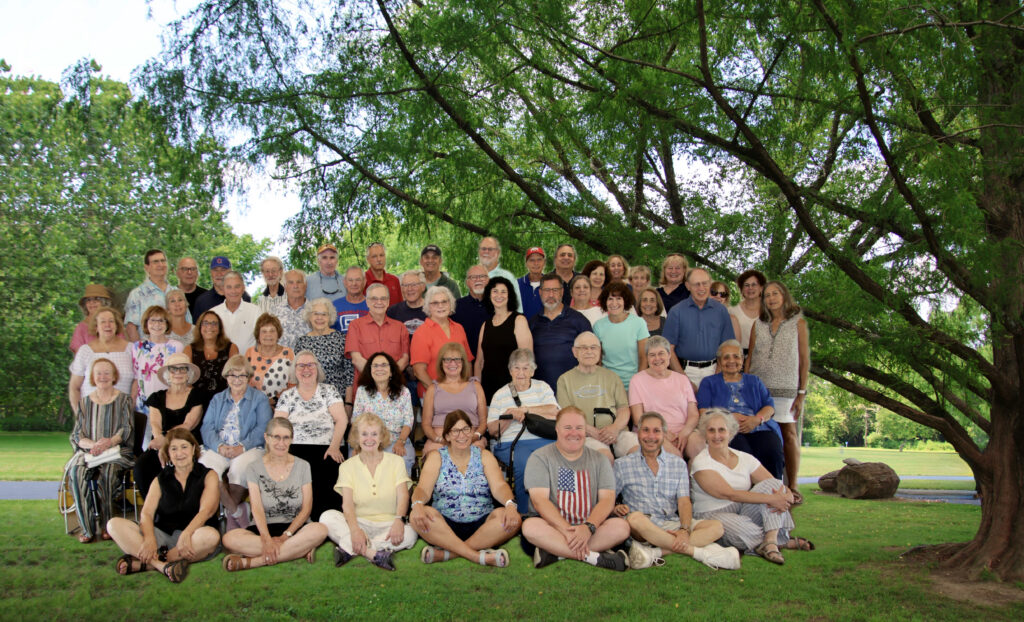
Shishim, Congregation Beth Tikvah’s senior group, ended its season with a picnic and concert in a park on July 9. Over 60 people from around the Columbus community attended. The picnic was held at Mirolo’s Community Shelter in Worthington. “We selected this site because of the beautiful natural setting surrounding the shelter as well as the array of amenities available at this site,” said Marcey Foreman, one of the event coordinators.
After a lunch from City Barbecue, Imber Solis provided musical entertainment. “We enjoyed her elegant vocals and acoustic guitar,” said Jackie Kon, a member of the Shishim planning committee.
Shishim also announced its new season of programs for September 2026 through June 2027.
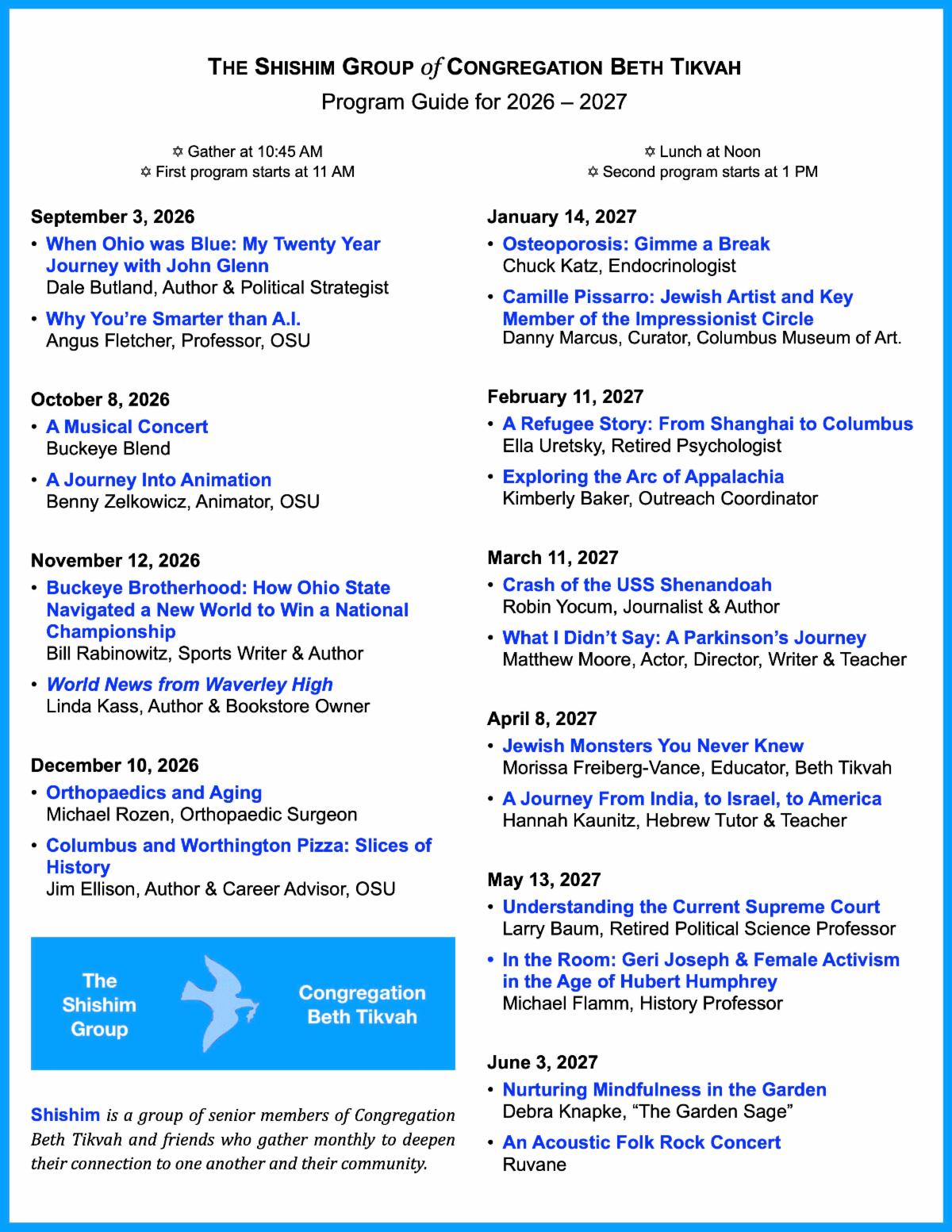
“Our planning committee has been hard at work finding a variety of speakers and entertainers,” said Jane Mitchell, Shishim’s chairperson. “The upcoming speakers will present diverse talks in the areas of history, art, literature, Judaism, gardening, and medical concerns for seniors. We even have lighter topics such as the history of pizza in Columbus as well as several musical concerts.”
The season starts on September 3 at 11:00 AM with former political strategist Dale Butland talking about “When Ohio was Blue: My Twenty-Year Journey with John Glenn.” At 1:00 PM there will be a talk by OSU Professor Angus Fletcher entitled “You Are Smarter Than AI.” A lunch will be held between the two programs.
Shishim, which holds its programs at Congregation Beth Tikvah, is open to the entire community. “Shishim’s outreach is to all seniors,” said Mitchell. “We have about 60 to 80 people coming to our programs each month from all around the Columbus area.”
If you would like to be added to the email list for monthly program messages, send a message to shishim@bethtikvahcolumbus.org.
Pursuing Justice
Morissa Freiberg-Vance, Tzedek America Rabbi Emily Feigenson Impact Fellowship
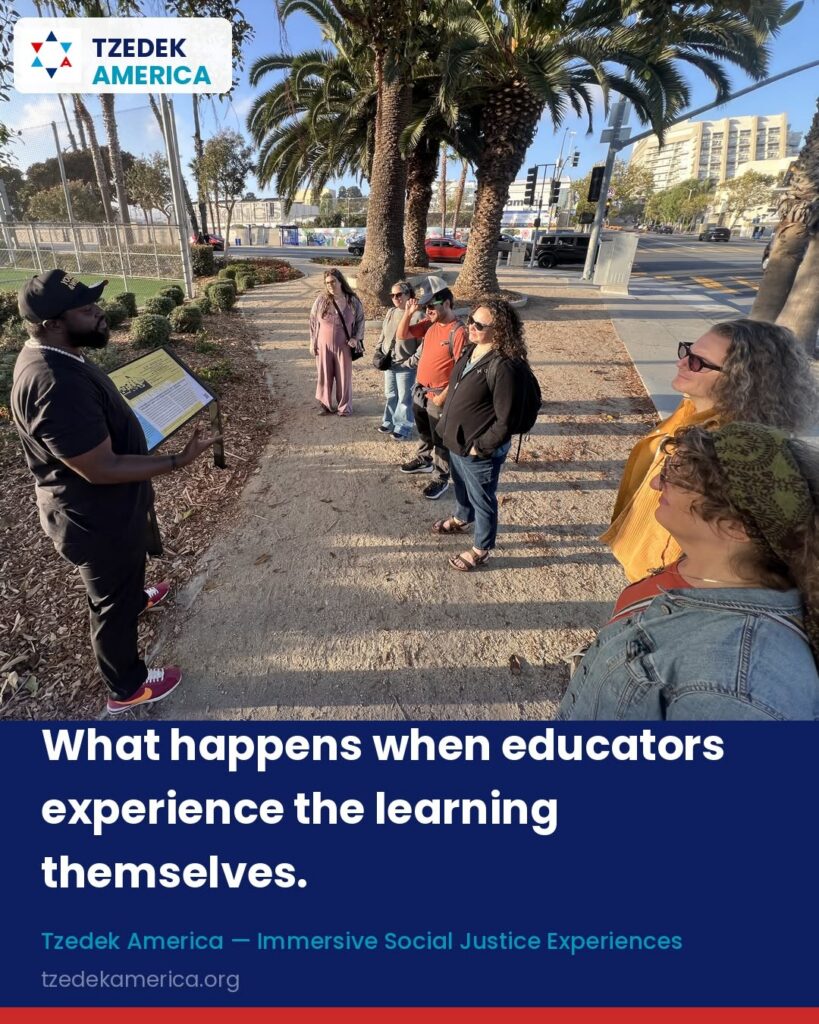
This summer, I had the privilege of completing the Rabbi Emily Feigenson Impact Fellowship through Tzedek America, a yearlong professional development experience for Jewish educators centered on social justice, Jewish values, and experiential learning. The fellowship culminated in an immersive educational journey through Los Angeles, where we explored what it means to live out the Torah’s repeated commandment to “welcome the stranger” and pursue justice in our own communities. Throughout the week, we visited organizations and neighborhoods that tell powerful stories of resilience, strength, and hope.
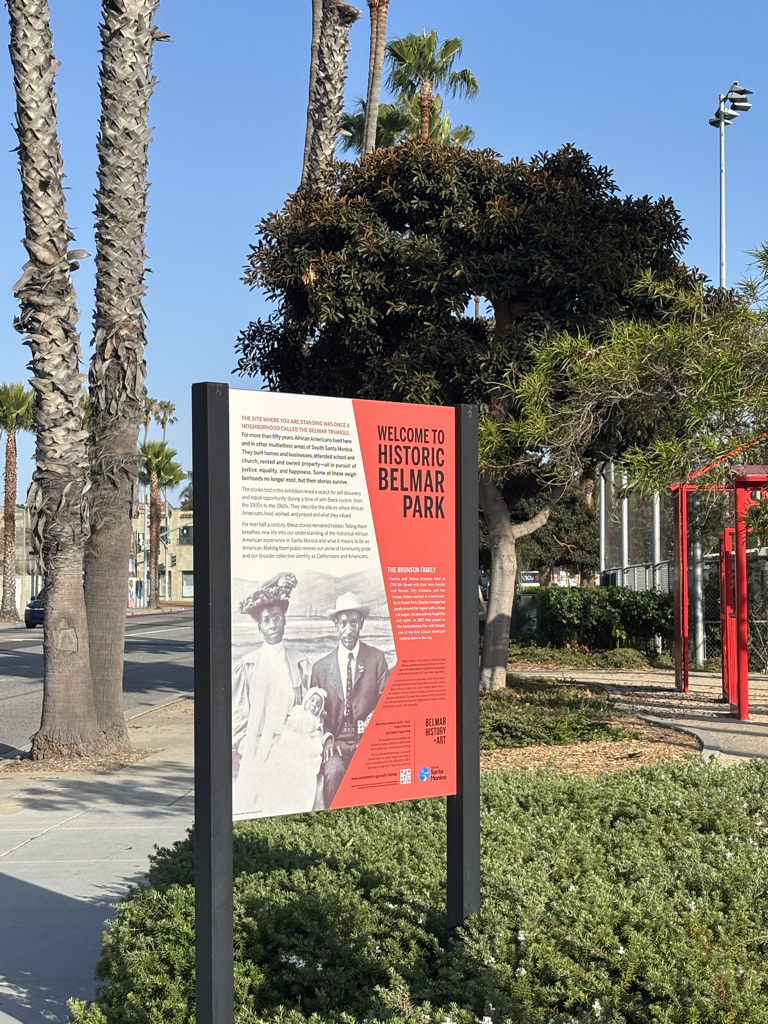
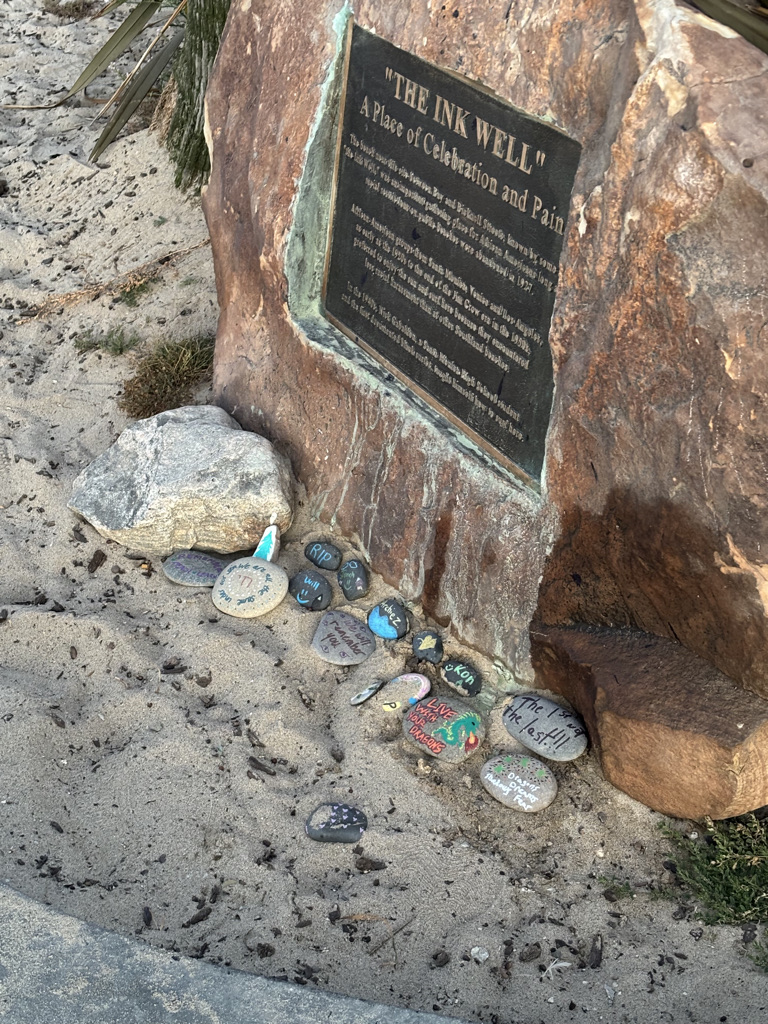
We began at Historic Belmar Park, which commemorates the thriving African American community that once existed there before it was destroyed through eminent domain in the 1950s. Our tour was led by Tzedek America educator Pastor Rondell Eskridge. At Inkwell Beach in Santa Monica, we learned about its history as a safe haven for African American beachgoers during segregation.
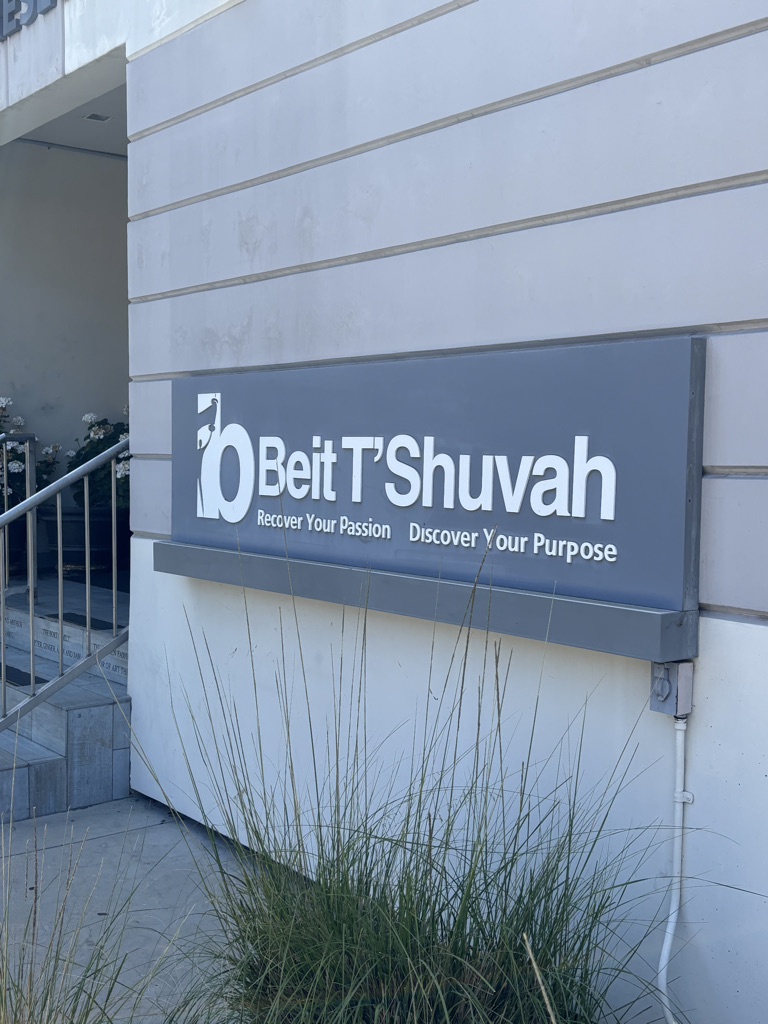
One stop that was especially meaningful to me was Beit T’Shuvah. As an organization that integrates Jewish spirituality, psychotherapy, and the 12-step program to support individuals recovering from addiction, its work beautifully demonstrates how Jewish values can be woven into healing, personal growth, and second chances. We heard testimony from residents and participated in a moving text study with their head rabbi, Iggy Gurin-Malous. We have welcomed Beit T’Shuvah educators to Beth Tikvah in the past, and I look forward to hopefully bringing them back for another program soon.
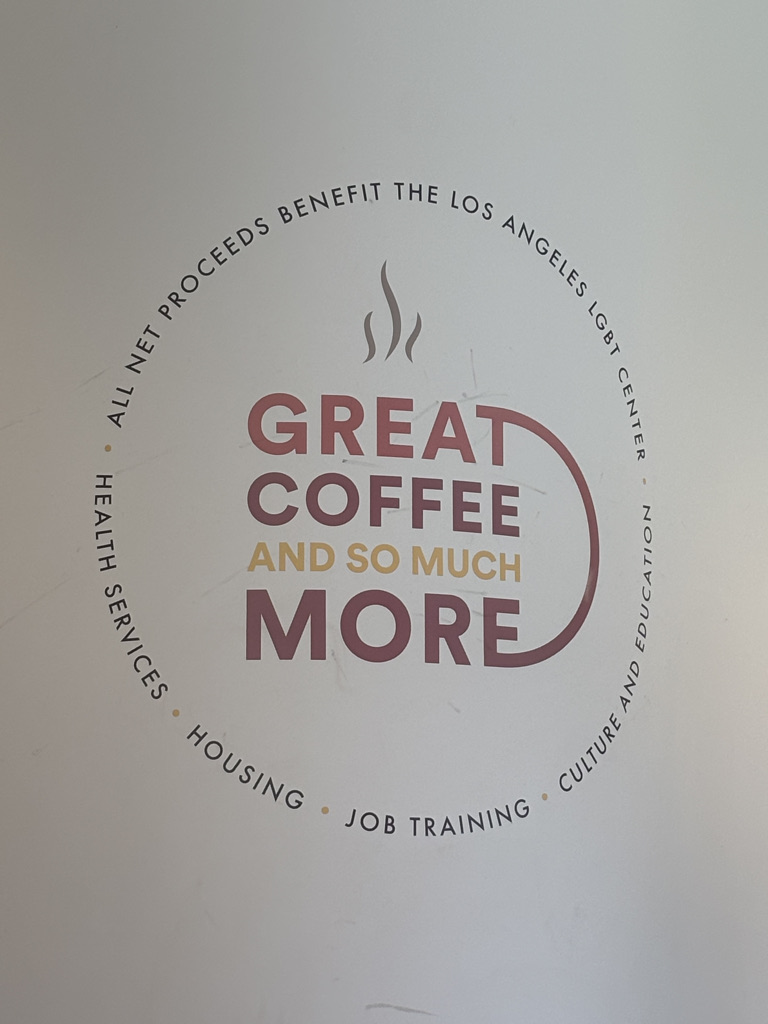
We also visited Liberation Coffee House, a social enterprise of the Los Angeles LGBT Center, where LGBTQ+ youth and older adults build job skills and community through its Culinary Arts program. We heard the story of a young person who moved to Los Angeles from a small town in rural California so they could be accepted for who they are. The LGBT Center provided them with housing, gender-affirming care, and now a job at the café.
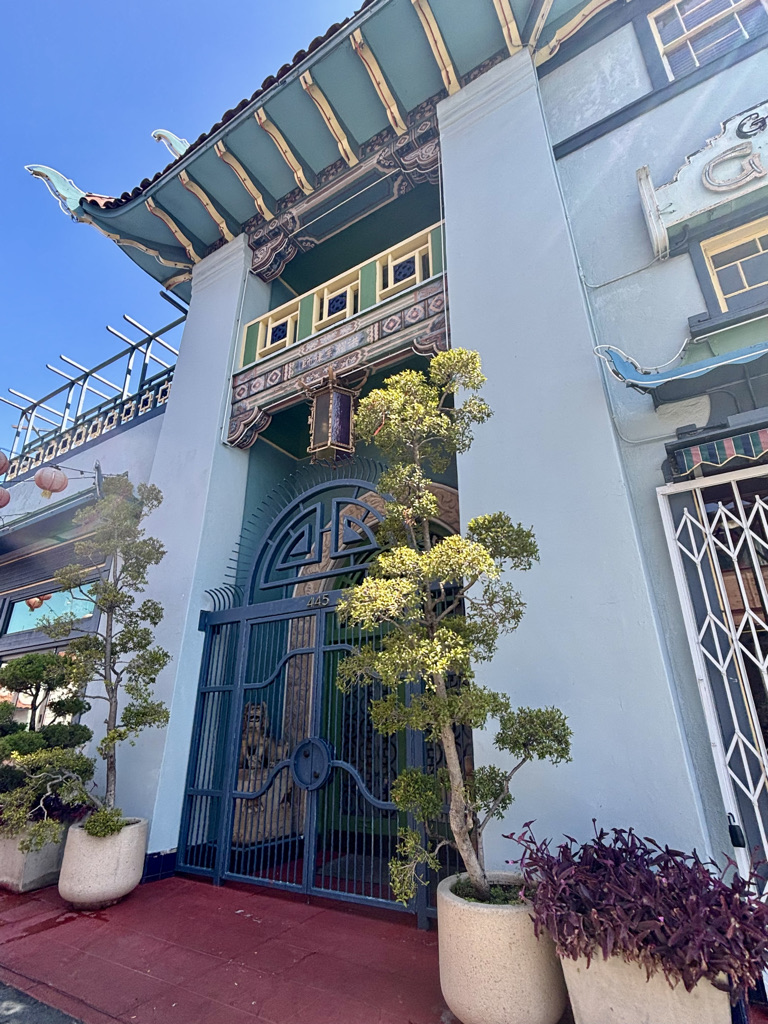
Our visit to Chinatown offered another powerful lesson, led by tour guide and local DJ Kev Lu. After the original Chinatown was demolished in the 1930s because of discriminatory housing policies, residents rebuilt their community while preserving their rich culture and traditions. We also learned how anti-Asian hate resurfaced during the COVID-19 pandemic, prompting community members to organize and protect one another. Their story is a testament to resilience in the face of repeated injustice.
One of the most inspiring experiences of the week was touring Homeboy Industries, the world’s largest gang rehabilitation and reentry program. For more than three decades, Homeboy has provided training, employment, counseling, and support to formerly gang-involved and previously incarcerated individuals, helping them rebuild their lives with dignity and purpose. Hearing our guide share his own journey of transformation was unforgettable and served as a powerful reminder of what becomes possible when communities choose compassion over judgment. Every major city in our country needs a program like Homeboy!
Perhaps the most impactful experience, however, was an afternoon spent with the Los Angeles Mission on Skid Row, distributing water and connecting with individuals experiencing homelessness. Out of respect for those we met, I chose not to take photographs. Instead, I left with stories, conversations, and a renewed sense of responsibility. With more than 70,000 people experiencing homelessness in Los Angeles County and critical funding for service organizations continuing to decline, the need is overwhelming.
This fellowship challenged me to think more deeply about justice, empathy, and the many ways Jewish values call us to engage with the world around us. It left me deeply concerned about those whom we call “strangers” in our community. It reminded me that tzedek, justice, is not simply an abstract ideal, but an ongoing practice of listening, learning, showing up, and recognizing the dignity inherent in every person.
As I prepare for another year with our Religious School and Adult Learning communities, I look forward to bringing these experiences into my work with our learners and families.

Pause for Poetry
Reflections by Rabbi Karen Martin
The Lanyard by Billy Collins
The other day I was ricocheting slowly
off the blue walls of this room,
moving as if underwater
from typewriter to piano,
from bookshelf to an envelope lying on the floor,
when I found myself in the L section
of the dictionary
where my eyes fell upon the word lanyard.
No cookie nibbled by a French novelist
could send one into the past more suddenly—
a past where I sat at a workbench at a camp
by a deep Adirondack lake
learning how to braid long thin plastic strips
into a lanyard, a gift for my mother.
I had never seen anyone use a lanyard
or wear one, if that’s what you did with them,
but that did not keep me from crossing
strand over strand again and again
until I had made a boxy
red and white lanyard for my mother.
She gave me life and milk from her breasts,
and I gave her a lanyard.
She nursed me in many a sick room,
lifted spoons of medicine to my lips,
laid cold face-cloths on my forehead,
and then led me out into the airy light
and taught me to walk and swim,
and I, in turn, presented her with a lanyard.
Here are thousands of meals, she said,
and here is clothing and a good education.
And here is your lanyard, I replied,
which I made with a little help from a counselor.
Here is a breathing body and a beating heart,
strong legs, bones and teeth,
and two clear eyes to read the world,
she whispered,
and here, I said, is the lanyard I made at camp.
And here, I wish to say to her now,
is a smaller gift—not the worn truth
that you can never repay your mother,
but the rueful admission that when she took
the two-tone lanyard from my hand,
I was as sure as a boy could be
that this useless, worthless thing I wove
out of boredom would be enough
to make us even.
It’s incredible to me the way memory works. Sometimes, I feel like my memory has more in common with Swiss cheese than a steel trap. Words won’t be where I need them, or I’ll remember every detail of a conversation, including where we were standing or sitting, but the name of my conversation partner eludes me. And yet, when I encountered this poem in When We See You Again by Rachel Goldberg-Polin, it felt like being teleported back in time. For Rachel, it was back to her own camp summers and the night she shared this poem with Hersh, who was killed after 328 days in captivity after being taken on October 7, 2023. For me, it was back to January of my senior year of high school, when my dad took me to the Key West Literary Festival to hear Billy Collins share his work. I read several of his books of poetry that year and was so excited to meet one of my literary icons.
Aspects of that trip came rushing back. Getting a hug from Billy Collins was pretty cool, but more poignant was the memory of how loudly my dad snored and how he would collect stories from everyone he encountered on the street. We shared a love of poetry and language. To borrow Rachel Goldberg-Polin’s language, he was my person.
Collins is a master of drawing out the deeply poignant in what might otherwise be seen as the painfully mundane. My kids have brought home myriad lanyards in different colors and states of completion. They litter their rooms and seem to spontaneously spawn in the backseat of my car. While these are not usually gifts, my younger son loves to draw pictures of hearts on whatever paper he can find and proudly presents them to me as a token of his love.
Goldberg-Polin zeros in on the last stanza of this poem, when Collins, as the speaker, confesses that in his youthful naïveté, he believed the gift of a lanyard (made with help and mostly out of boredom) was enough to repay all that his mother had given and done for him. He confesses this from a distance, no longer the child he was, and with this new perspective, no longer able to say the words to his mother.
Goldberg-Polin answers from the mother’s perspective:
I know how Hersh repaid me. He stayed alive and let me fight for him. For 330 additional days after Death came to the door of the opposite-of-shelter bomb shelter. Hersh let me prove how much I loved him by letting me go into the arena to battle without training or armor, just with my tiny fists of primal love. He gave me hope that I could save him by wrestling with the world. He kept breathing so that I would be motivated; he kept me motivated so that I would keep breathing. I was, and I still am.
I find her answer beautiful and deeply moving, but I also struggled with it because I struggle with the idea of debt in loving relationships. My parents didn’t keep accounts. Only in jest did I ever hear, “I gave birth to you, so…!” Life, care, and love were and are to be given freely and generously. To the extent that love is an exchange, I find myself repaid when my older son leans on me to show his affection between one thing and the next, or when my little one hands me yet another paper heart and asks for cuddles while sitting on the couch. I pray they never lose their affectionate natures.
In many ways, that’s the crux of the poem. It’s not about repaying in any real sense. Rather, it’s an acknowledgment of how perspective changes. As kids, we don’t see all that our parents pour into us, all that love and care and energy and time and financial and emotional resources. With perspective, we can see and name the impossibility of repaying all that was given, even if it is too late. As a mother, Goldberg-Polin’s answer turns the expectation of repayment on its head. Hersh paid her back, so to speak, by being Hersh. By waking up each day, by giving her the opportunity to be his mother, to love him fiercely, that was all she needed. No bauble or lanyard was necessary. He was the gift. He wasn’t perfect, but he was perfectly Hersh, and that’s all she needed him to be.
There’s a story told of the Hasidic master Rabbi Zusya. On his deathbed, he said to his disciples, “In the world to come, they will not ask me, ‘Why were you not Moses?’ They will ask me, ‘Why were you not Zusya?’” I hear the echoes of The Lanyard and Rachel Goldberg-Polin’s response. As I watch my children grow and discover who they are, I pray that they don’t lose themselves in the world’s tempestuous winds. I cannot imagine the challenges they and their friends will face, or how they will change and grow. In Zusya’s story, God is like a parent, knowing that the world will be filled with trials. Zusya’s words remind us that what God wants from us is not perfection or conformity to some imagined ideal, but rather that we weather the storms of life and come through them—not unchanged, which would be impossible—but anchored by that which makes us who we are.
1Rachel Goldberg-Polin. When We See You Again (Random House: New York, 2026), 179.
Torah Trailblazers: Roberta Kaplan
June 7, 2026
Every generation produces leaders who help move society towards progress. For Pride Month, we reflect on the impact of Roberta “Robbie” Kaplan, a Jewish attorney whose work has shaped some of the most significant civil rights victories of our time.
Born in Cleveland and educated at Harvard and Columbia, Kaplan built her career as a litigator, willing to take on difficult cases and unpopular fights. She is most well-known for representing Edith Windsor in United States v. Windsor, the landmark Supreme Court case that struck down a key provision of the Defense of Marriage Act (DOMA) in 2013. The decision required the federal government to recognize legally married same-sex couples and paved the way for marriage equality in America. Kaplan has said that when she first heard Windsor’s story, she knew that it was a case worth fighting for. Her willingness to take that risk helped change the lives of millions of Americans.
Kaplan’s career did not stop there. She went on to found her own law firm, focusing on civil rights and public-interest litigation. She has represented survivors of discrimination and harassment, supported LGBTQIA+ equality, and was involved in other high-profile cases. In 2024, Forbes featured her as one of America’s Top 200 Lawyers and described her career as one defined by “big risks and big payoffs.”
What makes Roberta Kaplan’s story compelling from a Jewish perspective is the values that stand as the basis for her victories. Jewish tradition teaches that every human is created b’tzelem Elohim—in the image of God. This idea calls on us to recognize the dignity and worth of every person. Kaplan’s work has consistently centered on advocating for those whose rights and humanity have been questioned or denied, something we actively work to live out in our community.
At Beth Tikvah, Pride Month is not only a celebration of LGBTQIA+ identity; it is an opportunity to reflect on what it means to build a community where everyone belongs. Kaplan reminds us that inclusion is not passive; it requires a willingness to stand up when equality seems out of reach.
Through her work, Roberta Kaplan has helped widen the circle of belonging—a goal that continues to resonate deeply with the values we strive to live each day at Beth Tikvah.
Written by Hannah Karr, Director of Marketing & Community Engagement at Congregation Beth Tikvah
Sources
The Carob Tree Project
Featuring Gideon Fraenkel
Gideon Fraenkel’s story begins in Germany in 1932. His family history stretches back through Munich; wool brokers, rabbis, lawyers, and relatives who understood, early enough, that Germany was no longer safe. “In 1933, the whole bloody lot of them moved to Palestine,” he said. “They were clever.” After Hitler came to power, British scientists came to Germany looking for scholars they could help bring back. “They got Dad a job at a university college, and so we moved to England.”
“A defining event of my life was the Second World War.” He was only a boy when the Blitz began. He remembers sleeping under the stairs with his younger brother because “that was a safe place,” while his parents slept under a heavy steel table. Soon the family moved west of London to Slough, where his father’s research had been relocated. There, wartime life took on a quieter rhythm; he remembers a nice house, a vegetable garden, and a sense of adaptation. “It was a rather quiet war, to tell you the truth,” he says.
School didn’t always hold his attention. “I was a rather bad student,” he admits. But then two subjects changed everything: history, because it simply happened, and chemistry, because it offered something irresistible: “you could mix things up, make a stink, and blow things up.” He and a few friends began turning his bedroom into a laboratory of small explosions and improvised fireworks; the reckless joy of boys who had discovered a messy form of wonder. “The funny thing is,” he says, “each of us became an academic chemist.”
That joy in experimentation never left him. Science became one of the great forces of Gideon’s life. He entered the field just as Nuclear Magnetic Resonance (NMR) was emerging, a technique that allowed chemists to see molecular structures in ways they never had before. “I was one of the early chemists who started using this to solve problems,” he says. “That was why I became well-known quite quickly.”
When he speaks about his work, he describes it with an exhilaration, as if he can see the memories dancing in front of him. “We were always in the forefront.” He recalls the chemistry departments in the 1950s, 60s, and 70s staying alive late into the night, with students and faculty alike pulled along by the thrill of discovery.
At the time, public investment in research created room for ideas to flourish and for young scientists to build lives in discovery. “You could get money to pursue research,” he says. It was a golden age—a world where curiosity was rewarded with possibility. While consulting for Goodyear, Gideon helped solve a dangerous problem with airplane tires that were bursting on landing. “I knew about the catalysts because we were interested in lithium compounds,” he explained. The solutions he and his partner implemented “must have saved the country millions in deaths, injuries, aircraft damage and so on.”
For all the exhilaration of scientific discovery, some of the deepest joy in Gideon’s life came from building a life with Alice. He tells their shared story with warmth and a glint of mischief. When she first opened the door to him, he says, she later confessed that she thought to herself “she’d like to have one of those.” A year later, they were married.
“In the beginning you’re in love,” he says, “and then later on you’re just best friends.” Alice died in 2016, but his admiration for her is unmistakable — for her mind, her ambition, and the life they built together.
Gideon speaks proudly of his children and grandchildren, of their intelligence, their individuality, and the ways they surprised him. But he is also candid about regret. “Probably should have paid more attention to my children,” he says. Gideon’s honesty is one of the qualities that makes him so compelling. He doesn’t try to pretend that life can be smoothed into a polished lesson.
Judaism runs through Gideon’s life as a culture, an inheritance, and a way of belonging. His father “knew the entire Torah by heart” a legacy of his Orthodox upbringing in Munich. At Beth Tikvah, Gideon continues to learn, read, argue, and think. The Jewish habits of interpretation and questioning seem to suit him.
Gideon remains animated by the same forces that shaped the child mixing chemicals in his bedroom. He talks eagerly about science, public research, energy, electric cars, heat pumps, and the future of universities. He still writes, questions, and critiques. He still wonders.
“I tell you one thing I regret,” he says, half-smirking. “I never bought myself a Miata.”
Gideon’s life has been shaped by history, sharpened by science, and sustained by curiosity. He has spent a lifetime asking questions others had not yet learned to ask. And even now, when he speaks about discovery, that youthful spark returns.
The experiment, it seems, is not over yet.
Written by Hannah Karr, Director of Marketing & Community Engagement at Congregation Beth Tikvah
Gideon Fraenkel was interviewed on May 20, 2026 by Rabbi Rick Kellner and Hannah Karr.
The Carob Tree Project is an initiative at Congregation Beth Tikvah designed to preserve the life stories, wisdom, and experiences of longtime congregants so their voices continue to guide the community long into the future. This project was started by Rabbi Rick Kellner and Hannah Karr, inspired by a story in the Talmud about Honi the Circle Maker. When asked why he is planting a tree that will take decades to bear fruit, he explains that just as others planted for him, he plants for the generations who will come after him. The lesson is about legacy, continuity, and responsibility across generations. In that spirit, the Carob Tree Project focuses on members of the congregation whose lives hold deep experience, reflection, and perspective. Through recorded interviews, participants are invited to share memories, formative moments, values, and lessons learned. These interviews are video recorded and archived, ensuring that their stories become a lasting resource for the community. Written profiles are then created from the interviews so that the insights and voices of these individuals can be shared more widely within the congregation. The goal is not simply to document history. It is to capture the human insight behind a life lived — the ideas, questions, and experiences that can nurture future generations. Just like the carob tree in the Talmudic story, the project recognizes that the fruits of a person’s life often extend far beyond their own lifetime. In this way, the Carob Tree Project becomes both an archive and a teaching tool: a living collection of stories that remind the community how wisdom is passed forward — one voice, one memory, and one life at a time.