
News & Events
Rabbi’s’ Blog
Rabbi Rick’s 2025 Book Recommendations
December 26, 2025
It is hard to believe that we have arrived at the last Shabbat of the year. It has been a long year—one that saw the release of all the living hostages, yet was marred by far too many Jews losing their lives in acts of terror simply because they were Jewish. At Congregation Beth Tikvah, Rabbi Karen Martin joined our community as Assistant Rabbi and has already touched the lives of many members through her wisdom and commitment to community building. We also celebrated with Morissa Freiberg-Vance as she married her beloved George.
As the year draws to a close, I wanted to reflect on the five most important Jewish books I read this past year. Perhaps, in the quiet remaining days of winter break, you might choose to pick one up. These books are listed in no particular order.
The Triumph of Life by Rabbi Yitz Greenberg
In a world filled with such darkness, we often wonder where God’s presence can be found. Rabbi Greenberg takes readers on a deep dive into some of Judaism’s most profound questions. As a post-Holocaust theologian, Greenberg—like many—wrestles with the question of where God was during the Holocaust. In exploring this question, we are reminded of the many miracles God performed throughout Jewish history. It might seem, then, that God could perform such miracles today. Greenberg teaches that we are now living in a third era of God’s presence. He reminds us that the covenant has two parts: God’s promise to us through divine teaching, and our fulfillment of mitzvot. Through the performance of mitzvot, he explains, we take on the responsibility of bringing God’s presence to life on earth. In a post-Holocaust world, where memories of depravity still shape our souls, it is the light of mitzvot that helps us encounter God’s light.
The Gates of Gaza by Amir Tibon
Amir Tibon lived on Kibbutz Nir Oz with his family. As a journalist, he and his wife wanted to give their young daughters a quieter life, far from the noise and chaos of Tel Aviv. Tibon tells the harrowing story of his family’s survival on October 7. Through the power of the pen, he weaves the events of that day together with the history of the kibbutz and the Gaza Envelope region. His writing carries readers through the battle and the tragedy that unfolded. We also learn about Noam Tibon, Amir’s father and a retired IDF general, who drove down from Tel Aviv with his handgun to rescue his son, daughter-in-law, and granddaughters. Throughout the ordeal, Noam kept telling his young grandchildren, “Saba will come.” Somehow, those words helped keep them quiet through a day filled with terror.
Ghosts of a Holy War by Yardena Schwartz
An August day was a highlight for our community as we welcomed author Yardena Schwartz to teach us about her book. Inspired by the letters of a young man who was murdered in the Hebron Massacre of 1929, Schwartz traces the history of the Arab-Israeli conflict back to that pivotal moment. Through in-depth research and compelling storytelling, she follows the conflict from the Hebron Massacre through October 7. Her work is guided by on-the-ground interviews, as well as thorough research into Israeli history. Anyone seeking to better understand the roots and complexity of the conflict should read this book.
Having read Sarah Hurwitz’s first book Here All Along earlier this year (this book gets an honorable mention!), I became very excited when I learned a second book was on its way. Hurwitz helps readers navigate the ways external forces have shaped who we are as Jews. Her book invites us to reclaim our story and our identity. As we continue to face darkness, Hurwitz teaches that pride in our story is possible and that there is no need to hide within the shadows. Throughout Jewish history—whether during the Inquisition, the Enlightenment, or the Holocaust—Jews were often forced to conceal their Judaism. In some instances, depraved forces not only demanded silence, but also took lives. Hurwitz helps us rediscover Jewish pride and Jewish joy.
Eli Sharabi was taken hostage on October 7. While in captivity, he held on to the hope that he would see his family again. What he did not know was that his wife and daughters were murdered on October 7, and that his brother was also murdered while in captivity. Sharabi’s story is one of hope and resilience. When reflecting on the Jewish story, it is often said that in every generation a new enemy rises up to destroy us. While that is certainly part of our history, we are also reminded that we are the never-dying people. Despite everything, we have survived. Sharabi’s harrowing account of his time in captivity reminds us that it is possible to find something to be grateful for each day, even in the darkness of the tunnels of Gaza. He also reminds us of our extraordinary resilience. Sharabi’s story is our Jewish story.
Next up on my list:
- Heart of a Stranger by Rabbi Angela Buchdahl
- A Call at 4 AM by Amit Segal
- While Israel Slept by Yaakov Katz
- Antisemitism: An American Tradition by Pamela Nadell
I hope these remaining days of 2025 are filled with blessing. May the new year ahead bring more light to the world.
Shabbat Shalom,
Rabbi Rick Kellner
Still, We Light
December 19, 2025
Happy Hanukkah! With each candle we light this year, there has been an added measure of fortitude as the electric menorah shines brightly in our window. We have been blessed to share the holiday with non-Jewish friends and neighbors, taking time to teach about the meaning of the ritual and the story of the holiday.
This week, images have circulated of now-deceased hostages lighting a paper cup menorah, alongside images of the menorah being lit in the Westerbork concentration camp. The six hostages—Hersh Goldberg-Polin, Carmel Gat, Eden Yerushalmi, Almog Sarusi, Ori Danino, and Alex Lubanov—lit a menorah in the tunnels of Gaza. Both scenes represent acts of defiance and a willingness to quite literally keep the flame alive.
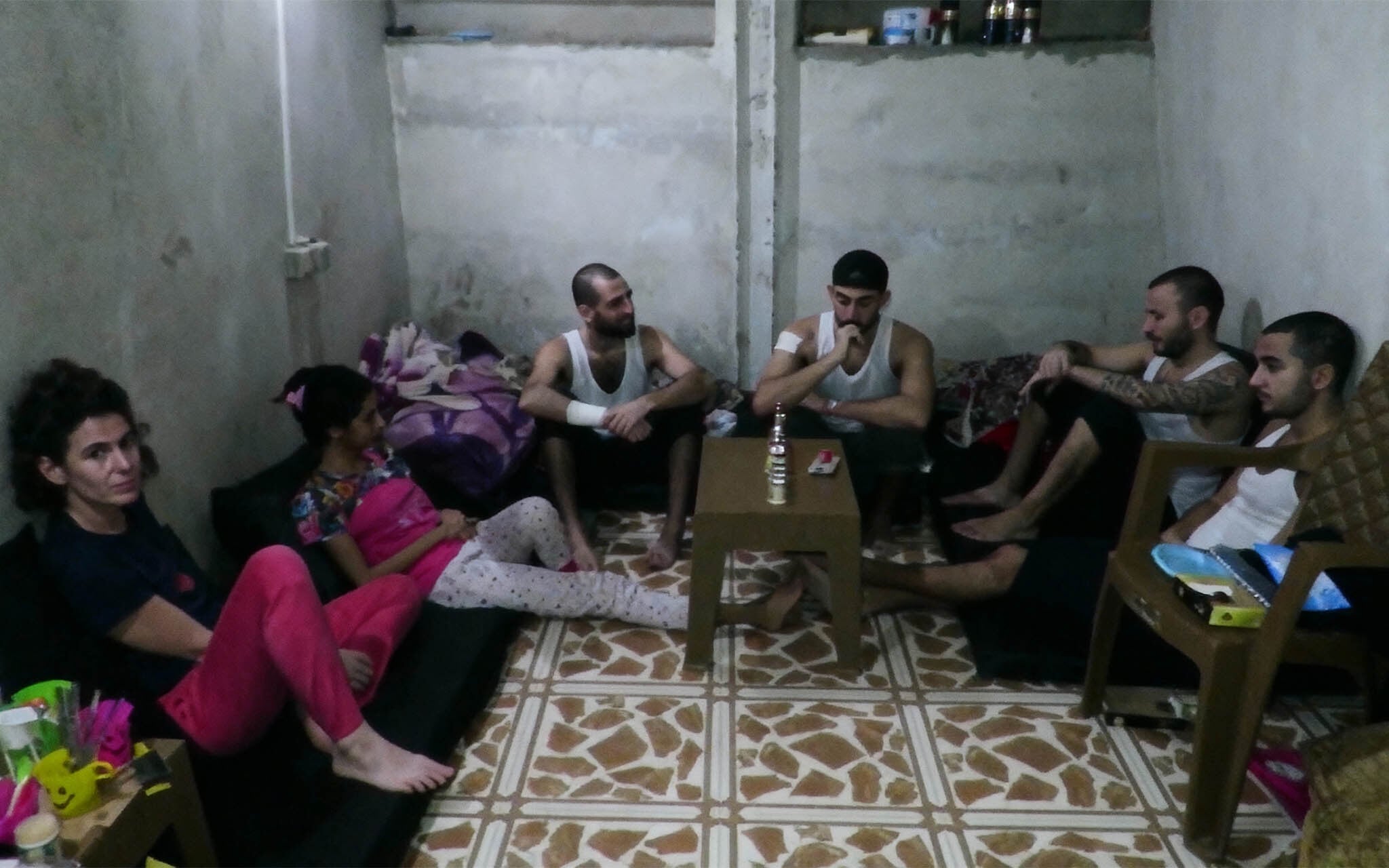

As these images become part of the fabric of our Jewish tapestry, they remind us of the warmth and resilience that have sustained us for centuries. In every generation, someone has risen to harm us. Hanukkah is part of that story, as the Seleucid Greeks sought to strip us of our faith and identity. But Hanukkah also reminds us of survival across the annals of history. After thousands of years, we are still lighting the hanukkiah and telling the story.
Hanukkah began with the senseless murder of 15 Jews on Bondi Beach in Australia. As I have learned throughout the week, the Australian Jewish community—numbering approximately 117,000 people, roughly the same size as the Jewish community of Ohio—is strong and mighty. The Australian Jewish community has more Jewish day school students per capita than any other diaspora country in the world. Many are descendants of Holocaust survivors, as Australia is home to the largest population of Holocaust survivors outside of Israel. Many who fled Europe came to Australia because it was as far away from Europe as they could get.
The Australian Jewish community is proudly Zionist, with Zionism deeply infused into Jewish life there. Sunday’s attack was not only the worst antisemitic attack against Jews in Australia, but also the worst terrorist attack in the country’s history. Unlike the United States, Australia is not known for gun violence and has some of the strictest gun possession laws in the world. In recent years, the Australian Jewish community has been the target of numerous antisemitic attacks. These attacks have included graffiti in synagogues, arson attacks on a kosher deli, and a rampage in a Jewish community in which 10 cars were vandalized, including one that was set on fire. Worshippers have been threatened, among other incidents. You can see a timeline of attacks in Time Magazine. Many in the community feared that something like this could happen.
The attack on Bondi Beach happened as more than a thousand Jews gathered to light the first candle. This is yet another attack on a Jewish holiday, robbing us of our joy. It is becoming clearer to me that many people around the world just cannot fully understand how such an attack affects Jewish communities on the other side of the world. We feel it deeply.
As I think about rising antisemitism and the fears so many of us are experiencing, I think about the need for multifaceted responses. On Tuesday, I was asked what I do for a living. I shared that I am a rabbi, wondering what response might follow. “Oh, I am sorry, for what happened in Australia, it must be so hard. I’m not religious, but everyone should be free to celebrate their religion.” Fear might have suggested a different response, but this interaction was a reminder that there are good and kind people who understand what it means to be human.
Antisemitism is not a problem for Jews to fight alone. “If not me, then who?” Who? The answer must be our allies. Our well-being should matter to our friends and neighbors. Yehuda Kurtzer, President of the Hartman Institute, writes about antisemitism as an American problem. He notes that the American Jewish community is currently spending $800 million annually on security. Consider what could happen if we took all those resources and invested them into Jewish summer camp, travel to Israel, or Jewish identity building.
Kurtzer reflects on the current state of the American political apparatus, which is experiencing a “deterioration of political norms, a collapse of bipartisan commitment to Jewish interests, and growing hostility from both the right and the left toward pluralism and other key elements of the framework of liberal democracy that helped American Jews thrive…” With these factors at play, it is more important than ever to take up the cause of allyship, so that our interfaith partners can help protect Jewish communities and reckon with the history of creating environments that are hostile to Jews.
I continue to feel the blessing of our Worthington interfaith partners who, time and again, reach out with care and concern. Their support has included donations to help offset security expenses, as well as shared learning experiences. Fighting antisemitism should not be a core part of Jewish identity. That identity should be built on Jewish pride, Jewish joy, Jewish values, a commitment to Jewish peoplehood, a love for Israel, Torah, and a connection to God. Combating antisemitism must be part of a larger interfaith effort—one in which people stand up and say, “We will not allow our Jewish neighbors to cower in fear. We will stand with them, and we will do our part to turn the tides of history.” I stand ready to work with anyone and everyone who wishes to examine the roots of antisemitism, why it grows, and how it impacts the flourishing of our precious democracy.
Hanukkah is the celebration of religious freedom and the kindling of Jewish pride. It also reminds us of those who risk their lives to save others. On this Shabbat, we are deeply grateful to Ahmed al Ahmed who single-handedly neutralized one of the shooters. Amid all this sadness, his brave act offers hope. As the candles are lit tonight, another 15 candles are kindled in memory of: Matilda, age 10; Rabbi Eli Schlanger; Dan Elkayam; Alexander Kleytman; Boris and Sofia Gurman; Peter Meagher; Reuven Morrison; Rabbi Yaakov Levitan; Tibor Weitzen; Marika Pogany; Edith Brutman; Boris Tetleroyd; and Adam Smyth. They were hunted because they were Jews. You can learn their stories here. May their memories be for a blessing.
Shabbat Shalom and Happy Hanukkah,
Rabbi Rick Kellner
Between Two Worlds
December 12, 2025
I want to invite you to imagine the rabbis of the Talmud sitting around their Beit Midrash (house of study) and discussing all of the matters pertaining to Jewish life. These conversations would have taken place sometime between the 1st century of the common era and the 5th or 6th century of the common era. As they are conversing, one of the rabbis interjects and says, “Mai Hanukkah?” meaning, “What is Hanukkah?” It is a profound question to ask. They answer by explaining the ritual of kindling lights and the miracle of the oil. When you want to understand the story of Hanukkah from a historical perspective, you generally look to two sources, the Talmud and the books of the Maccabees. The books of the Maccabees are considered part of the apocrypha, which means they were written around the time as the Bible, but are not part of the Tanakh, the Jewish Bible.
In the book of Maccabees, we learn the background of the story of the Seleucid Greeks. They ruled Jerusalem during the time of the origins of Hanukkah (2nd century BCE) and took over the Temple and placed idols within it. They forbade the Jews from offering sacrifices, made their own sacrifices to Greek gods, prevented the Jews from studying Torah, and prevented circumcision. This is called Hellenization – the process by which the communities that the Greeks conquered would abandon their own cultures and take on Greek cultures. Essentially the Greeks were saying, “We are happy to keep you alive, but you must become Greek.” Of course, if someone were to disobey these rules, they did so at the penalty of death.
Earlier this week, I listened to Rachel Goldberg-Polin as a guest on Dan Senor’s Call Me Back podcast. She frames the situation of the Jews in ancient Israel during the time of the Maccabees in the following way: There were Jews who fully assimilated and took on Greek culture; there were Jews who rebelled, fled to the hills, and maintained their Jewish identity; and there were Jews who had their feet in both buckets—the Jewish bucket and the Hellenized/assimilated bucket. The world in ancient times is much like the world we have faced in recent years. In many instances, we are given a choice: if you want to be accepted by the dominant culture, you have to abandon your Judaism. Some people choose to do that. Others dive deep into Judaism, Jewish practice, and Jewish identity. For the ancient Seleucid Greeks, they were happy to have us around—just in the way they wanted us to be around.
When we think about Hanukkah and we ask the same question the rabbis asked, mai Hanukkah? What is Hanukkah? — we are challenged to think about the importance of our own Jewish identity. Following Goldberg-Polin’s teaching, we wonder about the times when we wish for acceptance by the rest of the world, and we also think about how we immerse ourselves in our own Jewish identity. Over the last two years, many people have experienced receiving a message saying something like, “We are fine that you’re around, but in order for you to be accepted by ‘us,’ you have to abandon your values, your Zionism, your connection to Israel. We can keep you in our circle, but only on our terms.” That is exactly what the Seleucid Greeks did to the Jews in the time of the Maccabees.
Rachel Goldberg-Polin reminds us that history is repeating itself. She explains that Hanukkah is a choice. For those of us living here in America, we have a choice to make every day. We know we live in a world where there are times we do things that we would consider to be part of the assimilated world (i.e., going to the movies, concerts, sporting events, etc.) and there are times when we live in the Jewish world (i.e., going to Torah study, Shabbat services, family holiday dinners, and more). Hanukkah, then, is an invitation for us to think about where and when we want to draw the line regarding how assimilated we want to be. We know we live in both buckets: a Jewish bucket and an assimilated bucket. As we celebrate the days of Hanukkah and light the hanukkiah, let us think about the same questions our ancestors did: What is the line we want to draw for the boundary of our Jewish identity? When can we immerse ourselves Jewishly? When do we dive into the world around us? And perhaps we also need to ask ourselves how we bring our Jewish selves and values to the assimilated world we encounter.
Shabbat Shalom and Happy Hanukkah,
Rabbi Rick Kellner
Planting Hope in Sacred Soil
December 5, 2025
“If you build it, they will come.” Many of you will remember these famous words from the 1989 movie Field of Dreams when Ray Kinsella, an Iowa farmer, ploughs his corn fields to build a baseball diamond. The film, arguably my favorite baseball film, reveals that Ray is on the verge of defaulting on his property. Without his crop, he is unable to earn enough money to make the payment. His brother-in-law ridicules him for destroying the one thing that could provide income. It is not often that one ploughs a corn field; fast forward nearly 30 years and in real life, three brothers are planning to plough their own corn field.
Sterling, IL is home to Nik, Alex, and Ricky Jakobs. It was also once home to Temple Sholom, a synagogue that housed Jewish life for several generations. However, due to the closure of the Northwestern Steel and Wire Plant, many who called the area home were forced to move away, leading to the demise of Temple Sholom. Those who remained could not maintain the building. The synagogue was sold, and like many other small town midwestern synagogues it became a development of condos and businesses.
The story of Jewish life in Sterling began with the Jakobs’ grandfather, Norbert Jakobs, who survived the Holocaust and moved to the area in 1949. He bought land and began planting corn, soybeans, and other crops. On Rosh Hashanah, Nik pitched a tent on the field and the Jews who remained in Sterling gathered to hear the shofar and welcome in the new year with Rosh Hashanah services. Nik’s vision was to take part of the cornfield and rebuild Temple Sholom. His purpose in doing so was to create a museum that told the story of Jewish life in midwestern small towns and created a sacred space for those in and near Sterling to come and gather as a Jewish community. Nik and his family were not rebuilding solely because of his own family’s connection to the land, but also because of the many Jewish families in the area who yearned for a Jewish home.
As I reflected on this story (which you can read more fully in the Forward), I thought about what it takes to create and sustain Jewish life. It takes the fire inside of the people who are drawn closer to Jewish heritage, Jewish pride, the Jewish people, and Jewish faith. That fire is fueled by a vision that is tended to each day. In the article, mentioned above, Benyamin Cohen writes, “Hope, here, isn’t an idea. It’s a practice, the daily work of planting what you may never see bloom.” We are truly blessed at Beth Tikvah to share in the vision of creating sacred community. While we have a building and a thriving congregation, it takes the same will and desire of all of our members to plant a garden that can flourish and can continue to grow.
From our volunteers who serve our community in many different capacities, to our staff who till the soil inside our building every day, we flourish because we share a vision for what Jewish life can look like in Northwest Columbus, OH. Together, we nurture Jewish learning; we instill a sense of Jewish pride, tell our Jewish story, and add pages to the next chapter. We do the sacred work of building a better world for our neighbors and community. This work is only possible because of the people who sustain it.
I am so grateful to all those who support our sacred work through Life & Legacy contributions, gifts to Mishpacha, Annual Commitments, as well as the volunteers whose dedication gives our synagogue its unique character. I hope you will take the time to read about the building of Temple Sholom in Sterling, IL and think about how all of us can find the fire to continue to build and nurture what we have created together in Northwest Columbus.
Shabbat Shalom,
Rabbi Rick Kellner
Importance of Gratuity
November 28, 2025
On October 7th, the book I had ordered by Eli Sharabi called “Hostage,” arrived in the mail. With all the excitement of the new ceasefire and the hostages being released, I could not bring myself to read it. Upon returning from Israel earlier this month, I came home, opened the book and after three days, finished it. I could sense the discomfort within me during the weeks that it sat on my desk, unread. Did I want to read about the awful days he endured, the beatings that he took, the loneliness he felt? After returning home from Israel, where I once again encountered the resilience of our people, I knew I had to read Sharabi’s harrowing experience.
Of my many takeaways from the book, two stand out. First, during captivity, Sharabi was held for several weeks with Hersh Goldberg Polin. What could 23-year-old Hersh teach a father of two who was double his age? One’s age is not an indicator of one’s capacity to offer wisdom. Hersh had been influenced by reading the acclaimed Holocaust survivor and psychologist, Viktor Frankl’s personal account of surviving Auschwitz, “Man’s Search for Meaning.” Hersh learned from Frankl that, “A man who has a why, can endure any how.” Hersh’s wisdom changed Sharabi. Sharabi’s why was to get back to his family. Of course, entering the book, the reader knows that Sharabi’s family was murdered on October 7th. Sharabi also has another why; he befriends fellow hostage, Alon Ohel and in many ways becomes like a father figure to him. The two care for each other during captivity and Eli is pained when he is freed, but Ohel remained.
The second lesson I learned is how gratitude can be lifesaving. In captivity, Sharabi urged his fellow captives to conclude each night with a moment of gratitude. In the depths of horror, how could they find something good to recognize? Sharabi told them, “Come on, let’s think of something good that happened today, just one thing. For example, one good thing to be grateful for is when they suddenly allowed us to drink tea. Or when the tea was sweet. Another good thing might be if a particularly cruel guard we dislike doesn’t show up that day. We find ourselves searching for the good things for which we can express gratitude in the evening.” They began to look for something good in every moment. It changed their mindset, shaped their outlook, and potentially saved their lives.
As you read the book, you learn of the minimal food they ate – sometimes only one pita a day. You learn of the beatings they took and the fear they had. Sharabi’s resilience and the resilience of all the hostages is certainly remarkable. Perhaps Sharabi’s lesson to us is that gratitude is not something we only focus on one day per year; we can turn our gratitude into a practice. What if we paused each day to recount one good thing that happened? Even in our darkest moments, we have the power to find something positive about our day. Our practiced recognition of the good might just change our lives and help us survive the most challenging and darkest moments that we encounter.
Gratitude is at the heart of who we are as Jews. We read in our Torah this week about Leah giving birth to her fourth child, who she names Yehudah (Judah), because she says, “I am grateful.” The Jewish people are yehudim, a word that is derived Yehudah’s name. Gratitude is part of our Jewish DNA.
I hope that everyone is able to spend time today and throughout the weekend recounting at least one thing for which you would like to express gratitude. Perhaps you might consider recording it in a journal, texting it to a friend or family member, even posting about it on social media or replying to this email and letting me know – I would love to hear.
Perhaps even better, what if we made acknowledging our gratitude a daily practice?
Shabbat Shalom,
Rabbi Rick Kellner
The Role of a Rabbi
November 21, 2025
The role of the rabbi is quite diverse. We teach, we provide comfort, we celebrate significant moments in people’s lives, we counsel, we stand up for the vulnerable. People look to us to be a moral voice and a source of wisdom.
In ancient times, when the rabbis or sages reflected on their role in people’s lives, Yosei ben Yoezer—leader of Tz’reidah—taught, “let your house be a meeting place for the sages; sit in the dust of their feet; drink in their words thirstily,” (Avot 1:4). When commenting on this teaching, Rabbi Yehudah Aryeh Leib, also known as the S’fat Emet, explained that our places of learning should be made into homes. When we come to a place of Jewish learning, in modern day, that place of learning is a synagogue. We want people to feel fully at home there.
What does that look like? Rabbi Shmuly Yanklowitz explains that we want people to discover a thirst for knowledge, explore, ask questions, and find opportunities to grow intellectually and spiritually. Empowering people to live and learn Jewishly and make the world a better place is core to the sacred work we do at Beth Tikvah. In order to bring that vision to life, we strive to equip our community members with the tools to make Judaism part of their lives and to support one’s Jewish journey in personal and unique ways.
Five months ago, Rabbi Karen Martin joined our Beth Tikvah family and is helping to make this synagogue a home. In the time that she has been with us, she has worked to bring Torah to our lives in new and creative ways. She has spent much of her time in these past few months learning and teaching; she has already enriched our lives in such a short time. She has opened my own eyes to perspectives on Jewish communal life, insights into Torah, meaningful prayer, and a passion for bringing people together. While Rabbi Martin has already been with us for several months, tonight is a moment to both honor her at her installation and celebrate her as a community. Bringing a new rabbi into the community provides opportunities for more touch points and opens pathways to discovering new depths of Torah.
We also learn in the Pirke Avot that we are to “aseh l’cha rav—make for yourself a rabbi (or teacher).” Every one of us needs a teacher. The magical power of a teacher is to open one’s eyes to making new discoveries, new meaning, and new possibilities. Judaism is such a rich tradition, and when we approach our tradition with a new lens and new perspective, our eyes open to new possibilities. It is my hope that, if you have not done so already, you will welcome Rabbi Martin into your lives as one of your teachers.
Our tradition is rich with insight and wisdom that provides much guidance at every stage of our journey. As rabbis, we are privileged to experience those most private and vulnerable moments alongside you. Thank you for letting us walk with you when you are vulnerable, for allowing us to be your teachers, and for providing us with insight into your lives so that we can create opportunities to encounter what is holy.
Please join us this evening as we mark a historical moment in our synagogue’s journey and officially celebrate and welcome Rabbi Karen Martin, her husband Stewart, and her children Sam and Joel.
Shabbat Shalom,
Rabbi Rick Kellner
The Voice of Reform Judaism
November 14, 2025
Over the course of several weeks this spring, we encouraged voter turnout for the 2025 World Zionist Congress elections. You may recall that the World Zionist Congress and the World Zionist Organization are responsible for allocating $5 billion over the next five years.
While groups were traveling to Israel on the JewishColumbus 614 Mission trip, the WZC delegates were meeting in Jerusalem. Thousands of Jews, representing Jewish communities from all over the world, had gathered to set the agenda for the World Zionist Organization. The gathering in Jerusalem allowed for the establishment of coalitions and the Reform Movement partnered with other similarly aligned organizations, including Mercaz from the Conservative movement. My colleague in Columbus, Rabbi Hillel Skolnik—Senior Rabbi of Congregation Tifereth Israel and leader of Mercaz—delivered a remarkable address to the Knesset Committee on Aliyah, Absorption and Diaspora Affairs.
There has been widespread concern that, due to the voting outcome, the delegates representing the liberal Jewish circles (the use of liberal here is to denote, Reform, Conservative and other non-Orthodox organizations) would be far fewer. However, the results proved the opposite—these liberal Jewish circles will have more power and more funding than ever before. Some of the resolutions adopted include:
· Stopped funding for new settlements in Gaza
· Ensuring equal government protection for Reform and liberal synagogues in Israel
· Establishing a Commission of Inquiry to investigate the events of October 7
· Creating a national mental health taskforce for soldiers and victims of terror
· Expanding youth movements and Israel education in the Diaspora
· Halting settlement expansion in E1, staying on the path toward a two-state solution
· Supporting an equitable military draft for all Israelis
· Increasing access to the egalitarian section of the Western Wall
· Strengthening civil society, pluralism, and support for Holocaust survivors
We are deeply grateful for our delegates who spent the week in Jerusalem supporting Reform Jewish causes and helping to pave the way for Reform Jewish values to be present in Israel.
This week, I have been attending the Board meetings of the Central Conference of American Rabbis in New Jersey. Early in the week, we heard from Anna Kislanski, CEO of the Israel Movement for Progressive Judaism. Anna shared that 6% of Israelis identify as Reform Jews, while 33% support the movement.
Over the past two years, Reform Rabbis have led Havdalah in Hostage Square prior to the rallies. The week after the hostages were released, the movement decided they would no longer need to lead Havdalah—yet people still came, searching for it. One of the leaders who attended the rally had brought his spice box, candle, and kiddush cup but left them in the car, just in case. People yearned for Havdalah. Many had never heard of Havdalah before October 7, but now saw it as an essential part of their expression.
This movement revealed something profound. Reform Jewish leaders have learned that there is a place for Reform Judaism in Israel’s public square.
The work of Reform Judaism is authentic, and Reform Jewish life in Israel is vibrant. As more people encounter it, more come to support it.
Thank you again to all who voted in the World Zionist Congress elections. On to 2030!
Shabbat Shalom,
Rabbi Rick Kellner
Tzedakah in a Time of Shutdown
November 7, 2025
As the government shutdown has entered its second month, we are starting to see its direct impact in our own community. Earlier this week, I was invited to a meeting at the Worthington Resource Pantry with fellow clergy and community leaders to understand the shutdown’s impact on SNAP benefits. Those who earn at or below 130% of the federal poverty line are eligible for SNAP benefits. However, due to the shutdown, they did not receive those benefits on November 1. The federal government tapped into an emergency fund to allocate benefits, but at most, people will only receive half of the funds they typically receive each month, and it is unclear when those funds will be released. Additionally, the State of Ohio and Columbus City allocated emergency funds, but those funds are limited to people earning only 50% below the federal poverty line. The government shutdown also makes it impossible for any new registrants to enter the program. The Worthington Resource Pantry is able to serve people earning at or below 200% of the Federal Poverty line.
On Monday, the Worthington Resource Pantry served 232 families. Their previous daily high was 205. They served 27 new families. Many TSA and FAA employees were among the newly served as they continue to work without pay. As the shutdown goes on, there will be further demands and strains placed on local resource pantries. The Worthington Resource Pantry currently has the capacity to serve the increased demands. However, they have authorized emergency funds to spend on dry goods. The Resource Pantry is hoping to stay ahead of the curve. For example, they receive fresh fruit from the Mid-Ohio Food Bank, but since the food bank receives food from the USDA, that will end this month as USDA workers are not working due to lack of pay from the shutdown. Donations will enable them to provide the fresh fruit and other items they need.
Jewish tradition is guided by several sources when it comes to responding to hunger. Practically speaking, we might turn to Maimonides compendium of Jewish law, the Mishneh Torah offers a collection of laws entitled “Gifts to the Poor”. Chapter 9 begins with a law requiring every community to appoint righteous individuals to a committee who will circulate among the neighbors each week to collect tzedakah. That tzedakah is placed in what is called a kupah, and then is distributed to the poor, providing food for seven days. Maimonides adds, “we have never seen or heard of a community that does not have a kupah for tzedakah.” This universal communal characteristic directs our concern to the dignity of every neighbor in our community and reminds us that we all play a role in ensuring no one goes hungry.
Here is how you can help right now:
1. Consider making a monetary donation directly to the Worthington Resource Pantry. This is the best way to help because the Pantry has purchasing power and can best use financial resources.
2. Consider purchasing and donating items from their needed item list. This list reflects items that they would buy at the same price as we would in the store. Please deliver these items directly to the Worthington Resource Pantry, not Beth Tikvah.
3. Consider purchasing/donating items from their Amazon Wish List. These items will be delivered directly to the Pantry.
Of course, we are a geographically diverse community. If you prefer to donate to a pantry in Dublin, Hilliard, Delaware County, or wherever you live, they will be incredibly grateful for the support. The Worthington Resource Pantry is the largest Pantry in the area because they serve people living in the following zip codes: 43016, 43035, 43065, 43081, 43085, 43229, 43235, 43240.
Below is the data for local SNAP recipients, many of whom are children and elderly:

As the shutdown drags on, demand will increase. When it comes to an end, neighbors will still face a lack of resources to keep food on the table and conditions will only improve slightly.
If you can help, please consider donating. If you need help, please do not hesitate to reach out to me or to Rabbi Martin. We are here to support you in these challenging times.
Shabbat Shalom,
Rabbi Rick Kellner
Home, Again
October 31, 2025
Home.
Community.
Resilience.
Life.
It is difficult to find the words to capture these last three days on the JewishColumbus Israel mission. Traveling with our Beth Tikvah family and the larger JewishColumbus community has been incredible. We are the largest mission to travel to Israel since October 7th with over 190 people. As I walked through the neighborhoods of Tel Aviv last evening, I saw a vibrant market, a kids’ Halloween party, trick-or-treaters, packed restaurants and bars. Tel Aviv has the vibrancy that it has always had.
Of the 190, 45 were first-timers, and only a few had been since October 7. You instantly feel at home. Where else in the world could you visit and be thanked for coming. Our opening dinner was prepared by celebrity chefs; one stood to speak and he thanked us for “coming to my home” and then he immediately corrected himself and said, “our home.” You feel an instant connection to the land and the people. They are our family.
When we arrived at Rickenbacker Airport on Monday afternoon to board our chartered ElAl flight, many of us saw old friends and began connecting to new ones. The JewishColumbus staff and volunteer committee have been planning this trip for the last 18 months. Their vision was to bring us together and connect us to Israel. After a long night’s sleep, we learned about Columbus’ direct connection to the Ein HaBasur Moshav in the Eshkol region. Sivan Shefer’s parents made Aliyah from Columbus, OH to the Western Negev region of Israel more than 50 years ago. Their grandson Dudi was murdered on October 7 at the Nova festival. Sivan had a vision: to create a farm called Dialog for Life in memory of her nephew, Dudi. This farm specializes in healing the trauma endured by the residents of the region, IDF soldiers, and Nova survivors using the Human-Animal Dialogue method. JewishColumbus is the Founding Partner, helping to establish this incredibly impactful place. As we planted trees, made ceramic kalanit, and helped build this sacred place, we recognize that our community extends far beyond Central Ohio.
I am continually amazed by the Israeli people: the residents of Kibbutz Alumim who defended their Kibbutz on October 7th. The residents of Kfar Azza, another Kibbutz I visited in May of 2024, promise to rebuild in the next two years. The Nova site has changed so much in the last 18 months. The memorials where laminated paper was on display have been replaced by permanent metal placards that share the stories of the victims. As I have immersed myself in these stories over the last two years, some of the names are becoming more familiar. To remember just one name keeps their memory alive. To have met family members of victims and learned their child’s story helps us personalize the connections in a more meaningful way when we see their names. I recall the feeling I had the first time I was at Nova. It was as if my soul had been sucked out of my body. That emptiness was only matched when I walked the grounds of Auschwitz. Perhaps one of the lessons of Jewish sovereignty is our ability to not only remember and build memorials but to know and share the name of every person who was murdered.
We woke up in Tel Aviv, ran and cycled on the beach, watched the sunset, and saw and felt that Israel is still a vibrant place. Yes, the trauma of October 7th is still trapped in the souls of every Israeli, but so is the hope. It is the hope to be a free people in our own land. Together, with our family—the Jewish people, we share in the dream for our collective future. It is the dream that our ancestors shared when they wept by the waters of Babylon after the destruction of the first Temple. It is the dream that directed our hearts towards Jerusalem for centuries. It is the dream that Herzl and others after him turned into a reality. That dream is kept alive by every Israeli and Jewish soul. Each and every day, another stone is laid that hearkens back to our history and looks toward the future.
As Shabbat begins in Jerusalem and Columbus this evening, we nurture that dream through our prayers.
Shabbat Shalom,
Rabbi Rick Kellner
The Blessings of Rainbows
October 24, 2025
I was recently discussing the concept of Jewish prayer as it relates to theology with our Confirmation class. One aspect of prayer that we discussed was offering a blessing of gratitude for moments we encounter in our lives. Of course, the students were familiar with blessings such as the Motzi (thanking God for bringing forth bread from the earth) or Kiddush (blessing over the wine). They were unfamiliar, however, with the blessing over the rainbow. In fact, they were quite surprised to hear that there was a specific blessing for seeing a rainbow.
Every time a rainbow appears in the sky, it is met with much excitement. People run to see it. Perhaps the best word to describe what people are feeling is awe. In his book “Awe: The New Science of Everyday Wonder and How It Can Transform Your Life,” Dacher Keltner defines awe as, “the feeling of being in the presence of something vast that transcends your current understanding of the world.” He adds that awe is about our relation to the mysteries of life. In moments where we behold the rainbow, we don’t typically think about how the sunlight is refracted through the raindrops. We do not try to make sense of what we experienced; we stand in awe of its beauty trying to soak it all in.
When we behold the rainbow, does our mind take us to the story of Noah? Are we aware that there is a special Jewish blessing that can make such a moment both Jewish and holy? Our rabbis teach us that the blessing for the rainbow is:
.בָּרוּךְ אַתָּה יהוה, אֱלוֹהֵינוּ מֶלֶךְ הָעוֹלָם, זוֹכֵר הַבְּרִית וְנֶאֱמָן בִּבְרִיתוֹ וְקַיָּם בְּמַאֲמָרוֹ
Baruch atah Adonai, Eloheinu Melech ha-olam zocheir habrit v’neeman bivrito, v’kayam b’ma-amaro.
Blessed are You, Adonai our God, sovereign of the universe, who remembers and is faithful to the covenant and keeps the promise [made to humanity].
The Jewish connection to the rainbow comes from this week’s Torah portion. We learn that this connection is a sign of the covenant established between Noah and God. God promised not to destroy the world again and humanity promised to care for the earth and one another. The Talmud imagines that in a time of perfectly righteous people, there are no rainbows. so then, is it our hope that we should no longer see a rainbow? Rabbi Shlomo Riskin suggests in modern terms that since the rainbow is a half-circle, it means that human beings have a certain responsibility to become partners with God to care for the earth.
Taking a moment to recite the blessing upon seeing a rainbow (or the blessing for eating certain foods or encountering other aspects of wonder) has numerous purposes:
- It elevates the moment.
- It ties us into aspects of Jewish history or our textual tradition that have been studied for thousands of years.
- The blessing reminds us of the lessons we learn from the stories they are tied to.
- Taking a moment to say a blessing is a Jewish act that forges a connection between Jewish joy and pride.
If you are interested in learning about more blessings in the Jewish tradition, you may want to consider downloading the “Daily Blessings (CCAR)” app in your app store.
In the months ahead we will be offering a “How-to” email each month which can help bring some guidance and insight into certain Jewish practices ranging from holidays to Jewish ritual life. We hope these emails will serve as a reference for you and may even open doors that spark your curiosity. Having a deeper knowledge of our tradition empowers us and enriches the ways in which we practice Judaism and live Jewishly.
Shabbat Shalom,
Rabbi Rick Kellner
The Shadow of Return
October 17, 2025
This past week has been an emotional roller coaster. It began with great joy as the 20 living hostages returned home to their families. That joy was met with the heights of dancing and with Torah scrolls as we celebrated Simchat Torah. With the ebb and flow of emotions, those feelings of joy were matched by pain as we began to learn about the ways in which the hostages were tortured during their time in captivity. From not bathing, to minimal food, to being chained for months, we cannot imagine their pain. Our hearts are also broken for the families of the 19 deceased hostages whose remains have not yet been returned. It is our hope and prayer that they will be returned home as soon as possible. These families cannot truly begin the grieving process until they are home.
During the period of captivity, there is a song that has become an anthem for Israelis. In Hebrew, it is called “HaBaytah, coming home.” The song, written by Ehud Manor and made famous by Yardena Arazi, was inspired by the pain of the 1982 Lebanon War. After performing for the soldiers, Arazi told Manor of her experiences, and he wrote the song, calling for a return home. As Lior Zaltzman wrote this week for Kveller, it also calls for a return to a place of ideals and democratic values.
The lyrics express deep hopes and longing for the return of everyone in despair. This is the translation of the lyrics:
Another year has passed, another year of madness, the weeds have grown in the path and the garden. The wind sighed opening the shutter and banging the old wall, as if calling: Back home, back home, it’s time to return from the mountains from foreign fields. The day is fading and there is no sign. Back home, back home, before the light is dimmed. Cold nights, bitter nights, closing in now. Until the dawn I pray for you, bound in the grip of fear I hear steps. Back home, back home, because it hasn’t yet been given as was promised a long time ago.
To mark this time of despair, we have added the ritual of praying for the return of the hostages to our Shabbat services by singing of the Acheinu. Adding this prayer has helped remind us that we are connected to the larger Jewish people; it has kept our focus on the hostages. Rabbi Jonathan Sacks teaches us that “ritual turns us from lonely individuals into members of the people of the covenant.” His words remind us that we have a collective obligation to one another as a people and to the lofty partnership we share with God.
It feels like there has been a shift, and perhaps that shift demands the creation of a new ritual. We are in the process of discussing what that could look like and over the next several weeks, we may try several different rituals to see what fits. In this moment, it is important for us to take the lead of the Hostages and Missing Families Forum. They are reminding us that their world is incomplete.
Some have chosen to take off their yellow ribbons and Bring Them Home Now dog tag chains. I am continuing to wear mine because the hostages are not all home. And the question remains: what shall we do? This week, our Shabbat table that has been set for the hostages will hold 19 yellow flowers as a reminder that this color symbolizes the hostages. We will offer a prayer for the brokenness that the families of the unreturned hostages are feeling, but we will not sing Acheinu. (There is debate as to whether this should be said only for living hostages. As we study more, we may decide to add it back). Next week, we will offer a different ritual to replace the flowers and our sign.
We have also been singing Hatikvah each week since the war began. As we consider changes, we will be looking at adding different options of prayers for the State of Israel which would be traditionally said in the synagogue. These past two years have carried so much pain and have taught us many lessons. Among the most important lessons is our connection to the Jewish people and the critical need for the existence of the State of Israel.
In these moments of continued pain, we pray for the return of the remains of the hostages still in Gaza so that their families and the Jewish people can grieve and begin the path toward healing.
Shabbat Shalom,
Rabbi Rick Kellner
The Time of our Joy, The Time of our Hope
October 10, 2025
I cannot help but feel a joyful hope as Shabbat begins and we dwell in our sukkah this week. On Tuesday morning, I walked 1.07 miles at 6:29 a.m. with the OSU Hillel Community to mark the two-year anniversary of October 7. That somber mourning, coupled with intense rain that hung over the day, left me feeling sad and detached. But a mere thirty-six hours later, we learned that the long-anticipated hostage deal and ceasefire had been reached and all sides would come together to sign the agreement. In that moment, I felt a sense of relief and optimism, as if the weight of the world was starting to lift off Israel and the Jewish people. Of course, we think of the hostages and their families who have been crying out for this greatly anticipated moment, and the families of the soldiers and reservists who have spent countless days serving Israel. And we must always hold in our hearts the 466 soldiers who died fighting for Israel’s right to exist and bring the hostages home, and all those who died on October 7. May we always remember their names.
And for those who are familiar with our sacred texts, many began to recall the verse in Nehemiah 8:17 which reads, “The whole community that returned from the captivity made booths and dwelt in the booths—the Israelites had not done so from the days of Joshua son of Nun to that day—and there was very great rejoicing.” The captivity referred to here was the Babylonian exile, which took place after the destruction of the First Temple. Upon their return to Israel, they heard the Torah read aloud for the first time, and they took it upon themselves to fulfill the mitzvah of joy with the celebration of Sukkot, what our rabbis came to call zman simchateinu, the time of our rejoicing. The Israelites having not done so since the days of Joshua served as a reminder of the cyclical nature of our collective Jewish story. The Sukkot in the time of Joshua marked a liminal moment between our redemption and our returning home. And now a new generation returned home from captivity and built booths as a reminder of our past. In this moment, we rejoice on Sukkot because we are commanded to, but we rejoice because our people have been broken for far too long, with some of our family held in captivity for 735 days.
Yesterday morning, I decided to Google Hostage Square. I wanted to see if there was anything that would capture the feeling of the moment. I recall on our congregation’s trip in May 2024, I left the airport, and the taxi dropped me at Hostage Square to meet our group, which arrived only hours before. It was a somber place set with a Shabbat table that carried the dust of the tunnels. The clock counting the time from the start of the war was a central marker of this sad place, and the tents representing the communities that had been attacked along the Gaza border represented the potential for human connection and the stories that would now be etched on the hearts of our people for eternity. We sat in the tent and listened to their stories. Every Saturday evening since October 2023, that place has been home to rallies calling on the government to bring the hostages home. It has been a place of prayer, sadness, tears, and hope.
When I Googled Hostage Square, videos played of singing and dancing, and tears of hope. They sang Hava Nagila, Shalom Aleichem, Od Yavo Shalom, and Bashanah Haba’ah. They also sang Shir L’shalom, a song of peace. It was the song that Yitzhak Rabin sang in 1995 before his assassination, whose bloodied words were recovered from his pocket. Rachel Shani Stopper, from our sister city of Kfar Saba, said to the Times of Israel, “This is the most exciting day we have, that we could have expected…It is impossible to imagine what it will be like when we bring [the hostages] to the country, walking on the soil of the land of Israel.” Stopper came for the weekly rallies, but she said she never sang like she did this week. She says it was a reflex, not an active choice. “For two years,” she said, “we’ve held the sadness, pain, and frustration, and now it’s just coming out. You can’t control it.”
Hostage Square is located outside the Beit Ariela Library and the Tel Aviv Museum of Art. It sits opposite the IDF Headquarters. Prior to October 7th, it was known as Golda Meir Square. This location was chosen because it sits opposite the IDF headquarters, and it was the hope that the hostages would always remain the focus of the war. Amit Slonim wrote for the Jerusalem Post that former hostage Emily Damari had arrived. We remember her because of her now permanently wounded hand, missing two fingers. She was singing Od Avinu Chai. She hugged fellow hostages who returned from Gaza and says it is a fellowship no one asked for. Former hostage Omer Shem Tov was smiling, but Slonim writes that this smile is different than prior ones. He says, “It is an exhale shaped like joy with the optimism of hope.” Ziv Abud just wants to pull the plug on that remote counting the days.
Danny Moran’s son Omri was kidnapped from Kibbutz Nahal Oz and told SkyNews, “I feel a heavenly sense of joy and overwhelmed with emotion. There is no greater joy than this. It has been like waiting 9 months for a baby, but instead I have been waiting for two years. I feel ecstatic.”
These expressions of anticipated joy and relief, coupled with singing and dancing, brought me to a verse from Psalm 30 which reads hafachta misp’di l’machol. It is traditionally translated, “You turned my mourning into dancing.” Rabbi Richard Levy, in his commentary on the Book of Psalms entitled Songs Ascending, writes that “All of us experienced times in our lives such as illness or depression when we felt like we were living on the edge of an abyss of despair, abandonment or hopelessness.” Rabbi Levy, in his wisdom, suggests that rather than feeling as though God and all other beings have abandoned us, the psalmist encourages us to see this dark condition as an experience of God’s anger or facelessness, rather than God’s absence. Then finally, when our situation changes, our lament turns to joy, our grief to dance. Rabbi Levy says such a response comes because we long for it, we hope for it, we pray for it. It will not come unless we ask for it. The preceding verse reads, “Listen Adonai, show graciousness to me, Adonai, be my help.” We have been praying for the return of the hostages for two years. When they return, it will be a time for rejoicing.
And yet, the joy does not solely reflect the complexity of emotions of this moment. While they are coming home, the physical condition of the hostages will bring us tears of sadness. And for the families of the 28 hostages who are no longer alive, they will cry tears of grief. Rotem Cooper, son of Amiram Cooper, whose father lived for four months in captivity and died there, says in this moment he feels he will be lucky to get his remains and bury them. For Cooper, this is the best outcome. For others like Cooper, they will hopefully be able to hold funerals and observe shiva.
It will be a period of national joy and grief. It seems odd to hold those emotions all together at one time. But the traditional reading for Sukkot, the Book of Ecclesiastes, reminds us, “A season is set for everything, a time for every experience under heaven: there is a time for weeping, and a time for laughing, a time for wailing, and a time for dancing.” While the Midrash teaches us that the weeping and wailing are tied to a period of mourning, the laughing and the dancing to the time afterwards. But what if it all happens on the same day and in the same season? Perhaps these words are meant to remind us that life is filled with complex emotions. Biblical scholar Michael V. Fox explains that the answer to our question may be found in the word zman, meaning time. This word is repeated throughout this poem and does not refer to specific moments in time but an occasion that is right for something. He reminds us that certain occasions demand a certain type of response. This moment demands a multifaceted response because we have held a collective grief and sorrow for two years. God willing, we will celebrate the return of 20 living hostages, but we will mourn and grieve with those whose lives will forever remain wounded because of the barbaric attacks of October 7th.
And what if there are bodies that don’t come home or cannot be returned? How shall we respond? The Shulchan Arukh (Yoreh Deah 375), a Jewish legal text, says that if a body cannot be recovered, one observes shiva and says kaddish but does not hold a funeral. It is an incomplete mourning. We cannot truly build back what we had on October 6th, 2023. There will always be scars and wounds. Just as we carry the pain of the destruction of the Temples and mourn those moments, maybe there is something we can capture from the lessons the rabbis taught about its destruction. In the Tosefta (Sotah 15:10–15), a rabbinic legal code that parallels the Mishnah, we learn about a great discussion of how we should mourn the loss of the Temple. Rabbi Ishmael explains that since the destruction, it would be appropriate that we do not eat meat or drink wine since these were used in the Temple service. Rabbi Yehoshua responds that if we are going to do this, then we should not even drink water, for it was used as well. The followers of Rabbi Ishmael were shocked. To which Rabbi Yehoshua said to them, we cannot mourn excessively, and it is impossible to not mourn at all. He reminds them that a person may plaster their house with lime, but they leave a small amount unplastered as a remembrance of Jerusalem. Perhaps, leaving a place on the wall unplastered or unpainted, combined with the partial mourning rituals, we will encounter reminders of the eternal brokenness. Maybe it can help bring some measure of comfort. It will never be complete.
The images of dancing in Hostage Square will stay with me as much as the tears and pain of that place. We are a people that builds and rebuilds on top of the sorrow. Where have we done that? In the holy city of Jerusalem. In the Book of Ezra, we begin to learn about the rebuilding of the Second Temple upon that return from exile and captivity. We read, “When the builders had laid the foundation of the Temple of the Eternal, they sang songs extolling and praising God, ‘For God is good, God’s steadfast love for Israel is eternal.’ All the people raised a great shout extolling the Eternal because the foundation of the House of the Eternal had been laid.” When they rebuilt the Temple, they shouted together. However, in the next verse we read, “The elders who had seen the first Temple, wept loudly at the sight of the founding of this house. Many others shouted at the top of their voices.” Here we see the complex emotions of the community. Those who witnessed the destruction and had experienced the loss must have recalled the memories of the destruction. How painful those memories must have been. The younger generation shouts with joy because they did not know the personal pain. But then the next verse comes to teach, “The people could not distinguish the shouts of joy from the people’s weeping, for the people raised a great shout, the sound of which could be heard from afar.” The weeping and the joy become indistinguishable. God willing, in the days ahead, when the hostages return, we can begin to heal from our collective grief and trauma. The weeping and the shouts of joy will unite because as a people, we will hold that pain and resilience together. And tonight, we hope for the last time, we will pray for the return of the hostages with this new blessing written for this moment.
May It Be
May it be, our brothers and sisters, that just as you showed strength and courage in the terrible inferno, so may you find the strength to heal upon your return and as you walk the path of recovery. May you be embraced by the tens of thousands of loving hearts that never stopped worrying, hoping, acting, and working for your sake.
May it be that we know how to serve as a support and a source of strength—material, emotional, and spiritual—for you and your families. May we together weave the thread of the hope for salvation, so that your return will proclaim peace and herald good.
May it be that we preserve this shared home. May we honor the light revealed in the actions of all those who never stopped striving and crying out for your return.
May it be that the memory of those we could not bring back safely, and those who fell in battle, remain with us forever—an eternal flame of pain and hope, of sorrow and consolation.
May the verse be fulfilled through us: “To bind up the broken-hearted, to proclaim liberty to the captives” (Isaiah 61:1). Let us all say: Amen.
Sources:
[1] https://jewishrituals.org.il/tkasim/may-it-be/?mc_cid=b0143fd0a9&mc_eid=c9c03ba22d
[1] Songs Ascending, Rabbi Richard Levy, CCAR Press
[1] https://www.timesofisrael.com/liveblog_entry/group-dances-sings-songs-of-hope-and-peace-at-hostages-square-in-tel-aviv/
[1] https://www.jpost.com/israel-news/article-869878 [1] https://www.youtube.com/watch?v=IUhNhYSfVBE