
News & Events
Rabbi’s’ Blog
Pause for Poetry: “From Open Closed Open”
February 3, 2026
Moses saw the face of God just once and then
forgot. He didn’t want to see the desert,
not even the Promised Land, only the face of God.
In the fury of his longing he struck the rock,
climbed Mount Sinai and came down again, broke
the Tablets of Law, made a golden calf, searched through
fire and smoke, but he could remember only
the strong hand of God and His outstretched arm,
not His face. Moses was like a man who tries to recall
the face of someone he loved, but tries in vain.
He composed a police sketch of God’s face
And the face of the burning bush and the face of Pharaoh’s daughter
Leaning over him, a baby in the ark of bulrushes.
He sent that picture to all the tribes of Israel,
Up and down the desert, but no one had seen,
No one knew. Only at the end of his life,
On Mount Nebo, did Moses see and die, kissing
the face of God.
Seeing God’s face is an eternal yearning expressed throughout our sacred texts. The Psalmist cries out, “Don’t hide your face from me,” on numerous occasions. We might begin to ask ourselves, what does it actually mean to see God’s face? We read in Exodus 33:11, “Adonai would speak to Moses face to face as one person speaks to another.” Several verses later, Moses asks God to behold God’s presence, but God responds, “You cannot see my face, for a human being may not see me and live.” At the end of the Torah, in Deuteronomy, we learn there would never be another prophet who would know God face to face like Moses did. In the book of Numbers, the words the Priests use to bless people hope that God would lift God’s face as part of the blessing. These words are quite paradoxical. They reflect God’s mystery but behold the desire we each have to feel accepted by God and to ultimately feel God’s blessing.
In Amichai’s poem, I am drawn to the metaphor of the police sketch. In this contemporary metaphor, Moses is trying to reach out to others to see if anyone had the experience he had. Would anyone recognize the blessing he felt? He draws in some of the most sacred moments in his life. He felt the blessing of love by Pharaoh’s daughter as a baby floating in the Nile. He beheld the flames of the burning bush, a moment when he felt the intimacy of God’s call to him. After sending the sketches to every tribe, we might feel Moses is disheartened when no one recognizes God’s face. Why would that be? Is it because no one had actually seen God’s face before? Is it because no one had a relationship with God? Perhaps it is because every person might see the face of God differently. When God introduces Godself to Moses and asks God’s name, God responds, Ehyeh-Asher-Ehyeh. While we do not typically translate these words, it can be loosely translated as, “I will be what I will be.”
So many of us struggle with a belief in God or with creating a relationship with God. We wonder what God looks like, and if we cannot see God, then we might question God’s existence. We do know that love exists, and the wind exists. Perhaps, then, the relationship we create with God is unique to each of us and changes based on how we feel or what we need on a given day or in a given moment. If we need God to teach us, God teaches. If we need God to guide us, God guides. If we need God to comfort us, God comforts.
Each of us is a sketch artist. Sometimes we sketch with paper and pencil; other times, we paint pictures with our words. What is the face of God you would sketch? Perhaps it is staring back at you in the mirror.
Rabbi Rick Kellner
The Work of Remembering
January 30, 2026
Earlier this week, on January 27, the world marked International Holocaust Remembrance Day. This day was selected by the United Nations because it marks the liberation of Auschwitz in 1945 by Soviet troops. 2005 is the first year it was commemorated. On the 27th of Nisan in the Jewish calendar (about two weeks after the end of Passover), we observe Yom HaShoah v’haGevurah, Holocaust Day of Remembrance and Heroism. This day was established by the Knesset in 1951, and it marks the anniversary of the Warsaw Ghetto uprising in 1943. Lastly, each year on November 9 we observe Kristallnacht, the Night of Broken Glass, when Germans destroyed Jewish shops and burned synagogues and books. It was a pogrom on a mass scale.
Earlier this week, Rabbi Jeff Salkin posed the question in his blog Martini Judaism: why do we have three dates to the remember the Holocaust? He suggests that we need all three because they serve different purposes.
Kristallnacht reminds us of the normalization of cruelty. Yom HaShoah v’haGevurah is necessary because the Warsaw Ghetto uprising teaches us about the importance of resilience and the willingness to stand up and fight even if we may lose our battles.
Rabbi Salkin writes, “they fought to assert that even in a world collapsing into barbarism, Jews still possessed agency and dignity. They would not go like sheep to the slaughter.” International Holocaust Remembrance Day – the anniversary of the liberation of Auschwitz – was the day the world bore witness to the atrocities occurring.
In Germany, where U.S. soldiers liberated camps, General Eisenhower said, “I made the visit deliberately, in order to be in position to give first-hand evidence of these things if ever, in the future, there develops a tendency to charge these allegations merely to ‘propaganda.'” He commanded his soldiers to capture what they saw so the world would know the capacity of human beings to perpetrate evil towards one another. International Holocaust Remembrance Day is for the world to remember. Rabbi Salkin explains this day forces us to ask how the world could stand by and do nothing?
When I go into public schools to teach about antisemitism, I share the famous words of Elie Wiesel: “We must take sides. Neutrality helps the oppressor, never the victim. Silence encourages the tormentor, never the tormented. Sometimes we must interfere. When human lives are endangered, when human dignity is in jeopardy, national borders and sensitivities become irrelevant.” Wiesel’s words serve as a reminder to every generation that when evil goes unchecked, it can lead to mass murder. It is also a prophetic call on us to act.
Once again, we are encountering the widespread normalization of antisemitism and hate. It seems that hardly a week goes by before we see another vicious antisemitic attack. Springing to action can feel overwhelming and it can’t be the responsibility of Jews alone to remember and hold the world accountable. Our allies are critical to the sacred task of planting seeds that will bear the fruit of love and compassion.
I recently visited the U.S. Holocaust Museum and Memorial. Each time I enter, something unique stands out to me. This time, I captured the prayer that Rabbi Leo Baeck offered in Germany on Yom Kippur in 1938: “Our history is the history of the grandeur of the human soul and the dignity of human life. In this day of sorrow and pain, surrounded by infamy and shame, we will turn our eyes to the days of old. From generation to generation, God redeemed our fathers, and He will redeem us and our children in the days to come. We stand before our God… we bow to Him, and we stand upright… before man.”
Rabbi Baeck’s words remind us of the powerful connection between God and humanity. To stand upright before God and to stand upright before a fellow human being is to behold the beauty of one’s face and to see their soul in all their humanity. Recognizing the dignity of human life is core to who we are as Jews. To see each soul as created in the image of God is to recognize our holiness.
Why do we need three days to remember the Holocaust? Because the Holocaust is not one story. It is millions upon millions of stories. It is acts of heroism, the memory of the victims, and every story that is filled with sorrow and miraculousness.
May the memory of the righteous always be for a blessing and may we always be grateful for those who resisted and those who risked their lives and stood up in the face of evil to protect their neighbors and strangers.
Shabbat Shalom,
Rabbi Rick Kellner
What Have We Done?
January 28, 2026
As we awaited the arrival of a historic snowstorm on Saturday evening, news was spreading of the death of Alex Pretti, who was killed filming federal immigration officials. In the moments before he was killed, Pretti ran to protect a woman who was also protesting. Alex Pretti was a nurse who cared for veterans at the VA hospital.
While watching the video of the shooting with horror, I could not help but think of the moment in the Torah when we read about Cain killing Abel. In Genesis 4:10, we read that God speaks to Cain and says, “What have you done? Hark, your brothers blood cries out to Me from the ground!”
“What have you done?” Torah commentator Malbim explains that this question indicates that God informed Cain that he had free will and that his deeds were attributable to him. It feels as if the Torah is asking this question of all of us now.
What have we done… that we have come to these moments in which Alex Pretti and Renee Good were killed because they tried to protect fellow human beings.
What have we done…that such profound darkness has settled over us so that we can no longer behold the dignity of other human beings.
What have we done…that people are no longer questioning the morality of their orders.
What have we done?
All I could think about in these last few days is that Alex Pretti’s blood is calling out to us. The word for blood in the Torah appears in the plural. The rabbis note that this is not typical and wonder about its meaning. Nearly every commentator explains that the words appearing in the plural indicates that all the generations that came after Abel were also crying out. Another commentary indicates that there were so many blows given to Abel, that it was unclear when his soul departed. In this moment, not only do we have Alex Pretti’s lost descendants crying out, but we have countless people across our country and our world crying out that things are completely askew here. The videos of Alex’s death show at least ten shots fired; do we know when his soul departed?
Thousands march in the frigid temperatures in Minneapolis because they are concerned for their neighbors. These raids are not just about people in the U.S. who are undocumented. U.S. citizens are being held as well. We cannot continue down the road we are on.
Tonight, we have planned an interfaith gathering as part of Faith250, a series of interfaith discussion opportunities designed to explore important texts in our nation’s history. Our first session will focus on Emma Lazarus’s poem “The New Colossus,” which will lead us to conversations about immigrants and the treatment of immigrants in our country. If you have not already planned to join us, I hope you will consider doing so.
We continue to grieve as a nation over the loss of Renee Good and Alex Pretti. May their memories always be for a blessing.
L’shalom,
Rabbi Rick Kellner
A Cry for Freedom from Tehran
January 27, 2026
For the past few weeks, I have awakened each morning and looked at my phone for updates coming out of Iran. Protests erupted several weeks ago and were met with a brutal response by Iranian Ayatollah Ali Khamenei. Inflation is out of control, and people took to the streets because they could no longer afford basic necessities. Today, 1,000,000 rials are equivalent to approximately $1 USD. This severe inflation has resulted from international sanctions imposed over Iran’s refusal to curb its nuclear program. The Ayatollah has not put the people of Iran first, instead advancing an ideology rooted in “down with Israel, down with the U.S.”
To suppress the protests, internet access was cut off, primarily to limit communication between protest leaders. Over the course of several days, reports began to emerge that the IRGC had killed nearly 20,000 protesters (exact numbers could not be independently verified). Iran has posed a threat to Israel and Jews around the world for decades. The Iranian regime has supported global terror, funneling financial resources—despite being an oil-rich nation—to proxy groups including Hezbollah, Hamas, and the Houthis. In 1994, Iranian-backed Hezbollah bombed the Argentine Israelite Mutual Association (AMIA) in Buenos Aires. Years of repeated threats against Israel have culminated in several rounds of ballistic missile attacks over the past two years, causing death and widespread destruction across Israeli cities.
In recent weeks I have spent time trying to better understand the implications of these uprisings. For those looking to learn more, I recommend the following podcasts:
Dan Senor’s Call Me Back
January 5: After Venezuela, is Iran Next? With guest Karim Sadjapour
January 12: If Iran Falls, What then? With guest Karim Sadjapour
Ask Haviv Anything
Breaking Iran’s Machinery of Oppression
For Heaven’s Sake
January 13: Iran: When the Story Changes
These podcasts offer a deep-dive into revolutions and societal changes.
Perhaps the most important question is why we should be concerned here in America. Since the Iranian Revolution of 1979, the Islamist regime has ruled with an iron fist. It has brutally suppressed its own people while advancing a deep hostility toward the West. As Jews, we know this regime has repeatedly threatened Israel, funding proxy networks with the explicit goal of Israel’s destruction.
Last week, the Central Conference of American Rabbis (CCAR) expressed support for the Iranian people, many of whom have lost their lives opposing the regime. As the largest sponsor of state terrorism, Iran’s continued support of terror organizations threatens the stability of the Middle East and the safety of populations around the world. The CCAR wrote:
“Centuries before democracy was common, our rabbinic sages decreed that a ruler may only lead a people with their consent (Talmud Brachot 55a). The Iranian regime has forfeited its moral authority to rule the nation and has now lost the popular support required to remain in power. Their reach goes well beyond its own boundaries to impose its terror in the Middle East and the western hemisphere. For the sake of a greater peace that begins in Iran, it is time for the people of Iran to be sovereign.”
Our hearts go out to the suffering Iranian people. While we may feel powerless to effect change, we can acknowledge their extraordinary bravery and hope for a future in which they experience the freedom they yearn for. As Jews, we have always stood with the oppressed. In this moment, we pray for the Iranian people in their suffering and hope they will one day celebrate their liberation.
Listening to experts, it remains unclear whether a regime change will happen in the near future. According to Karim Sadjapour, there are five key factors for a regime to fall:
1. Fiscal Crisis
2. Divided Elites
3. Opposition that starts to cohere
4. Shared narrative of resistance
5. A favorable international environment
Sadjapour argues that the elites are not divided. The IRGC remains loyal to the Ayatollah, and significant segments of the population still support the regime. This loyalty may be the key factor preventing regime change at this time.
I am also struggling with another reality. Over the past several years, voices denouncing Israel have flooded social media and filled the streets in protest. Yet many of those voices have remained silent as the Iranian regime has murders its own citizens, with the singular focus on remaining in power. The silence of their defenders is deafening, and the double standard is deeply troubling.
As hours go by, I join countless others in prayer, hoping for strength and safety for the Iranian people. May they one day be free to chart their own path toward prosperity and live in the light of freedom.
Rabbi Rick Kellner
They Are All Home.
January 27, 2026
On International Holocaust Remembrance Day, we rejoice in the news that Ran Gvili’s body has been returned home. On Sunday evening, we received word that an operation was underway to recover his body from a cemetery in northern Gaza City. For the first time in 12 years, there are no Israeli hostages being held by Hamas. On October 7, 24-year-old Ran Gvili, a police officer who had been injured and was awaiting surgery, chose to jump into the fight. He fought Hamas terrorists at Kibbutz Alumim, where he was killed and taken into captivity. For 843 days, we have prayed for the return of the hostages, and now they are all home. Since October 7, we have said, “Bring Them Home,” and yesterday the IDF brought Ran home.
With thanks to social media, I saw soldiers singing “Ani Maamin, I believe with perfect faith…”—a text first written more than a thousand years ago by Maimonides—affirming our belief with perfect faith that there will be someone to come and rescue us from the depths of despair. As the brave soldiers of the IDF carried Ran’s body, wrapped in the blue and white colors of the Israeli flag, they spoke the words of Psalm 121, “Hinei lo yanum v’lo yishan, shomer Yisrael—behold, the Guardian of Israel neither slumbers nor sleeps.” For 843 days, we called out to God in prayer with the words of the prayer for the return of the living hostages, and then for the return of the remains of those who died in captivity or were killed and then captured. Our prayers have been answered; they are all home.
I often wonder about the complexity of the coincidences that occur in certain moments. This week, we read in the Torah as the Israelites were preparing to leave Egypt: “And Moses took with him the bones of Joseph, who had exacted an oath from the children of Israel, saying, ‘God will be sure to take notice of you; then you shall carry up my bones from here with you.’” (Exodus 13:19) Before his death, Joseph did not want to be left behind. He wanted to be with his people. These words echo within the heart and soul of every Israeli, of every Jew. We have seen that our people will do all we can to bring home those held in exile.
I learned of the news early yesterday morning as I got off the Peloton. As I prepared for my day, I looked down at my dog tag and yellow pin and, with a tearful smile, said to myself, “I don’t have to put this on anymore.” I have worn that dog tag since I returned from Israel in May 2024, and it has been a daily reminder that the hostages and their families remain ever so close to my heart. On our bimah, we have had a visual symbol since October 7, 2023. During services this Shabbat, we will take out the last kalanit (poppy flower) from the vase and return it to the garden outside our sanctuary. We will take down the sign that reads, “Until the Last Hostage,” and remove the table. Even though the visual signs are gone, our connection to the Jewish people will remain in our hearts. The holes left from the pins will be an eternal reminder of our pain and suffering, but also of our resilience and hope. While the pages are turning on this chapter in our people’s history, we know that there is still much healing that needs to happen. Our prayers are with the Gvili family, all those who still grieve loved ones lost in these last two years, and those who bear the burdens of the pain they carry from their time in captivity. The healing work can now finally begin.
As we move forward, there are deep questions that the Israeli people can now begin to ask as they build toward the future. May Ran’s memory always be for a blessing.
With blessing,
Rabbi Rick Kellner
MLK Reflection: Will We Be Ready for the Call?
January 19, 2026
On a frigid December day, a call went out to the Community Response Hub listserv asking for people to stand outside several mosques frequented by Somali refugees. ICE was out, and their pursuit of certain people added to the chill in the air. I still feel guilty that I could not join those who stood in the cold, hoping to protect a human being from being detained. During the darkest nights of the year, countless individuals could not leave their homes as they feared being taken from their children, or that their children would be taken from them. Days later, another call went out seeking volunteers to do grocery pickups for those who needed to stay locked in their homes. It was the holiday season, and so many of us were traveling. I put out the call to those in our community who had previously expressed interest in supporting immigrants or doing social justice work. It was all I could do, was it enough?
Months earlier, with crisp morning air and leaves beginning to fall, I began thinking to myself: ICE will show up here; what are we going to do? We can see what is happening in other cities; leaders need to come together and create a playbook so that when they arrive, we call out play A, B, or C. Maybe such a meeting took place; I wasn’t in the know. The calendar turned, and ICE crept north to Minneapolis, the largest Somali population in the United States (Columbus is the second). More than 3,000 ICE agents, four times the number of Minneapolis police officers, began roaming the city. Reports followed of kicked-in doors, individuals harassed in their homes, and the shooting of Renee Good and another civilian. I know that so many of us are angered and saddened by what we are witnessing around the country, and we feel powerless to respond.
Today is Martin Luther King Jr. Day. Part of me wonders what he might say if he were preaching today. As he bore witness to the pain of his brothers, he worked to bend the moral arc of the world toward justice. In the hot summer of 1964, he put out a call to the Central Conference of American Rabbis to come to St. Augustine, FL, to stand in “creative witness to the joint convictions of equality and racial justice.” 16 rabbis, along with Al Vorspan—who would later direct the Religious Action Center of Reform Judaism—went to Florida. Fifteen were arrested outside of Monson’s Restaurant as they joined in integrated prayer. Two others were arrested because they dined with three Black individuals at the Chimes Restaurant. In the sweltering heat of the jail, lit by a single light outside the cell, these 17 Jewish leaders penned a famous letter called “Why We Went”. The letter was written on the back of pages of a mimeographed accounting of the bloody KKK attacks.
I had the privilege of knowing three of those 17 men personally. One was my teacher. I remember him telling us the story of Dr. King calling to them. My teacher, Rabbi Richard Levy z”l, who held a balance of righteousness and spirituality in his soul, taught us that we say, “Hineini, here I am,” when we are called to bear witness and break the bonds of injustice. His righteous indignation still echoes within my memory and serves as a reminder of one of our significant responsibilities as Jews: to stand up to Pharaoh.
These rabbis wrote, “We came to St. Augustine mainly because we could not stay away… We could not pass by the opportunity to achieve a moral goal by moral means—a rare modern privilege—which has been the glory of the non-violent struggle for civil rights… We came because we could not stand quietly by our brother’s blood. We had done that too many times before… We came as Jews who remember the millions of faceless people who stood quietly, watching the smoke rise from Hitler’s crematoria. We came because we know that, second only to silence, the greatest danger to man is loss of faith in man’s capacity to act… What disturbs us more deeply is the large number of decent citizens who have stood aside, unable to bring themselves to act, yet knowing in their hearts that this cause is right and that it must inevitably triumph.”
They carried with them the memory of those who were bystanders in the face of the greatest evil humanity has ever known. Not even two decades after the end of the war, they could not forget. These great leaders saw a moral cause and knew they had to act. Sitting with Black men at a meal and praying in an integrated service did more than serve as an act of protest; it was a response to those whose cries pierced through the screen blinding people from seeing their humanity. In a rare moment, those who were dehumanized because of the color of their skin were seen as human in the eyes of the rabbis.
As they were greeted with exuberant joy in the church and marched hand in hand, they reflected, “We came to stand with our brothers and, in the process, have learned more about ourselves and our God. In obeying Him, we become ourselves; in following His will we fulfill ourselves. He has guided, sustained, and strengthened us in a way we could not manage on our own.” God’s holiness is felt when human beings join hand in hand and the break the bonds of injustice.
As I sit with the words of this letter engraved on my heart, I reflect on the words of Torah we read this past Shabbat from Parashat Vaera: “I have now heard the moaning of the Israelites because the Egyptians are holding them in bondage, and I have remembered My covenant” (Exodus 6:5). Why is God now only able to hear their cries? Has something changed in the people? Has something changed in God? Or HaChaim, an early 18th-century commentary written by Chaim ibn Attar, a kabbalist and Talmudist, teaches us that the words in this verse—and also gam ani—refer to God’s attribute of mercy. He explains that this attribute extends beyond the cries and prayers of the Israelites. God’s mercy touches the lives of all who suffer. This painful witnessing helps God remember the covenant.
In this moment in time, we too must have our attribute of mercy awakened by the cries of those who cannot leave their homes because they fear being taken from their families. We share a covenant with all human beings. To behold the face of another is to remember we are responsible for them. If they were harmed, their blood would cry out to us from the ground. Upholding our end of the covenant with humanity begins with ensuring that we see every soul as a human being.
Last Wednesday, we hosted our first community meal. Neighbors in our community who need a free meal come to houses of worship for various reasons. The churches in Worthington had been doing this for years. Though we prepared for 40 people, only two came. Neither woman spoke English. I sat with them and spoke Spanish. I learned they were from Venezuela and Ecuador. The woman from Venezuela shared that she walked for seven months to get here, sometimes going seven to ten days without food or water. She shared her desire to take English classes and that so few people spoke Spanish. By sitting with these two women and speaking their native tongue, perhaps I was able to overcome a small part of the barrier they face with most people. They were seen in their humanity.
We have a long road ahead. As ICE agents sprawl through our cities, we might begin to ask ourselves what we can do to ensure that we see our neighbors as human beings. In some instances, the people they are going after are the people who clean our homes or care for our lawns. They do all they can to put food on the table and provide for their families. We know they will descend on our city again. We must ask ourselves: will we be ready for the call?
Rabbi Rick Kellner
We Are Beth Israel
January 16, 2026
When a synagogue burns, part of my soul goes up in flames too. That is the price of being a Jew and part of the Jewish people. Wherever a Jew suffers, we all suffer. Last Shabbat, we opened the book of Exodus and we read of Moses turning aside to see a bush burning but not consumed. In the dark hours of the night, a synagogue was set ablaze, and by the time the first rays of light brightened the morning sky, a library that once witnessed laughter and learning had been consumed by the flames of hate. Beth Israel of Jackson, Mississippi is the largest synagogue in the state and is also home to the Institute for Southern Jewish Life, an institution that has preserved Jewish life in the South for generations. Jackson is also home to nearby URJ Camp Jacobs, the Reform Movement’s summer that serves much of the Jewish South.
During Shabbat, my social media feed was filled with stories and memories of how this small but mighty congregation had touched the lives of so many people I know. The synagogue was served by many student rabbis who studied at HUC in Cincinnati. All of these connections deepened the closeness I felt to this tragedy.
Why does this hurt so much? There is something that we, the Jewish community, feel so deeply that many outside of it struggle to understand. The pain of such a tragic moment pierces our souls because we know people directly hurt by this antisemitic attack. And if we do not, it is the intergenerational trauma we have inherited from centuries of hatred our ancestors endured. We also imagine ourselves sitting in our own temple libraries—studying sacred texts, recounting our Jewish story, or engaging in prayer. When our sacred spaces are vandalized, it is an attack on our identity, our sense of security, and the place we call home.
On Sunday afternoon, I slowly walked through the dark halls of the United States Holocaust Memorial and Museum with our Confirmation (10th grade) students. We saw video and still images of the fires of Kristallnacht, as well as a desecrated Torah scroll from the Holocaust. Nearly 90 years later, the images haven’t changed.
When I learned of the Beth Israel fire, my initial reaction was anger, which quickly turned to pain and sadness, as if I had stepped into a storm cloud. It pains me that the embers of hate still burn so deeply within the souls of people who may be our neighbors. Even after all the work we have done, propaganda videos online are more than just words—they feed embers and turn them into flames that spark fires destroying our sacred spaces. The loss of Torah scrolls—carrying the words of our people, read aloud for generations, inspiring us to love our neighbors, care for the orphan, the widow, and the stranger, reminding us that we are all made in God’s image, and commanding us to be holy—is beyond tragic. One of the scrolls that survived was one that survived the Holocaust. Thank God! The former rabbi of the synagogue shared photos sent to him just weeks ago of children learning in that library. He posted those photos alongside images of the library charred by fire. The contrast is striking.
Out of the fire of the Burning Bush emerged the voice of God. This community is no stranger to terror, having been bombed fifty years ago. As Jews, we rebuild. Just as being targets of hate is part of DNA, so too is our resilience. We are an ever-living people, and we have survived for millennia, even as countless forces sought to destroy us. We will continue to survive, and we will rebuild again. Perhaps the most inspiring part of this tragic story is the many churches that reached out to their Jewish neighbors in Jackson and offered space to worship and learn. In fact, on Sunday morning, the children of Beth Israel gathered to learn once more. The destructive flames cannot extinguish the eternal flame that burns in the heart of the Jewish soul.
So many of us were touched by this awful tragedy because we feel it so personally. We are all Beth Israel. If you would like to join me in donating to Beth Israel’s rebuilding efforts, please go to their website www.bethisraelms.org to find a donation link.
As we enter Shabbat this evening and sing the words of V’shamru, we will be reminded of the eternal covenant God established with the Jewish people. The threads of the covenant bind us tightly to one another. We pray that the sacred connection of the Jewish people brings Beth Israel of Jackson strength and love as they rebuild. May we all know that we care and support one another through these difficult moments.
Shabbat Shalom,
Rabbi Rick Kellner
A Decade of Dedication – Enos Wisniewski
January 9, 2026
Transitional life moments often bring mixed emotions. We might feel joy as we forge new paths and sadness about the ones we leave behind. While I was traveling for winter break, I saw a video on our social media of Enos Wisniewski, our longtime custodian, walking through our front doors at the conclusion of his last shift on his final day. Enos has been with us for 10 years, and he retired at the end of 2025.
When I think about Enos, I think about him standing on a ladder painting my office ceiling as he finished a repair caused by a leak. I think about him power-washing the walls and the concrete around the building or even climbing onto the roof to fix things up there. Enos did more than setups and repairs. He came to work every day wanting to make us all laugh and smile. About a year or so ago, I noticed something very special. I noticed that all the JCC North kids leaving at the end of the day would run to Enos, and he cared for every one of them like they were his family. He offered them a sweet treat, and he looked forward to seeing their smiling faces every day. He helped make them smile.
One of Enos’ passions is fishing, and he shared it with us. “Rabbi, I’m goin’ fishin’. Gonna fry up some fish,” he would say. And he did just that, making the staff a fish-fry lunch on numerous occasions. Over the course of his time at Beth Tikvah, he experienced several health issues. In the last two years, he coped with debilitating back pain, but he came to work nearly every single day and powered through with a smile on his face. My heart went out to him as he labored to walk through the temple hallways.
When Hannah Karr, our Director of Marketing and Community Engagement, interviewed him in November, Enos shared that he would miss everybody. He said, “I built great relationships with everyone… I hope everybody keeps me in their heart, because you will all be in my heart forever.” He also shared that he always bragged about Beth Tikvah and said it was one of the best jobs he ever had. I like to think he felt that way because he truly recognized how special everyone is. Our members care for Enos like they would a family member. He cared for us and was passionate about his work in return.
Someone once shared with me that the book of Deuteronomy is the greatest retirement manual. Moses lays out his wisdom to the people and transfers his authority to Joshua. Moses ascends Mount Nebo and is able to take an expansive view of all he has done in his life as he looks upon the people he has led. Tonight, we will invite Enos to join us on the bimah as we celebrate his retirement. We will think about all the joyful moments he shared with us over the years. We will certainly miss his joy and smiling face walking the halls of Beth Tikvah each day. Please join us for services this evening at 7:15 to be part of this wonderful celebration.
Enos, we will truly miss you and all you brought to us.
Shabbat Shalom
Rabbi Rick Kellner
An Interfaith Journey Through America’s Texts
January 2, 2026
Happy New Year! As the pages of the calendar have literally flipped (or perhaps more accurately, we’ve started a new calendar, or scrolled down on our phones), the arrival of 2026 brings with it the 250th anniversary of the United States of America. The Semiquincentennial offers us a unique opportunity to reflect on our nation’s history, the stories of our nation’s past, and the values on which our country was founded.
Throughout our history, we have adapted and grown, holding onto many of the values upon which our country was founded while incorporating new ideas as immigrants shaped the arc of our nation’s story. This moment in history affords us the opportunity to sit together with friends from Beth Tikvah and across lines of faith to study what we might consider “American Scripture.” In partnership with an organization called faith250, we will join with several Worthington-area churches to engage in meaningful dialogue around these texts that have laid the foundation for the American experience.
The founders of faith250 imagined clusters of interfaith organizations coming together in a moment of rising political violence, where it seems that the “moral threads holding our democracy together are wearing thin.” As we gather with this multi-faith initiative, we can begin to “counter the division, contempt, and toxicity” that is tearing us apart. We do not often take the time to sit with people of diverse faiths and learn together about the place and the values we all share.
The four core texts we will study are Emma Lazarus’ “The New Colossus,” the Declaration of Independence, America the Beautiful, and Frederick Douglass’ “What to the Slave Is the Fourth of July?” written in 1852.
Imagine thinking deeply about the meaning of “Give me your tired, your poor, your huddled masses yearning to breathe free,” and sharing your family’s story of coming to America. As we think about our own pasts, we might consider how we can help those coming to America today. This text will encourage us to think about shared values of belonging and narrative formation. When we studied this text a few weeks ago with our interfaith partners, it was truly remarkable to hear the stories of people whose ancestors came to the U.S. in the 1600s, as well as those who arrived in the late 1800s, after the Holocaust, and as recently as the late 1990s.
Imagine reflecting on the values of equality and liberty while reading the Declaration of Independence. We will ask challenging questions about equality, especially when not everyone was considered equal at the time the text was written. As we study America the Beautiful, we will wonder what it means to “mend our moral flaws” and reflect on the meaning of nobleness. We will discuss how we exhibit moral aspiration. As we study Frederick Douglass’ “What to the Slave Is the Fourth of July?” we will reflect on Douglass’ pain as he experiences this date in history and imagine a Fourth of July celebration that would have made him proud.
After our sessions, we will come together as one Worthington interfaith community around the Fourth of July to mark our Semiquincentennial with an interfaith service.
The first learning and community session will take place on Wednesday, January 28th at 7:00 PM at Congregation Beth Tikvah. We are grateful to our partners and friends at Worthington Presbyterian, St. John’s Episcopalian, All Saint’s Lutheran, and Lord of Life Lutheran for embarking on this journey together with us. We hope you will join us!
Once again, happy New Year and Shabbat Shalom!
Rabbi Rick Kellner
The Carob Tree Project
January 1, 2026
When the stillness of winter brings a snowy blanket that covers hard-packed soil, I find myself thinking of the trees. Though their skeletal branches pierce the cold air at this time of year, I always imagine that trees continue to grow even now. While deciduous trees enter a state of dormancy above ground during the winter months, their roots continue to grow beneath the surface. They absorb nutrients from the ground and store them for spring growth.
We, too, experience growth throughout our lives, at every stage and in every season. Much like a tree’s roots soaking up nutrients, we take in experiences that nurture our souls. Every experience impacts us; we reflect on the moments that shape us into who we become. We are guided by memories, shaped by values, and formed by the people we encounter. Throughout life’s stages, we plant seeds in the ground that help others grow.
As we reflect on growth, we are reminded of a famous story from the Talmud, Tractate Ta’anit. Honi, known as the Circle Maker, is walking along the road when he encounters a man planting a carob tree. He asks the man, “How long will it take for this tree to bear fruit?” The man replies, “Seventy years.” “Will you live to see this tree bear fruit?” Honi wonders. With wisdom, the man responds, “Just as my ancestors planted for me, I plant for those who come after me.” Honi then sits by the side of the road and falls asleep. When he awakens, he sees a man gathering fruit from the carob tree. Honi asks, “Are you the one who planted this tree?” The man answers, “It was my grandfather who planted this tree.” In that moment, Honi realizes he has slept for seventy years.
The fruit that grows from the trees of our lives has far-reaching effects that nurture others. We leave legacies that shape the next generation. Our stories are more than stories; they are the seeds that sustain the legacies we create in the world.
With this in mind, we are excited to launch a new project at Congregation Beth Tikvah. We call it The Carob Tree Project. Congregation Beth Tikvah is built on the stories of our members. Through this project, Hannah Karr, our Director of Marketing and Community Engagement, and I look forward to meeting with members to learn more about their stories, the values that have guided their lives, and the experiences that have shaped who they are.
In our January issue of Tikvah Topics, you will find the first installment of The Carob Tree. Last month, we met with longtime Beth Tikvah member Dawn Heyman. We spoke about joyful moments in her life, the challenges she faced, her connection to Judaism and Jewish life, and the lessons that have guided her. Her stories are both fruit and seeds that nurture us and help us grow. It is our hope that, as this project continues, we can be like Honi—reaping the fruits and seeds of the many members of our community who have incredible stories to share.
Rabbi Rick Kellner
Rabbi Rick’s 2025 Book Recommendations
December 26, 2025
It is hard to believe that we have arrived at the last Shabbat of the year. It has been a long year—one that saw the release of all the living hostages, yet was marred by far too many Jews losing their lives in acts of terror simply because they were Jewish. At Congregation Beth Tikvah, Rabbi Karen Martin joined our community as Assistant Rabbi and has already touched the lives of many members through her wisdom and commitment to community building. We also celebrated with Morissa Freiberg-Vance as she married her beloved George.
As the year draws to a close, I wanted to reflect on the five most important Jewish books I read this past year. Perhaps, in the quiet remaining days of winter break, you might choose to pick one up. These books are listed in no particular order.
The Triumph of Life by Rabbi Yitz Greenberg
In a world filled with such darkness, we often wonder where God’s presence can be found. Rabbi Greenberg takes readers on a deep dive into some of Judaism’s most profound questions. As a post-Holocaust theologian, Greenberg—like many—wrestles with the question of where God was during the Holocaust. In exploring this question, we are reminded of the many miracles God performed throughout Jewish history. It might seem, then, that God could perform such miracles today. Greenberg teaches that we are now living in a third era of God’s presence. He reminds us that the covenant has two parts: God’s promise to us through divine teaching, and our fulfillment of mitzvot. Through the performance of mitzvot, he explains, we take on the responsibility of bringing God’s presence to life on earth. In a post-Holocaust world, where memories of depravity still shape our souls, it is the light of mitzvot that helps us encounter God’s light.
The Gates of Gaza by Amir Tibon
Amir Tibon lived on Kibbutz Nir Oz with his family. As a journalist, he and his wife wanted to give their young daughters a quieter life, far from the noise and chaos of Tel Aviv. Tibon tells the harrowing story of his family’s survival on October 7. Through the power of the pen, he weaves the events of that day together with the history of the kibbutz and the Gaza Envelope region. His writing carries readers through the battle and the tragedy that unfolded. We also learn about Noam Tibon, Amir’s father and a retired IDF general, who drove down from Tel Aviv with his handgun to rescue his son, daughter-in-law, and granddaughters. Throughout the ordeal, Noam kept telling his young grandchildren, “Saba will come.” Somehow, those words helped keep them quiet through a day filled with terror.
Ghosts of a Holy War by Yardena Schwartz
An August day was a highlight for our community as we welcomed author Yardena Schwartz to teach us about her book. Inspired by the letters of a young man who was murdered in the Hebron Massacre of 1929, Schwartz traces the history of the Arab-Israeli conflict back to that pivotal moment. Through in-depth research and compelling storytelling, she follows the conflict from the Hebron Massacre through October 7. Her work is guided by on-the-ground interviews, as well as thorough research into Israeli history. Anyone seeking to better understand the roots and complexity of the conflict should read this book.
Having read Sarah Hurwitz’s first book Here All Along earlier this year (this book gets an honorable mention!), I became very excited when I learned a second book was on its way. Hurwitz helps readers navigate the ways external forces have shaped who we are as Jews. Her book invites us to reclaim our story and our identity. As we continue to face darkness, Hurwitz teaches that pride in our story is possible and that there is no need to hide within the shadows. Throughout Jewish history—whether during the Inquisition, the Enlightenment, or the Holocaust—Jews were often forced to conceal their Judaism. In some instances, depraved forces not only demanded silence, but also took lives. Hurwitz helps us rediscover Jewish pride and Jewish joy.
Eli Sharabi was taken hostage on October 7. While in captivity, he held on to the hope that he would see his family again. What he did not know was that his wife and daughters were murdered on October 7, and that his brother was also murdered while in captivity. Sharabi’s story is one of hope and resilience. When reflecting on the Jewish story, it is often said that in every generation a new enemy rises up to destroy us. While that is certainly part of our history, we are also reminded that we are the never-dying people. Despite everything, we have survived. Sharabi’s harrowing account of his time in captivity reminds us that it is possible to find something to be grateful for each day, even in the darkness of the tunnels of Gaza. He also reminds us of our extraordinary resilience. Sharabi’s story is our Jewish story.
Next up on my list:
- Heart of a Stranger by Rabbi Angela Buchdahl
- A Call at 4 AM by Amit Segal
- While Israel Slept by Yaakov Katz
- Antisemitism: An American Tradition by Pamela Nadell
I hope these remaining days of 2025 are filled with blessing. May the new year ahead bring more light to the world.
Shabbat Shalom,
Rabbi Rick Kellner
Still, We Light
December 19, 2025
Happy Hanukkah! With each candle we light this year, there has been an added measure of fortitude as the electric menorah shines brightly in our window. We have been blessed to share the holiday with non-Jewish friends and neighbors, taking time to teach about the meaning of the ritual and the story of the holiday.
This week, images have circulated of now-deceased hostages lighting a paper cup menorah, alongside images of the menorah being lit in the Westerbork concentration camp. The six hostages—Hersh Goldberg-Polin, Carmel Gat, Eden Yerushalmi, Almog Sarusi, Ori Danino, and Alex Lubanov—lit a menorah in the tunnels of Gaza. Both scenes represent acts of defiance and a willingness to quite literally keep the flame alive.
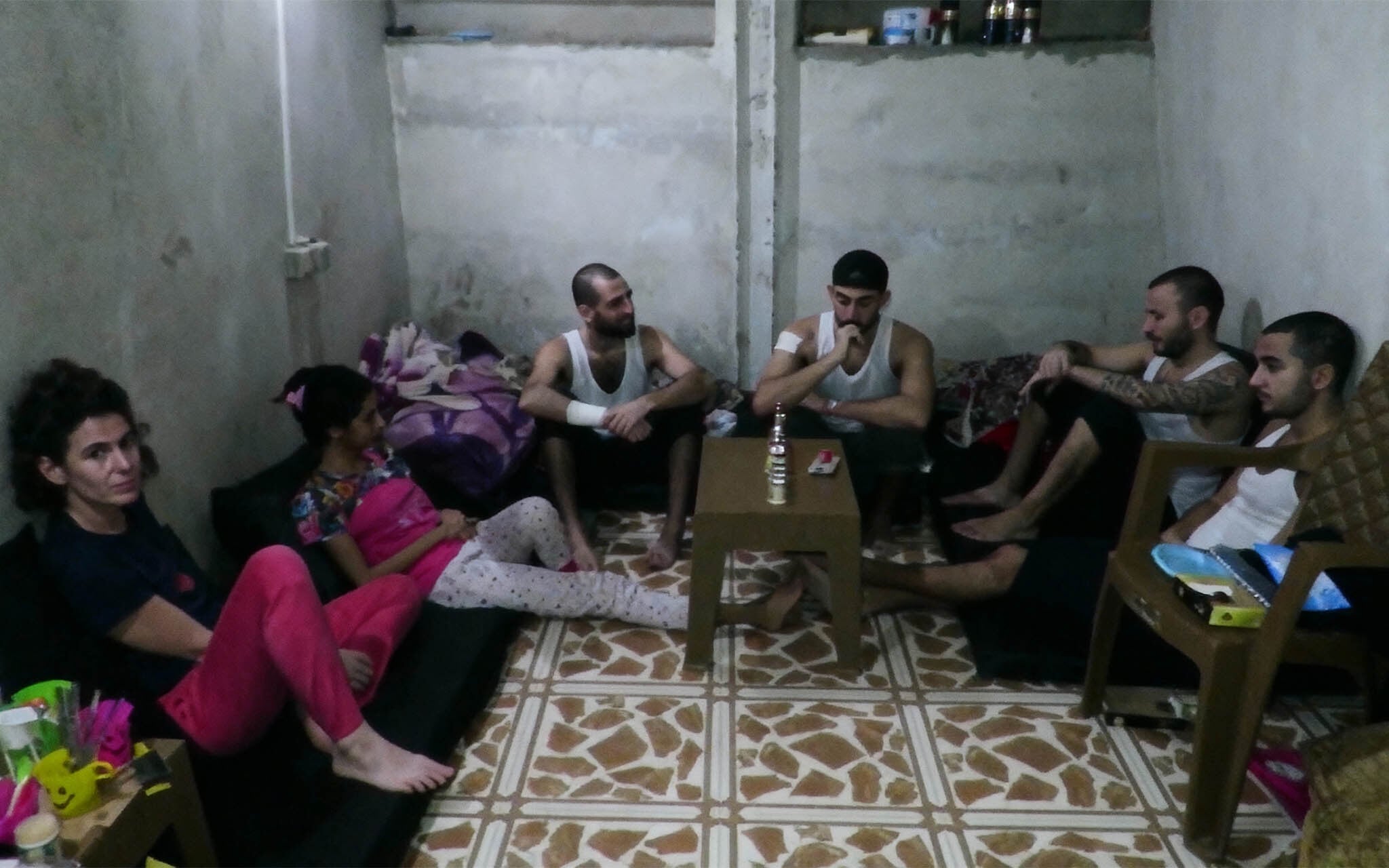

As these images become part of the fabric of our Jewish tapestry, they remind us of the warmth and resilience that have sustained us for centuries. In every generation, someone has risen to harm us. Hanukkah is part of that story, as the Seleucid Greeks sought to strip us of our faith and identity. But Hanukkah also reminds us of survival across the annals of history. After thousands of years, we are still lighting the hanukkiah and telling the story.
Hanukkah began with the senseless murder of 15 Jews on Bondi Beach in Australia. As I have learned throughout the week, the Australian Jewish community—numbering approximately 117,000 people, roughly the same size as the Jewish community of Ohio—is strong and mighty. The Australian Jewish community has more Jewish day school students per capita than any other diaspora country in the world. Many are descendants of Holocaust survivors, as Australia is home to the largest population of Holocaust survivors outside of Israel. Many who fled Europe came to Australia because it was as far away from Europe as they could get.
The Australian Jewish community is proudly Zionist, with Zionism deeply infused into Jewish life there. Sunday’s attack was not only the worst antisemitic attack against Jews in Australia, but also the worst terrorist attack in the country’s history. Unlike the United States, Australia is not known for gun violence and has some of the strictest gun possession laws in the world. In recent years, the Australian Jewish community has been the target of numerous antisemitic attacks. These attacks have included graffiti in synagogues, arson attacks on a kosher deli, and a rampage in a Jewish community in which 10 cars were vandalized, including one that was set on fire. Worshippers have been threatened, among other incidents. You can see a timeline of attacks in Time Magazine. Many in the community feared that something like this could happen.
The attack on Bondi Beach happened as more than a thousand Jews gathered to light the first candle. This is yet another attack on a Jewish holiday, robbing us of our joy. It is becoming clearer to me that many people around the world just cannot fully understand how such an attack affects Jewish communities on the other side of the world. We feel it deeply.
As I think about rising antisemitism and the fears so many of us are experiencing, I think about the need for multifaceted responses. On Tuesday, I was asked what I do for a living. I shared that I am a rabbi, wondering what response might follow. “Oh, I am sorry, for what happened in Australia, it must be so hard. I’m not religious, but everyone should be free to celebrate their religion.” Fear might have suggested a different response, but this interaction was a reminder that there are good and kind people who understand what it means to be human.
Antisemitism is not a problem for Jews to fight alone. “If not me, then who?” Who? The answer must be our allies. Our well-being should matter to our friends and neighbors. Yehuda Kurtzer, President of the Hartman Institute, writes about antisemitism as an American problem. He notes that the American Jewish community is currently spending $800 million annually on security. Consider what could happen if we took all those resources and invested them into Jewish summer camp, travel to Israel, or Jewish identity building.
Kurtzer reflects on the current state of the American political apparatus, which is experiencing a “deterioration of political norms, a collapse of bipartisan commitment to Jewish interests, and growing hostility from both the right and the left toward pluralism and other key elements of the framework of liberal democracy that helped American Jews thrive…” With these factors at play, it is more important than ever to take up the cause of allyship, so that our interfaith partners can help protect Jewish communities and reckon with the history of creating environments that are hostile to Jews.
I continue to feel the blessing of our Worthington interfaith partners who, time and again, reach out with care and concern. Their support has included donations to help offset security expenses, as well as shared learning experiences. Fighting antisemitism should not be a core part of Jewish identity. That identity should be built on Jewish pride, Jewish joy, Jewish values, a commitment to Jewish peoplehood, a love for Israel, Torah, and a connection to God. Combating antisemitism must be part of a larger interfaith effort—one in which people stand up and say, “We will not allow our Jewish neighbors to cower in fear. We will stand with them, and we will do our part to turn the tides of history.” I stand ready to work with anyone and everyone who wishes to examine the roots of antisemitism, why it grows, and how it impacts the flourishing of our precious democracy.
Hanukkah is the celebration of religious freedom and the kindling of Jewish pride. It also reminds us of those who risk their lives to save others. On this Shabbat, we are deeply grateful to Ahmed al Ahmed who single-handedly neutralized one of the shooters. Amid all this sadness, his brave act offers hope. As the candles are lit tonight, another 15 candles are kindled in memory of: Matilda, age 10; Rabbi Eli Schlanger; Dan Elkayam; Alexander Kleytman; Boris and Sofia Gurman; Peter Meagher; Reuven Morrison; Rabbi Yaakov Levitan; Tibor Weitzen; Marika Pogany; Edith Brutman; Boris Tetleroyd; and Adam Smyth. They were hunted because they were Jews. You can learn their stories here. May their memories be for a blessing.
Shabbat Shalom and Happy Hanukkah,
Rabbi Rick Kellner