Morissa Freiberg-Vance, Tzedek America Rabbi Emily Feigenson Impact Fellowship
This summer, I had the privilege of completing the Rabbi Emily Feigenson Impact Fellowship through Tzedek America, a yearlong professional development experience for Jewish educators centered on social justice, Jewish values, and experiential learning. The fellowship culminated in an immersive educational journey through Los Angeles, where we explored what it means to live out the Torah’s repeated commandment to “welcome the stranger” and pursue justice in our own communities. Throughout the week, we visited organizations and neighborhoods that tell powerful stories of resilience, strength, and hope.
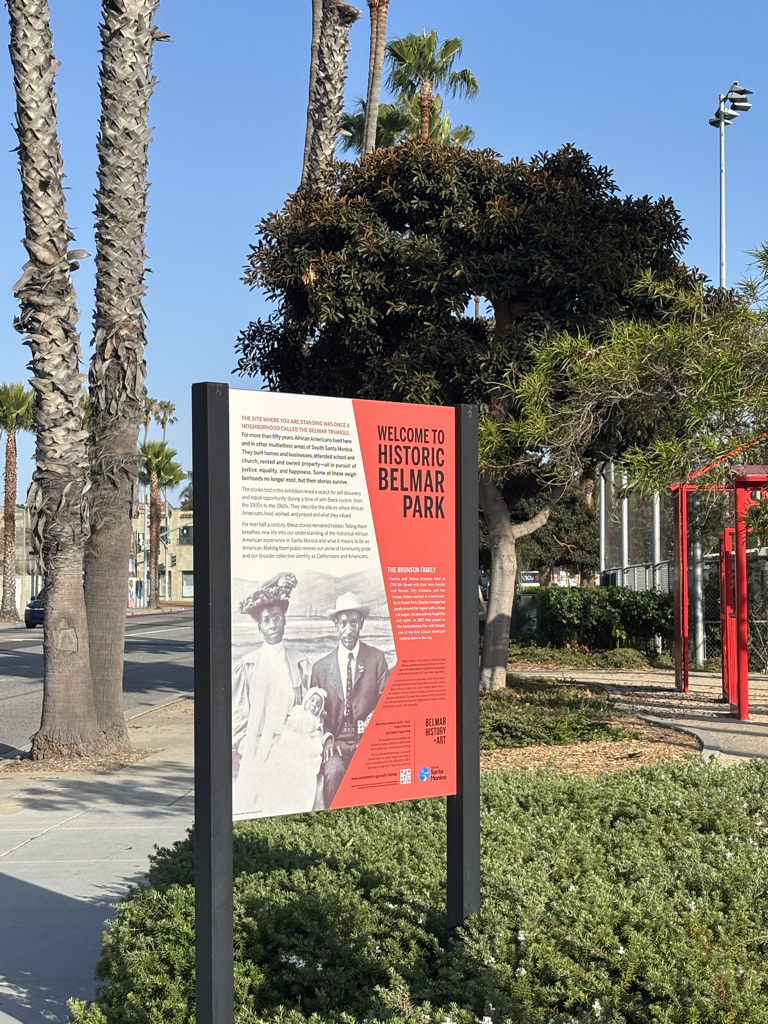
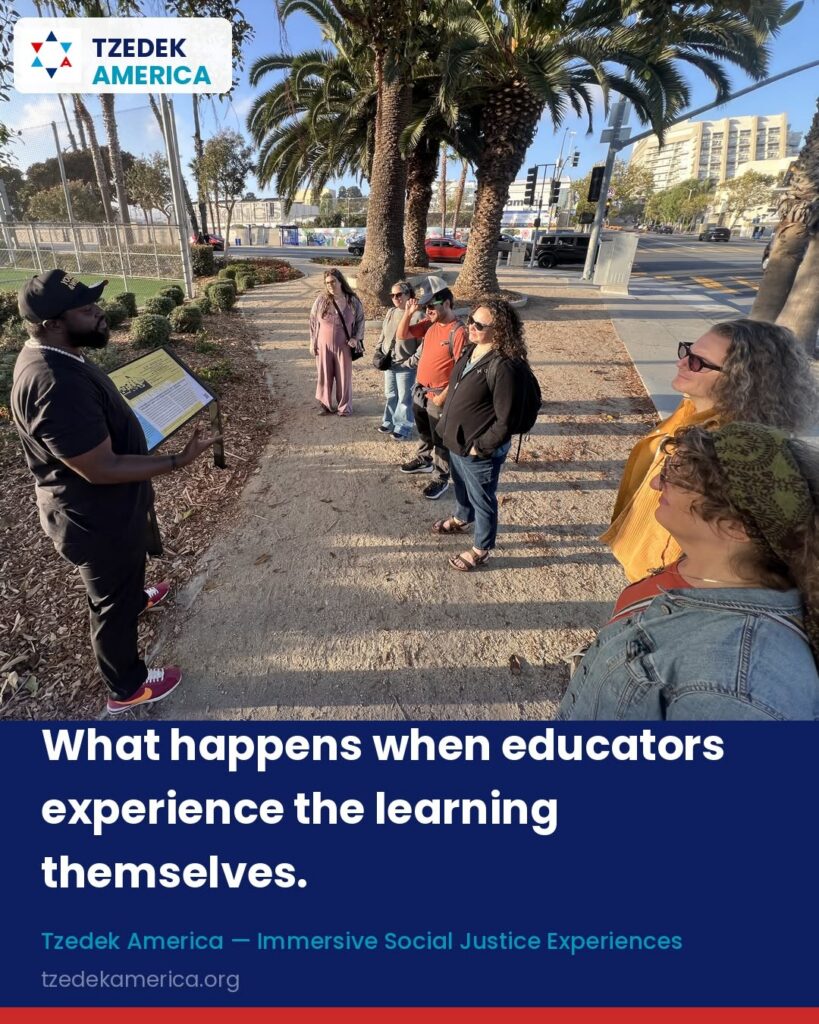
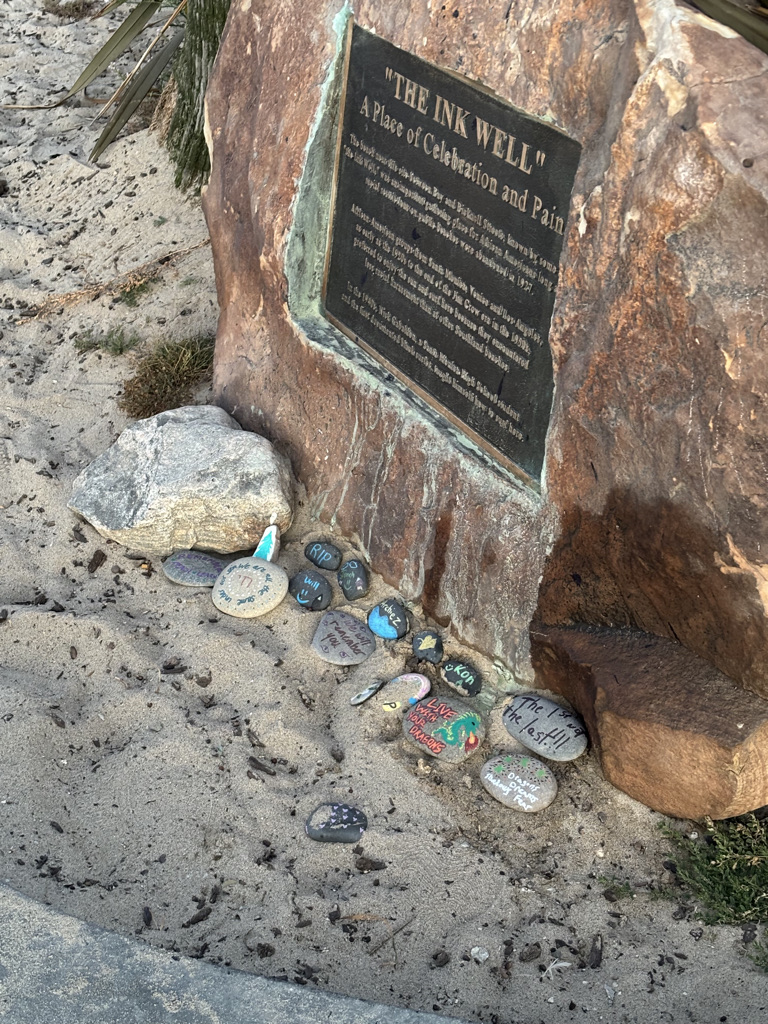
We began at Historic Belmar Park, which commemorates the thriving African American community that once existed there before it was destroyed through eminent domain in the 1950s. Our tour was led by Tzedek America educator Pastor Rondell Eskridge. At Inkwell Beach in Santa Monica, we learned about its history as a safe haven for African American beachgoers during segregation.
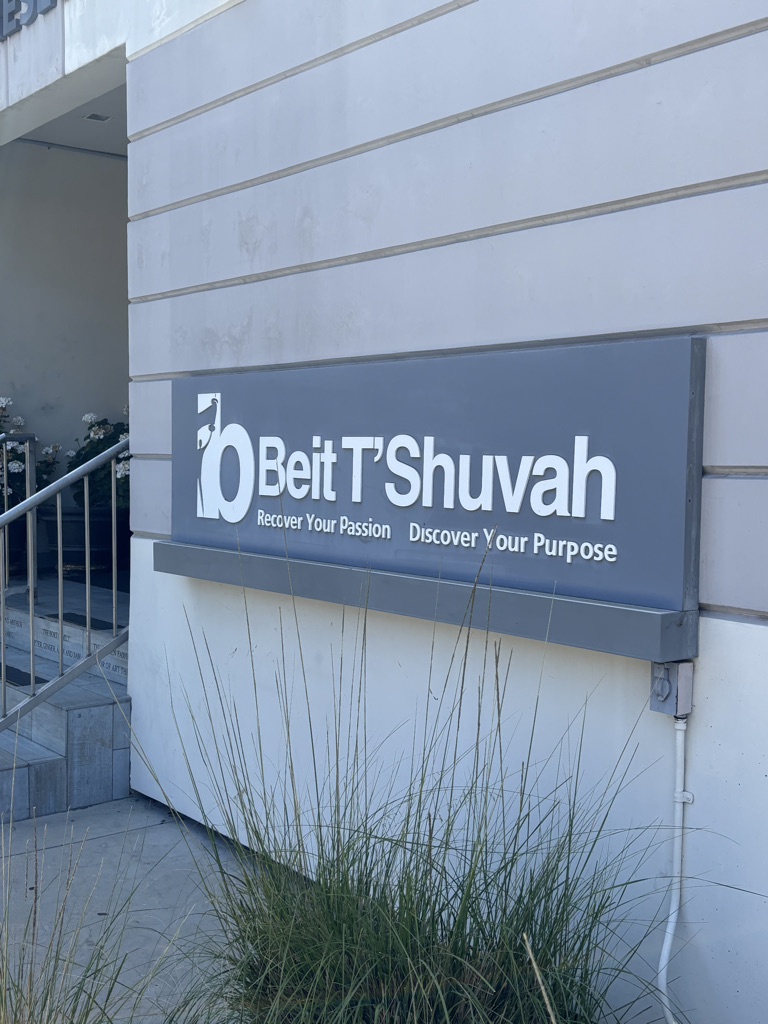
One stop that was especially meaningful to me was Beit T’Shuvah. As an organization that integrates Jewish spirituality, psychotherapy, and the 12-step program to support individuals recovering from addiction, its work beautifully demonstrates how Jewish values can be woven into healing, personal growth, and second chances. We heard testimony from residents and participated in a moving text study with their head rabbi, Iggy Gurin-Malous. We have welcomed Beit T’Shuvah educators to Beth Tikvah in the past, and I look forward to hopefully bringing them back for another program soon.
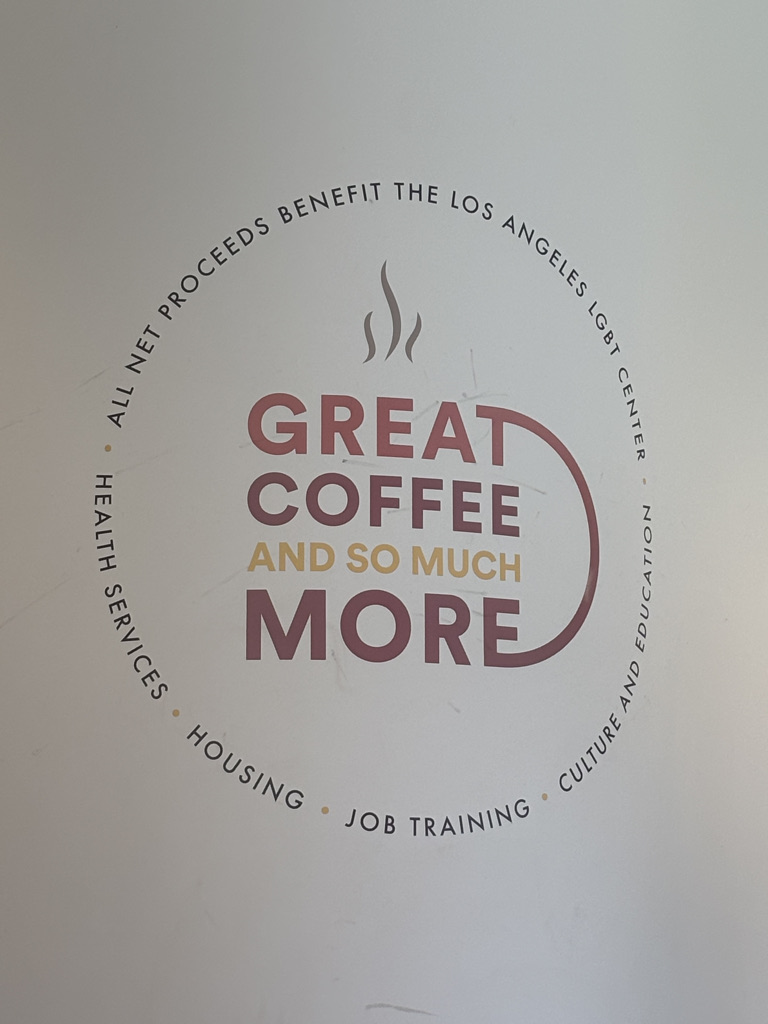
We also visited Liberation Coffee House, a social enterprise of the Los Angeles LGBT Center, where LGBTQ+ youth and older adults build job skills and community through its Culinary Arts program. We heard the story of a young person who moved to Los Angeles from a small town in rural California so they could be accepted for who they are. The LGBT Center provided them with housing, gender-affirming care, and now a job at the café.
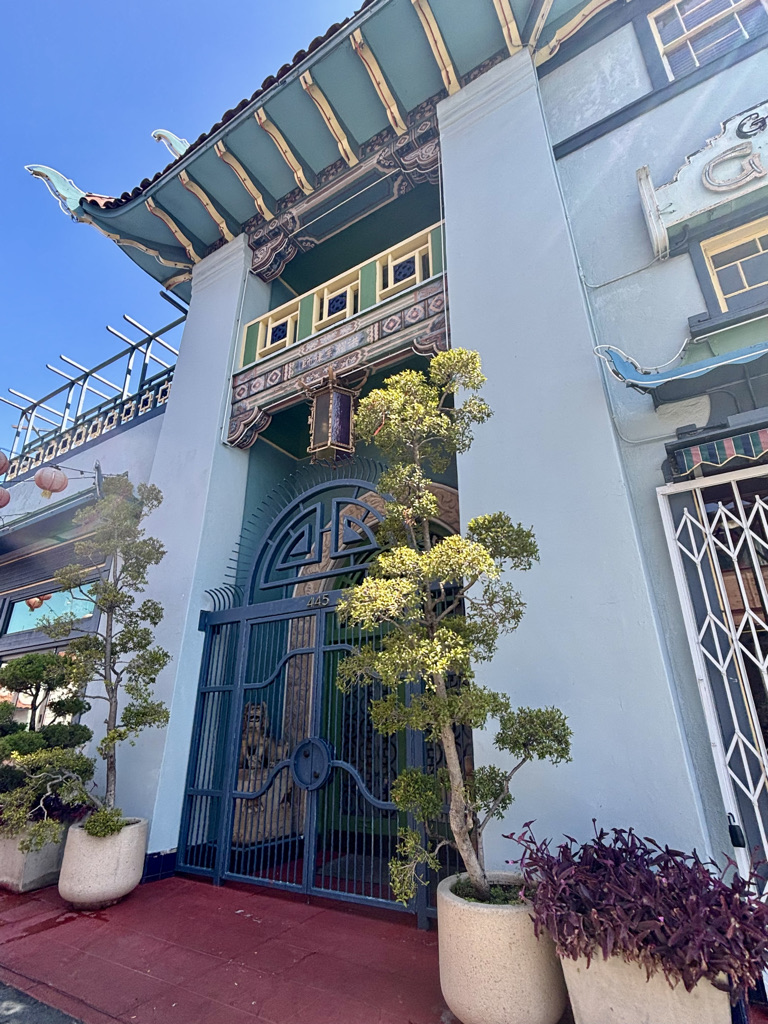
Our visit to Chinatown offered another powerful lesson, led by tour guide and local DJ Kev Lu. After the original Chinatown was demolished in the 1930s because of discriminatory housing policies, residents rebuilt their community while preserving their rich culture and traditions. We also learned how anti-Asian hate resurfaced during the COVID-19 pandemic, prompting community members to organize and protect one another. Their story is a testament to resilience in the face of repeated injustice.
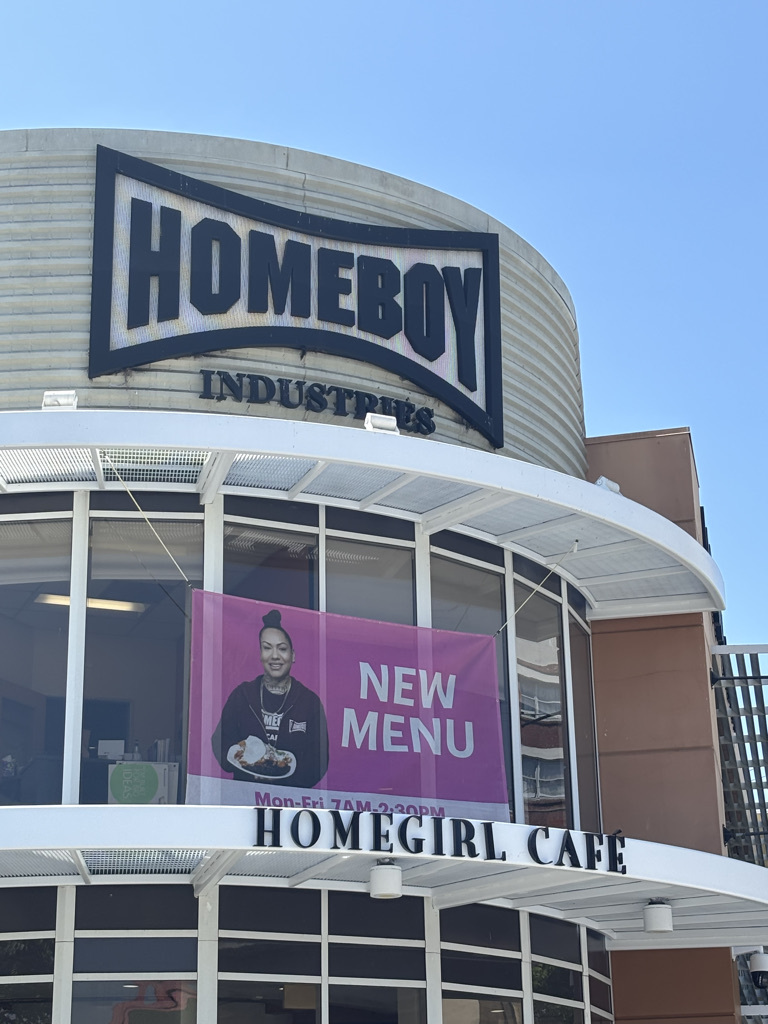
One of the most inspiring experiences of the week was touring Homeboy Industries, the world’s largest gang rehabilitation and reentry program. For more than three decades, Homeboy has provided training, employment, counseling, and support to formerly gang-involved and previously incarcerated individuals, helping them rebuild their lives with dignity and purpose. Hearing our guide share his own journey of transformation was unforgettable and served as a powerful reminder of what becomes possible when communities choose compassion over judgment. Every major city in our country needs a program like Homeboy!
Perhaps the most impactful experience, however, was an afternoon spent with the Los Angeles Mission on Skid Row, distributing water and connecting with individuals experiencing homelessness. Out of respect for those we met, I chose not to take photographs. Instead, I left with stories, conversations, and a renewed sense of responsibility. With more than 70,000 people experiencing homelessness in Los Angeles County and critical funding for service organizations continuing to decline, the need is overwhelming.
This fellowship challenged me to think more deeply about justice, empathy, and the many ways Jewish values call us to engage with the world around us. It left me deeply concerned about those whom we call “strangers” in our community. It reminded me that tzedek, justice, is not simply an abstract ideal, but an ongoing practice of listening, learning, showing up, and recognizing the dignity inherent in every person.
As I prepare for another year with our Religious School and Adult Learning communities, I look forward to bringing these experiences into my work with our learners and families.