
December 19, 2025
Happy Hanukkah! With each candle we light this year, there has been an added measure of fortitude as the electric menorah shines brightly in our window. We have been blessed to share the holiday with non-Jewish friends and neighbors, taking time to teach about the meaning of the ritual and the story of the holiday.
This week, images have circulated of now-deceased hostages lighting a paper cup menorah, alongside images of the menorah being lit in the Westerbork concentration camp. The six hostages—Hersh Goldberg-Polin, Carmel Gat, Eden Yerushalmi, Almog Sarusi, Ori Danino, and Alex Lubanov—lit a menorah in the tunnels of Gaza. Both scenes represent acts of defiance and a willingness to quite literally keep the flame alive.
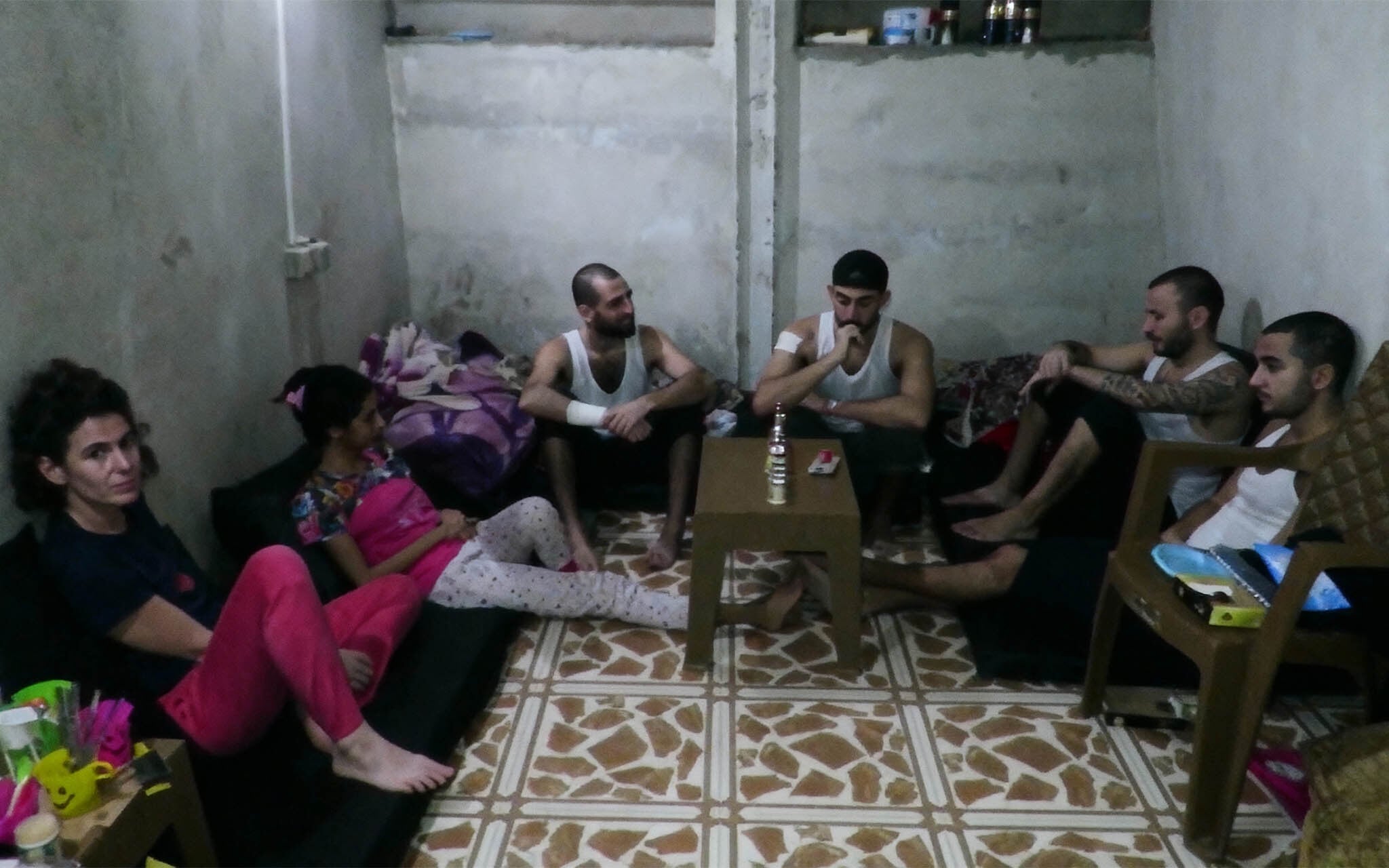

As these images become part of the fabric of our Jewish tapestry, they remind us of the warmth and resilience that have sustained us for centuries. In every generation, someone has risen to harm us. Hanukkah is part of that story, as the Seleucid Greeks sought to strip us of our faith and identity. But Hanukkah also reminds us of survival across the annals of history. After thousands of years, we are still lighting the hanukkiah and telling the story.
Hanukkah began with the senseless murder of 15 Jews on Bondi Beach in Australia. As I have learned throughout the week, the Australian Jewish community—numbering approximately 117,000 people, roughly the same size as the Jewish community of Ohio—is strong and mighty. The Australian Jewish community has more Jewish day school students per capita than any other diaspora country in the world. Many are descendants of Holocaust survivors, as Australia is home to the largest population of Holocaust survivors outside of Israel. Many who fled Europe came to Australia because it was as far away from Europe as they could get.
The Australian Jewish community is proudly Zionist, with Zionism deeply infused into Jewish life there. Sunday’s attack was not only the worst antisemitic attack against Jews in Australia, but also the worst terrorist attack in the country’s history. Unlike the United States, Australia is not known for gun violence and has some of the strictest gun possession laws in the world. In recent years, the Australian Jewish community has been the target of numerous antisemitic attacks. These attacks have included graffiti in synagogues, arson attacks on a kosher deli, and a rampage in a Jewish community in which 10 cars were vandalized, including one that was set on fire. Worshippers have been threatened, among other incidents. You can see a timeline of attacks in Time Magazine. Many in the community feared that something like this could happen.
The attack on Bondi Beach happened as more than a thousand Jews gathered to light the first candle. This is yet another attack on a Jewish holiday, robbing us of our joy. It is becoming clearer to me that many people around the world just cannot fully understand how such an attack affects Jewish communities on the other side of the world. We feel it deeply.
As I think about rising antisemitism and the fears so many of us are experiencing, I think about the need for multifaceted responses. On Tuesday, I was asked what I do for a living. I shared that I am a rabbi, wondering what response might follow. “Oh, I am sorry, for what happened in Australia, it must be so hard. I’m not religious, but everyone should be free to celebrate their religion.” Fear might have suggested a different response, but this interaction was a reminder that there are good and kind people who understand what it means to be human.
Antisemitism is not a problem for Jews to fight alone. “If not me, then who?” Who? The answer must be our allies. Our well-being should matter to our friends and neighbors. Yehuda Kurtzer, President of the Hartman Institute, writes about antisemitism as an American problem. He notes that the American Jewish community is currently spending $800 million annually on security. Consider what could happen if we took all those resources and invested them into Jewish summer camp, travel to Israel, or Jewish identity building.
Kurtzer reflects on the current state of the American political apparatus, which is experiencing a “deterioration of political norms, a collapse of bipartisan commitment to Jewish interests, and growing hostility from both the right and the left toward pluralism and other key elements of the framework of liberal democracy that helped American Jews thrive…” With these factors at play, it is more important than ever to take up the cause of allyship, so that our interfaith partners can help protect Jewish communities and reckon with the history of creating environments that are hostile to Jews.
I continue to feel the blessing of our Worthington interfaith partners who, time and again, reach out with care and concern. Their support has included donations to help offset security expenses, as well as shared learning experiences. Fighting antisemitism should not be a core part of Jewish identity. That identity should be built on Jewish pride, Jewish joy, Jewish values, a commitment to Jewish peoplehood, a love for Israel, Torah, and a connection to God. Combating antisemitism must be part of a larger interfaith effort—one in which people stand up and say, “We will not allow our Jewish neighbors to cower in fear. We will stand with them, and we will do our part to turn the tides of history.” I stand ready to work with anyone and everyone who wishes to examine the roots of antisemitism, why it grows, and how it impacts the flourishing of our precious democracy.
Hanukkah is the celebration of religious freedom and the kindling of Jewish pride. It also reminds us of those who risk their lives to save others. On this Shabbat, we are deeply grateful to Ahmed al Ahmed who single-handedly neutralized one of the shooters. Amid all this sadness, his brave act offers hope. As the candles are lit tonight, another 15 candles are kindled in memory of: Matilda, age 10; Rabbi Eli Schlanger; Dan Elkayam; Alexander Kleytman; Boris and Sofia Gurman; Peter Meagher; Reuven Morrison; Rabbi Yaakov Levitan; Tibor Weitzen; Marika Pogany; Edith Brutman; Boris Tetleroyd; and Adam Smyth. They were hunted because they were Jews. You can learn their stories here. May their memories be for a blessing.
Shabbat Shalom and Happy Hanukkah,
Rabbi Rick Kellner